




RELATED: How to Use the Off-Season to 'Tune Up' University Campus Shuttle Services
The Challenges, Opportunities of Operating University Campus Shuttle Services
Many institutions offer bus and shuttle services to provide transportation for students and staff, and they face the same challenges of providing consistently high rider satisfaction levels that municipal transit authorities and operators do.
August 9, 2019
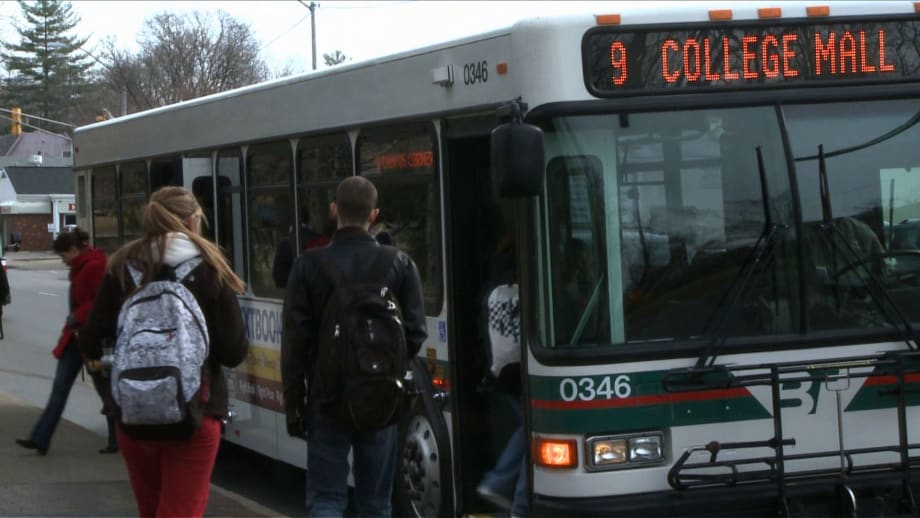
The ideal shuttle service enables a student to roll out of bed and hop on the campus shuttle rather than trekking across campus on foot to make it to class on time. Photo: RATP Dev USA
6 min to read
The ideal shuttle service enables a student to roll out of bed and hop on the campus shuttle rather than trekking across campus on foot to make it to class on time. Photo: RATP Dev USA
The campuses of colleges and universities, particularly those outside a city’s limits, are essentially small (or even medium-sized) cities unto themselves. Berry College just outside of Rome, Ga., is the nation’s largest at 27,000 acres. The U.S. Air Force Academy in Colorado Springs comes in a close second at 18,000 acres. The typical school has dozens of buildings, numerous off-campus student housing options, and tens of thousands of people moving on and off campus, and between stops throughout. That is why many institutions offer bus and shuttle services to provide transportation for students and staff, and they face the same challenges of providing consistently high rider satisfaction levels that municipal transit authorities and operators do. This presents opportunities to experiment with adding new technologies and services to improve customer service and increase ridership.
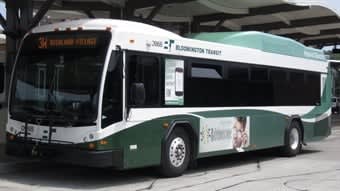
Installing telematics technology in all campus shuttles should be a priority to facilitate the collection, analysis and use of data in real time. Photo: RATP Dev USA
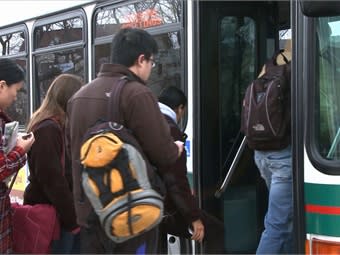
Whether students realize it or not, the most important service campus shuttles provide is safety. Photo: RATP Dev USA
A study conducted at the University of North Dakota asked college students what factors influenced their decision to ride the campus shuttle. The top reason is convenience. Other reasons included: time, accessibility, and parking availability.
But whether students realize it or not, the most important service campus shuttles provide is safety. They are a convenient and reliable way for students to get around campus at night, particularly if they are alone. Shuttles can help with another safety hazard faced by college students — bad backs. A study by a University of Indiana professor found that the average graduate student carries a backpack weighing just over 12 pounds. That’s a lot of weight to bear when you are hurrying across miles of campus.
Adding more vehicles and stops alone to provide acceptable service levels is no longer adequate. Increasing ridership numbers requires leveraging technologies that enable operators to evolve from being transportation providers that send buses and shuttles along predetermined routes to mobility management providers that consider all aspects of their riders’ journeys. That begins with the collection and analysis of information from multiple sources.
Installing telematics technology in all vehicles should be a priority to facilitate the collection, analysis and use of data in real time to do much more than monitor whether a shuttle reaches a stop at the scheduled time. Factors like driver behavior, vehicle performance, rider demographics and even how the time of day affects ridership levels can be captured, too.
This can help implement some variation of after hours and/or on-demand service, which can significantly boost ridership considering students frequently need access to reliable transportation in the evenings and on weekends, when regular service is often scarce. This can include providing riders with a mobile app to request a pickup and drop-off location — usually anywhere on campus or the surrounding area.
The Massachusetts Institute of Technology offers a late-night on-demand shuttle service that operates after normal hours. Its service, SafeRide, operates as a fixed-route campus shuttle from 6:00 p.m. to 11:00 p.m. At 11:00 p.m., the service switches to an on-demand model. Riders can use a mobile app to request a pickup and drop-off at any location within the SafeRide zone. The pilot program will run through the beginning of June. Princeton University, University of Connecticut and Brown University are just some of the others that offer similar transportation options. A few universities like the University of Michigan introduced self-driving, Autonomous Technology with AV Shuttles on their main campus.
Similarly, at Baylor University in Waco, Texas, students and visitors can ride the Baylor University shuttle, a.k.a. “The BUS”, for free. The fixed-route service not only provides transportation to classes and campus activities, it also helps reduce vehicular traffic and parking congestion on campus. In addition to its regular service on class days, there is also an After Hours BUS that runs from 6:30 p.m. to 1:30 a.m. Monday through Thursday. To make the after-hours service more convenient and predictable for students, Baylor has implemented a GPS tracking system on its buses. Students download Baylor’s app to their smart device and can track the BUS in real time.
The shuttles do more than just transport students to class. Many will also take students to areas close to campus so they can run errands, or get to jobs and appointments. Shuttles are also important on game days when crowds of alumni converge on campus to cheer on their alma maters. The game-day shuttles often operate for hours before and after game time … transporting thousands of people safely to the game and then back again to their cars or campus.
Take a lesson from the internet and store retail sector: It is impossible to overestimate the importance of always striving to create a better customer experience. That is critical to turning first-time or occasional customers into long-term, loyal brand advocates. The same philosophy applies to campus bus/shuttle riders. Build long-term loyalty, and you will not only maintain ridership levels, you'll see them rise as happy riders broadcast their satisfaction across all their social media channels.
That is why technology plays a key role not only in the "back room operations," but also in improving the customer experience. You should strive to be the primary source of information that passengers turn to for all of their transportation options. Provide them with a single view into bus and shuttle arrival times and delays, as well as their options for the last mile, such as a bike- or scooter-sharing service. If you can make last mile services more accessible, that will have a positive impact on ridership trends.
Consider this scenario: A rider’s bus is delayed, but she’s not in a hurry. She can check the app on her smartphone for nearby leisure options, like the Starbucks in the student union or just off campus. If she's in a rush to get to class, she can view alternative means of transport such as a ride-sharing service or a bike-share. That is how to create a direct connection to the individual passenger on a mass scale.
Beyond implementing the necessary telematics and other technologies, improving passenger satisfaction and safety levels also requires taking a more holistic approach to public transportation. Embrace options you may view as competitors, such as ride-hailing services, and you build loyalty among your riders, even if your services are not options for them to traverse that last mile. Loyal riders become frequent riders and encourage their friends and family to do the same.
The ideal shuttle service enables a student to roll out of bed and hop on the campus shuttle rather than trekking across campus on foot to make it to class on time or pick up a pizza at a nearby restaurant late at night. This combination of safety and convenience will be a big selling point to all those prospective students and their parents during a campus tour. If you operate a fixed-route service near a university campus, reach out to students and faculty to understand how they transport their students — you might just uncover a new opportunity to deliver new services and boost ridership levels.
Russ Tieskoetter is the COO of RATP Dev USA.
(This article originally appeared in August 2018)
Subscribe to Our Newsletter
More Blog Posts
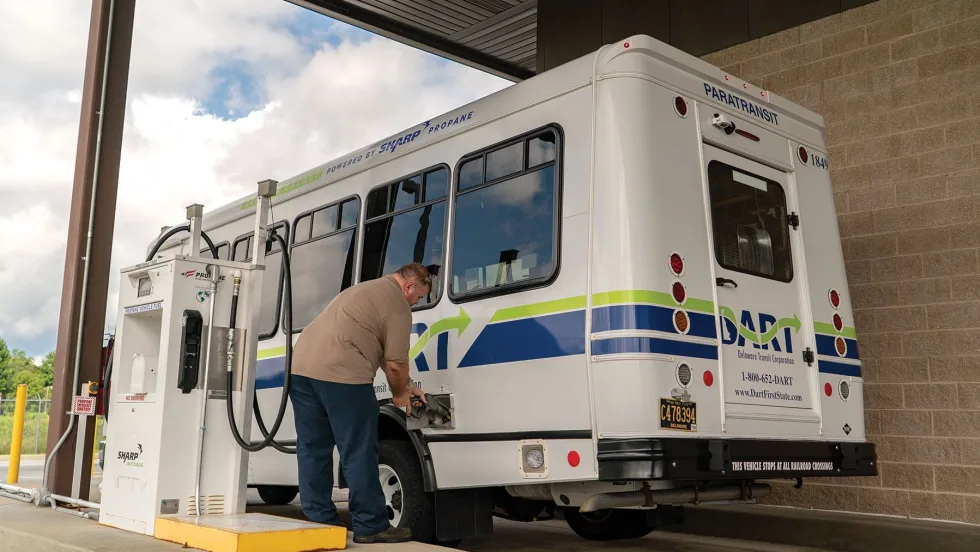
Building a Winning FTA Grant Proposal: Why Propane Autogas is the Pragmatic Choice for Fleet Resilience
With $610 million available through the FY 2026 Buses and Bus Facilities Competitive Program and the Low or No Emission Grant Program, agencies must build a compelling case before the September 21 deadline that balances environmental compliance with operational feasibility.
Read More →
Velo-city Conference 2026: Latest Trends in Cycling as Part of Urban Mobility
The global cycling conference highlighted how cities are integrating bicycles into multimodal transportation networks, expanding cycle tourism and reshaping urban mobility.
Read More →
Kindness Isn’t Soft...It’s Strategic.
Mike Bismeyer — often known as “The Kindness Guy” — has spent more than 17 years in public transit and mobility, serving in industry leadership roles, speaking across North America, and advocating for stronger workplace cultures. But his message doesn’t come from theory. It comes from lived experience.
Read More →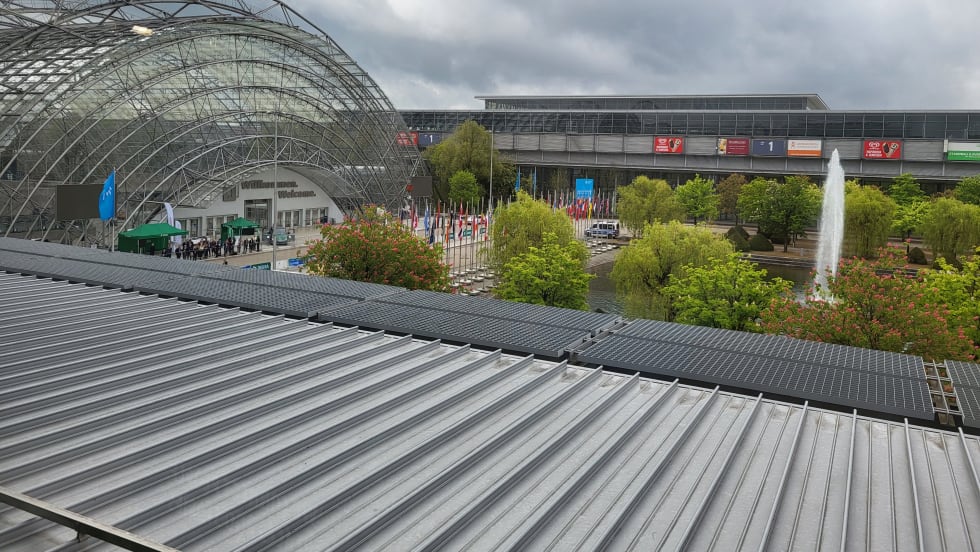
Inside ITF 2026: Transport Reacts to A Challenging World
Transport leaders from around the world gathered in Leipzig, Germany, for the 2026 International Transport Forum to discuss resilience, climate impacts, supply chains and the future of sustainable mobility.
Read More →
Every Ride Tells a Story — But You’re Not Just Selling the Ride
You’re selling the moment, the meaning, and the emotion behind it.
Read More →
How Digital Signage is Reshaping the Traveler Experience at Transportation Hubs
What was once a landscape of static signs has evolved into a responsive, immersive environment powered by real-time visual communication.
Read More →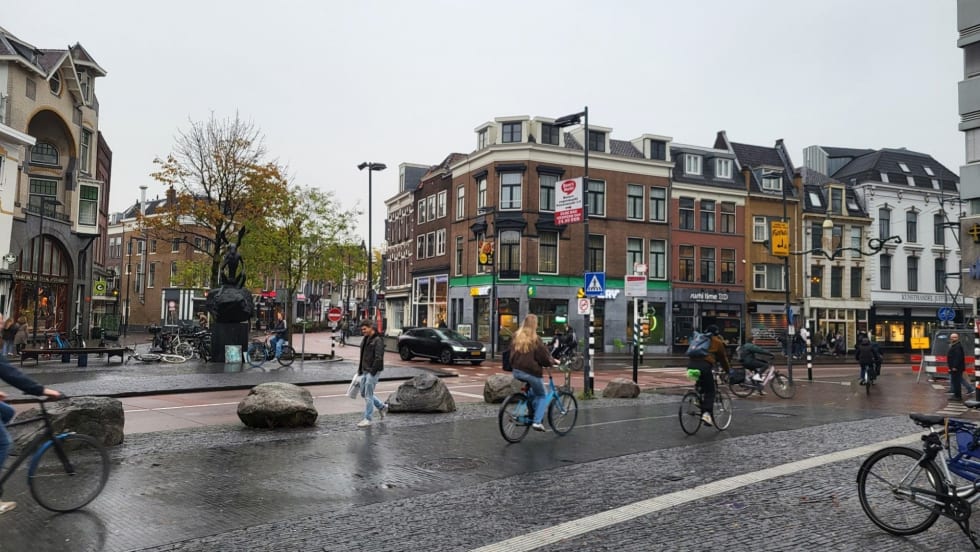
Latest Trends in Urban Mobility from Polis Conference 2025
Polis comprises cities and regions, as well as corporate partners, from across Europe, promoting the development and implementation of sustainable mobility. This year’s event had over a thousand attendees across various policy forums and an exhibition.
Read More →
Why Transit Leaders Require Better Tools for Operational Clarity In Today’s Tech-Fragmented Environment
Across North America and beyond, transit agency officials are contending with a perfect storm of operational headaches and strategic challenges that hamper daily service and long-term progress.
Read More →
The Powerless Brokers: Why California Can’t Build Transit
It is no secret that transit in the U.S. is slow and expensive to build.
Read More →
Why Transport Sustainability Should Focus on People Instead of Cars
Simply incentivizing electrification is not enough to make a meaningful impact; we must shift our focus toward prioritizing public transportation and infrastructure.
Read More →