



The Modular Route to Electrification Reduces Risk
The choice to go electric for your zero-emission bus fleet doesn’t need to be overwhelming. A modular approach can be the best route to lower your risk while advancing your decarbonization goals.

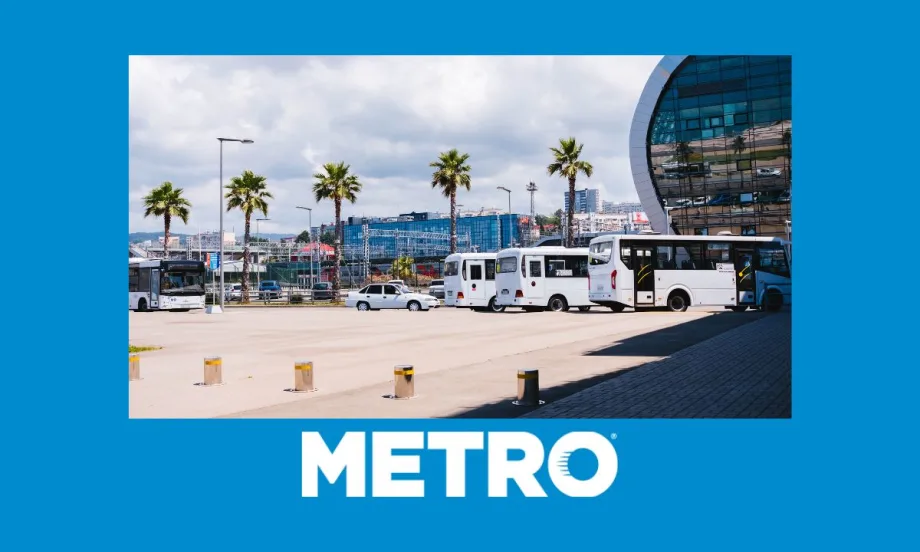
By rightsizing your electric fleet and infrastructure with a modular solution, you are effectively simplifying the operational and capital impacts and building a platform for your fleet’s future evolution.
Photo: Canva
- A modular approach to electrification allows for a gradual transition to a zero-emission bus fleet.
- This strategy can help in mitigating risks associated with moving to electric vehicles.
- It supports organizations in achieving their decarbonization objectives effectively.
*Summarized by AI
The choice to go electric for your zero-emission bus fleet doesn’t need to be overwhelming.
A modular approach can be the best route to lower your risk while advancing your decarbonization goals.
We define a modular approach as one that is tailored to your unique situation and can flex to fit your future needs and objectives. In other words, a modular approach meets you where you are in your zero-emission journey.
By rightsizing your electric fleet and infrastructure with a modular solution, you are effectively simplifying the operational and capital impacts and building a platform for your fleet’s future evolution.
Flexibility Meets Practicality
Bus electrification projects rarely follow a uniform path.
A modular approach allows operators to select the specific support they need — whether that’s infrastructure design, financing, or grant-writing assistance — without committing to services they don’t need. This creates significant advantages, enabling private and public transit fleet operators to maximize their investments while maintaining operational control.
For instance, modular solutions can help manage the high upfront costs of bus electrification.
Instead of making capital-heavy investments in charging infrastructure or battery systems, fleet operators can opt for financing and spread costs over time that are typically then offset by operational savings.
Further, a growing trend amongst savvy fleet operators is securing financing for their project that takes into account the residual value of the fleet’s batteries. Residual value refers to the future economic value of a bus’s battery in its second life.
Once the bus battery is no longer suitable for the demands of daily routes, it still has value as a stationary storage solution. Accounting for the residual value upfront can further sweeten your zero-emission strategy, making the transition more financially accessible.

Electrifying bus fleets is not just about achieving environmental goals — it’s also about delivering a reliable, cost-effective service to passengers and clients.
Photo: Canva
Real-World Value
An example of modular electrification in action is Zenobē’s partnership with Australia’s largest electric bus depot, where modularity enabled efficiency at scale by electrifying 59 buses for global bus operator Transit Systems. Flexible service offerings, including infrastructure financing and maintenance, contributed to smoother project rollout and long-term reliability.
Expected outcomes, including lower per-mile energy costs and reduced maintenance expenditures, will highlight the economic viability of this approach.
Another sample project involvesUzabus helping introduce zero-emission electric buses serving Metlink, the public transport operator serving Wellington, New Zealand.
By employing a flexible model, the project introduced two electric buses without burdening Uzabus with unnecessary infrastructure or equipment.
The financing structure covered the vehicles, their batteries and the charging systems while also allowing for future scalability. The latter is essential as Metlink has a goal of decarbonizing its fleet by 2035.
Over the 16-year financing term, operational cost savings from the diesel avoided are expected to significantly mitigate initial outlays.
Business Benefits
For bus fleets, the modular approach delivers tangible value in several ways:
Cost savings: Electric vehicles generally offer lower operational costs compared to diesel counterparts. Energy costs can be significantly lower per mile, depending on local electricity prices, while maintenance expenses decrease due to fewer moving parts.
Scalability: Modular systems can grow alongside operational needs, accommodating additional electric buses or infrastructure upgrades as demand increases. This scalability ensures that businesses are not locked into static solutions that may become obsolete.
Risk mitigation: Flexible financing spreads capital costs over the project’s lifetime, reducing financial risk while making it easier to predict and manage budgets.
Future-proofing: With technology advancing rapidly, modular solutions ensure compatibility with emerging innovations, safeguarding investments against obsolescence.

As governments increasingly favor projects with demonstrable environmental and economic benefits, modular bus electrification strategies position businesses to secure public and private funding while delivering measurable outcomes.
Photo: Canva
A Path to Broader Impact
Electrifying bus fleets is not just about achieving environmental goals — it’s also about delivering a reliable, cost-effective service to passengers and clients.
By addressing financial and operational challenges with a modular approach, businesses can align sustainability initiatives with their bottom line.
Moreover, adopting this model sends a clear message to stakeholders: sustainability can be practical and profitable.
As governments increasingly favor projects with demonstrable environmental and economic benefits, modular bus electrification strategies position businesses to secure public and private funding while delivering measurable outcomes.
Fleet operators today must navigate a rapidly changing transportation landscape. Modular solutions offer not just flexibility but also a pragmatic framework for success — helping businesses meet their sustainability goals without compromising on operational efficiency or financial performance.
Quick Answers
A modular approach to electrification involves implementing electric vehicle technologies step-by-step, allowing for a more manageable transition to an electric fleet.
*Summarized by AI
More Blog Posts
Five Years Later: What’s Changed at Greyhound
Five years after Flix acquired it, Greyhound reflects on fleet modernization, operational improvements, employee empowerment, and a renewed focus on customer experience.
Read More →
Building a Winning FTA Grant Proposal: Why Propane Autogas is the Pragmatic Choice for Fleet Resilience
With $610 million available through the FY 2026 Buses and Bus Facilities Competitive Program and the Low or No Emission Grant Program, agencies must build a compelling case before the September 21 deadline that balances environmental compliance with operational feasibility.
Read More →
Velo-city Conference 2026: Latest Trends in Cycling as Part of Urban Mobility
The global cycling conference highlighted how cities are integrating bicycles into multimodal transportation networks, expanding cycle tourism and reshaping urban mobility.
Read More →
Kindness Isn’t Soft...It’s Strategic.
Mike Bismeyer — often known as “The Kindness Guy” — has spent more than 17 years in public transit and mobility, serving in industry leadership roles, speaking across North America, and advocating for stronger workplace cultures. But his message doesn’t come from theory. It comes from lived experience.
Read More →
Inside ITF 2026: Transport Reacts to A Challenging World
Transport leaders from around the world gathered in Leipzig, Germany, for the 2026 International Transport Forum to discuss resilience, climate impacts, supply chains and the future of sustainable mobility.
Read More →
Every Ride Tells a Story — But You’re Not Just Selling the Ride
You’re selling the moment, the meaning, and the emotion behind it.
Read More →
How Digital Signage is Reshaping the Traveler Experience at Transportation Hubs
What was once a landscape of static signs has evolved into a responsive, immersive environment powered by real-time visual communication.
Read More →
Latest Trends in Urban Mobility from Polis Conference 2025
Polis comprises cities and regions, as well as corporate partners, from across Europe, promoting the development and implementation of sustainable mobility. This year’s event had over a thousand attendees across various policy forums and an exhibition.
Read More →
Why Transit Leaders Require Better Tools for Operational Clarity In Today’s Tech-Fragmented Environment
Across North America and beyond, transit agency officials are contending with a perfect storm of operational headaches and strategic challenges that hamper daily service and long-term progress.
Read More →
The Powerless Brokers: Why California Can’t Build Transit
It is no secret that transit in the U.S. is slow and expensive to build.
Read More →