



The Operator Exchange: Creating Space for Operators to Learn from One Another
Launched in July 2026, The Operator Exchange brings passenger transportation operators together for monthly virtual discussions focused on shared challenges, practical solutions, and lessons learned from industry peers.

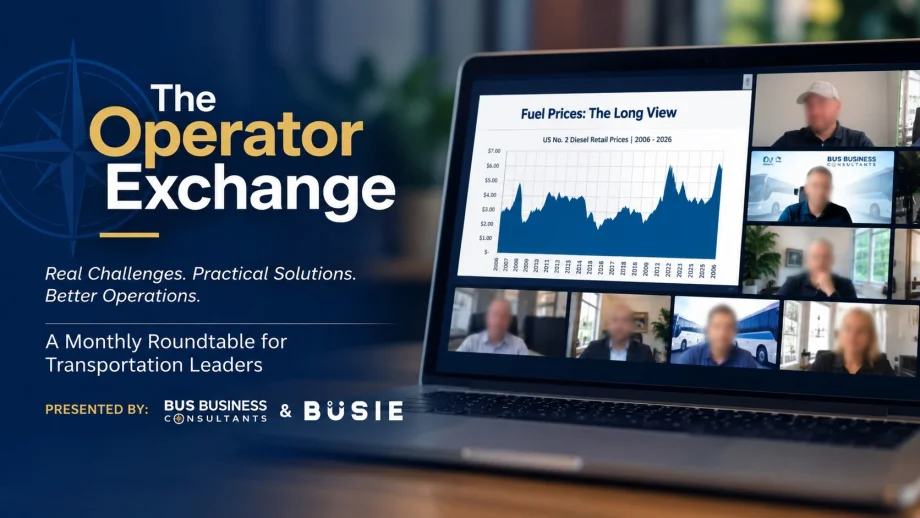
The Operator Exchange, launched by Brian Dickson of Bus Business Consultants and Louis Bookoff of Busie, provides a free monthly virtual forum for passenger transportation operators to share experiences, discuss industry challenges, and learn from one another.
Brian Dickson
- The Operator Exchange, launched in July 2026, facilitates monthly virtual discussions for passenger transportation operators.
- These discussions focus on addressing shared challenges and exchanging practical solutions.
- Participants benefit from lessons learned through experiences shared by their industry peers.
*Summarized by AI
One thing I’ve learned throughout my career in the passenger transportation industry is that some of the most valuable business insights don’t necessarily come from a conference presentation, a consultant, or an industry publication.
Sometimes, they come from a conversation with another operator who has already faced the same challenge you’re dealing with.
It might be a discussion about rising insurance costs, managing fuel-price fluctuations, recruiting and retaining drivers, or navigating an increasingly complicated operating environment. Whatever the issue, someone else in our industry has likely experienced it, developed an approach to managing it, and learned something worth sharing.
That simple observation became the foundation for The Operator Exchange, a free monthly virtual roundtable that Louis Bookoff, Co-Founder and CEO of Busie, and I launched in July 2026.
Our objective was straightforward: create a place where passenger transportation operators could connect regularly, talk openly about the challenges they face, and learn from one another.
Four sessions later, we’re beginning to see just how valuable those conversations can be.
Creating a Different Kind of Conversation
Our industry has no shortage of conferences, trade associations, educational programs, and networking opportunities. Organizations such as the American Bus Association, United Motorcoach Association, and regional associations provide tremendous value to their members.
The Operator Exchange was never intended to compete with those organizations or replace the opportunities they provide.
Instead, Louis and I saw an opportunity to complement them.
We wanted to create a setting where operators could have meaningful conversations without traveling, attending a conference, or waiting for the next industry event.
Just as importantly, we wanted participants to drive the discussions.
The concept wasn’t to create another traditional webinar, where attendees spend an hour listening to a presenter. Instead, we wanted to create a forum where operators could share what they’re experiencing, ask questions, compare approaches, and potentially walk away with an idea they could put to work in their own businesses.
We also wanted to make the conversations accessible to the broader private passenger ground transportation industry.
Whether someone operates motorcoaches, minibusses, shuttles, limousines, black cars, or other chauffeured transportation services, many underlying business challenges are remarkably similar.
The equipment and operating models may differ, but the challenges of managing people, controlling costs, serving customers, and running a profitable business often overlap.
Those shared experiences create opportunities for meaningful learning.
What We’ve Learned From the First Four Sessions
We launched The Operator Exchange in July, with a deliberately open format.
Instead of selecting a single topic and building a presentation around it, we asked participants to identify the issues they wanted to discuss.
Our role was primarily to facilitate the conversation, ask questions, and encourage participants to share their experiences.
We continued that approach through our August and September sessions.
One thing became apparent: operators often benefited as much from hearing how someone else approached a problem as from discussing the problem itself.
There isn’t always a single correct answer.
An approach that works for a large operator with substantial resources may not be practical for a smaller, owner-operated business. But understanding the reasoning behind another operator’s decisions can still provide valuable perspective. That’s one strength of peer-to-peer learning.
It gives people an opportunity to consider approaches they might not otherwise encounter. The feedback from our early sessions reinforced that we were moving in the right direction.
In our July and August post-session surveys, all respondents rated the discussions as valuable or very valuable and indicated they were likely to participate again.
One participant offered feedback that captured exactly what we had hoped to accomplish:
“I liked the format in which all of the participants shared their experiences and policies regarding the different questions/topics which were presented. Very informative to know that all of the operators present face the same challenges and obstacles in their day-to-day operations.”
That observation is particularly meaningful.
Sometimes, simply recognizing you’re not the only operator facing a particular challenge can be valuable. Hearing how others are responding takes that recognition a step further.
Finding the Right Balance Between Structure and Open Discussion
As the sessions progressed, Louis and I also began thinking about how to make the experience even more valuable.
One challenge with a completely open discussion is that participants may arrive with different expectations or hesitate to introduce a topic.
At the same time, we didn’t want to lose the conversational nature that made the format appealing in the first place.
For our October 14 session, we experimented with a slightly different approach.
We began with a focused discussion on fuel costs and fuel-price management, a topic that affects virtually every passenger transportation operator.
Fuel is particularly interesting because operators have limited control over its market price, yet they must continually decide on pricing, budgeting, and managing the financial impact of fluctuations.
The discussion gave us a chance to consider the issue from different operating perspectives before moving into a broader conversation.
The response was encouraging.
In our October live poll, all respondents rated the session as very or extremely valuable. Most also preferred a format that combines a featured topic with an opportunity for open discussion. That feedback helped reinforce the direction we were already considering.
In the future, we plan to begin each session with a timely issue operators are facing, then open the conversation to other questions and challenges participants want to explore.
The featured topic gives everyone a common starting point, while the open discussion preserves the flexibility that was central to our original concept. We believe that combination offers the best of both approaches.
The Value of Learning From One Another
One thing I appreciate most about these conversations is the range of experiences participants bring to the table.
Each operator has developed ways of doing business based on their market, customers, resources, and experience.
Some approaches have worked well. Others have produced lessons that were learned the hard way.
Both are valuable.
Throughout my career, I’ve found that leaders can sometimes become so immersed in their own operations that they lose sight of how other businesses approach similar challenges.
It’s not necessarily because they aren’t interested in learning. Often, they’re consumed by the daily demands of running the business.
In an industry where operational demands rarely stop, making time for professional development and meaningful conversation can be difficult. That’s another reason we chose a virtual format.
Operators don’t have to leave the business for several days or incur travel expenses to participate. They can join a conversation with peers from other markets, share an experience, hear a different perspective, and return to their day.
Not every discussion will produce an immediate solution. But sometimes a single question, observation, or idea can prompt someone to rethink an existing practice. That can begin a meaningful improvement.
Continuing the Conversation
As The Operator Exchange evolves, Louis and I are continuing to listen to participants and refine the experience.
Our November discussion will focus on insurance and risk management, including the challenges associated with rising costs, coverage, claims, and managing exposure.
These issues affect operators across the industry, regardless of business size or the type of transportation they provide.
We also see opportunities to explore other subjects that influence the long-term success of transportation businesses, from leadership and workforce development to technology, financial management, and business ownership.
Our goal isn’t to have all the answers.
In fact, The Operator Exchange is built on the idea that neither Louis nor I has all the answers.
The real value comes from bringing together people with different experiences and perspectives and creating an environment where they’re comfortable sharing what they’ve learned.
The conversations we’ve had through the first four sessions have reinforced something I’ve believed throughout my career: some of the most valuable insights in our industry come from the people navigating its challenges every day.
If we can create more opportunities for those conversations, we’ll contribute something worthwhile to the industry.
Ultimately, better conversations can lead to better decisions, stronger businesses, and a stronger industry.
The Operator Exchange is a free monthly virtual roundtable presented by Bus Business Consultants and Busie. To learn more or register for an upcoming session, visit busbusinessconsultants.com/operator-exchange.
Quick Answers
The Operator Exchange is a platform launched in July 2026 to facilitate monthly virtual discussions among passenger transportation operators about shared challenges and solutions.
*Summarized by AI
More Blog Posts
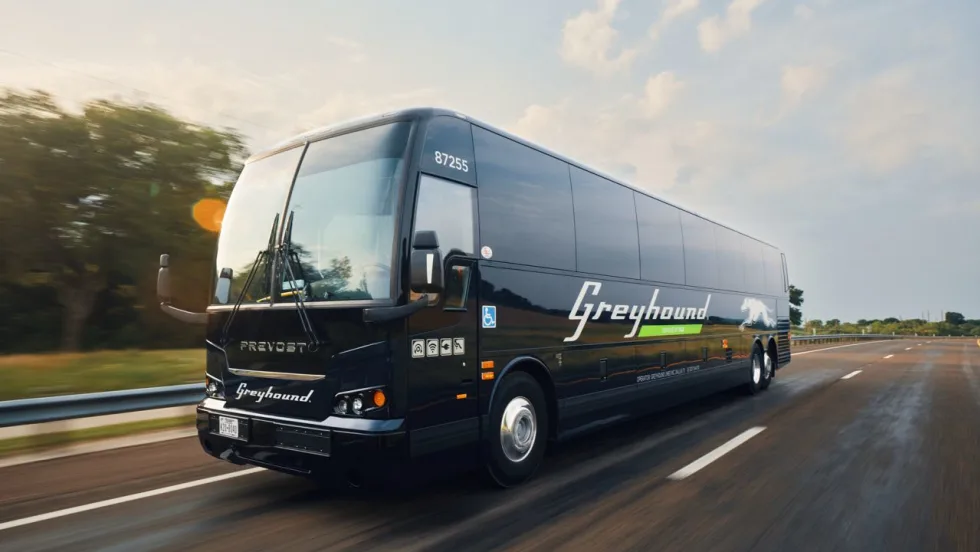
Five Years Later: What’s Changed at Greyhound
Five years after Flix acquired it, Greyhound reflects on fleet modernization, operational improvements, employee empowerment, and a renewed focus on customer experience.
Read More →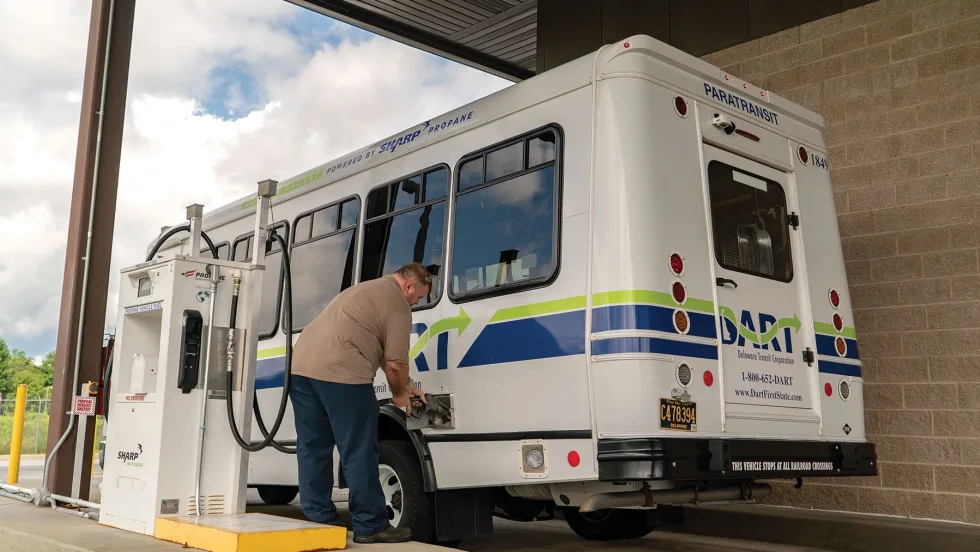
Building a Winning FTA Grant Proposal: Why Propane Autogas is the Pragmatic Choice for Fleet Resilience
With $610 million available through the FY 2026 Buses and Bus Facilities Competitive Program and the Low or No Emission Grant Program, agencies must build a compelling case before the September 21 deadline that balances environmental compliance with operational feasibility.
Read More →
Velo-city Conference 2026: Latest Trends in Cycling as Part of Urban Mobility
The global cycling conference highlighted how cities are integrating bicycles into multimodal transportation networks, expanding cycle tourism and reshaping urban mobility.
Read More →
Kindness Isn’t Soft...It’s Strategic.
Mike Bismeyer — often known as “The Kindness Guy” — has spent more than 17 years in public transit and mobility, serving in industry leadership roles, speaking across North America, and advocating for stronger workplace cultures. But his message doesn’t come from theory. It comes from lived experience.
Read More →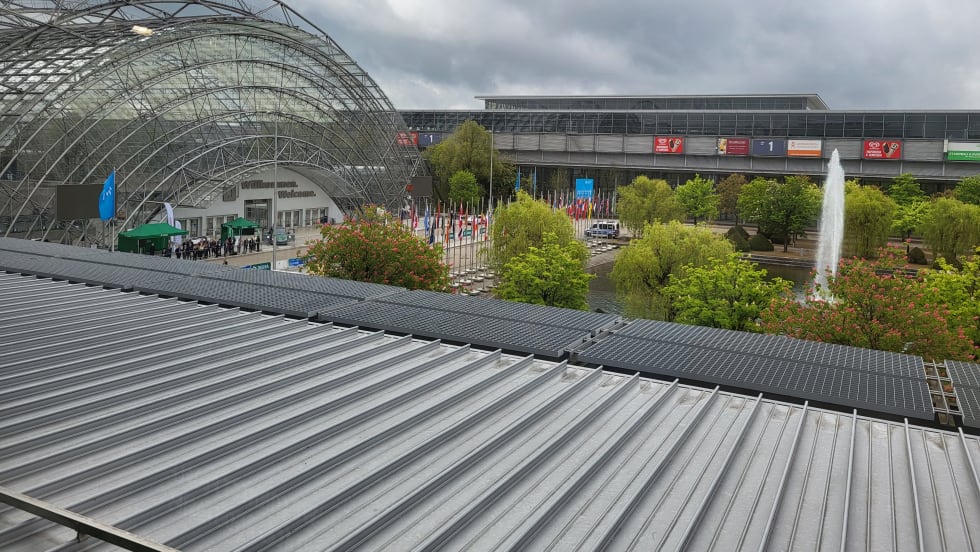
Inside ITF 2026: Transport Reacts to A Challenging World
Transport leaders from around the world gathered in Leipzig, Germany, for the 2026 International Transport Forum to discuss resilience, climate impacts, supply chains and the future of sustainable mobility.
Read More →
Every Ride Tells a Story — But You’re Not Just Selling the Ride
You’re selling the moment, the meaning, and the emotion behind it.
Read More →
How Digital Signage is Reshaping the Traveler Experience at Transportation Hubs
What was once a landscape of static signs has evolved into a responsive, immersive environment powered by real-time visual communication.
Read More →
Latest Trends in Urban Mobility from Polis Conference 2025
Polis comprises cities and regions, as well as corporate partners, from across Europe, promoting the development and implementation of sustainable mobility. This year’s event had over a thousand attendees across various policy forums and an exhibition.
Read More →
Why Transit Leaders Require Better Tools for Operational Clarity In Today’s Tech-Fragmented Environment
Across North America and beyond, transit agency officials are contending with a perfect storm of operational headaches and strategic challenges that hamper daily service and long-term progress.
Read More →
The Powerless Brokers: Why California Can’t Build Transit
It is no secret that transit in the U.S. is slow and expensive to build.
Read More →