



What will the impact of automated vehicle technology be on public transportation?
Although the implementation of automated vehicles on a large scale is probably 20 years or more in the future, it is a subject that will get increased attention in the next few years. So, what does this have to do with public transportation? No one has a crystal ball on this subject, but it is worth considering the possible changes that could impact the use and provision of public transit.

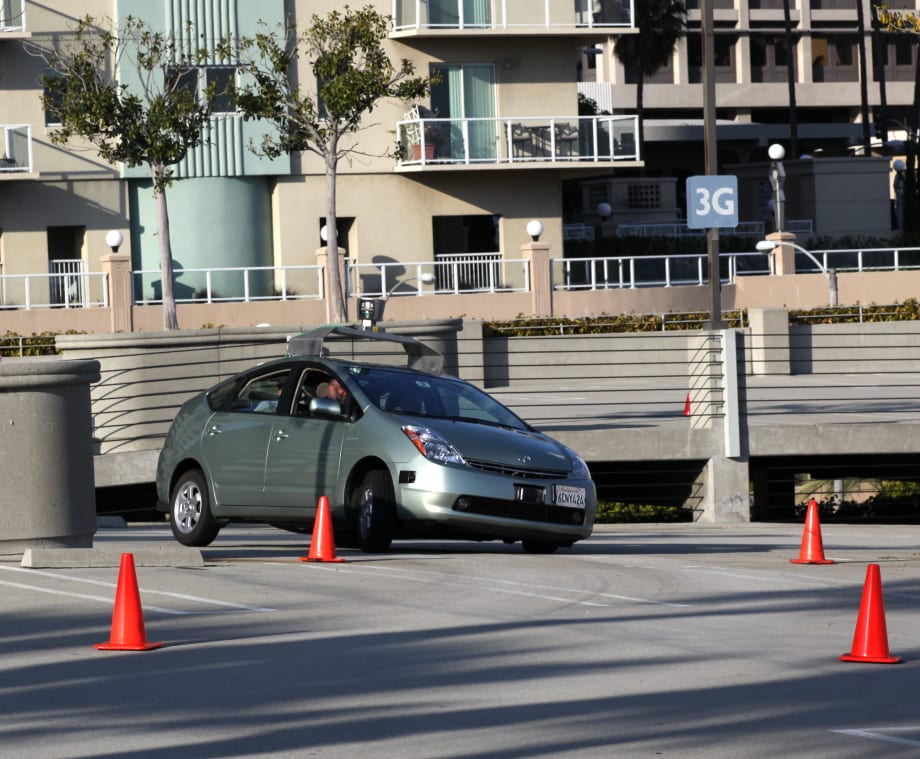
Google driverless car operating on a testing path. Photo by Steve Jurvetson via Wikimedia Commons
Google driverless car operating on a testing path. Photo by Steve Jurvetson via Wikimedia Commons
Although the implementation of automated vehicles on a large scale is probably 20 years or more in the future, it is a subject that will get increased attention in the next few years. Denis Eirikis, director of the Automated Vehicle Institute at the Center for Urban Transportation Research, says we will see more significant change in the field of mobility in the next 20 years than we have in the past 75 years due to enabling technologies.
The automated Google car has already logged hundreds of thousands of accident-free miles and three states (California, Nevada, and Florida) have passed laws allowing their use on public roads. Michigan will soon follow and establish a pilot program in Ann Arbor. Many new cars are already outfitted with cameras and sensors that allow for automated parallel parking and braking. It won’t be long before broader commercialization of these features will accelerate the interest in making vehicle operations more automated.
In the U.S., there are more than 33,000 deaths a year on highways. This is the equivalent of having a fully occupied 737 jet crash and kill all passengers every weekday. If that was actually happening in aviation, we can be sure there would be a full force effort to correct the problem. While considerable progress has been made in reducing highway deaths since the 1960s, we still have a long way to go. Most surface vehicle crashes and fatalities are due to driver error. Automated vehicles provide hope that this great loss of life and even more injuries can be greatly minimized.
So what does this have to do with public transportation? No one has a crystal ball on this subject, but it is worth considering the possible changes occur that could impact the use and provision of public transit. The full use of automated cars and trucks can make travel safer, and thereby, more attractive for some people who get very stressed when driving personal vehicles. Insurance for operating private vehicles would probably be reduced. Travel times may be lessened due to sensors that will allow cars to travel at greater speeds and closer proximity to other vehicles, increasing the capacity of highways (and/or reducing congestion). Private cars could become more like mobile offices in which people can text, talk by cell phone, send emails, or sleep without worrying about the dangers of distracted driving. It would seem that all of these potential developments would work against increasing ridership on public transit. Many transit passengers today use transit because they can engage in electronic communications without worry of causing an accident. Much of this advantage public transit now enjoys in attracting choice riders would be gone with automated cars.
It is possible parents will no longer need to be chauffeurs of their children, and kids might have options other than taking transit or bicycling if their family cars could be programmed to deliver them to their destinations and back after school.
On the plus side for transit, with private vehicles equipped with crash avoidance and automated braking technology, there should be fewer cars causing rear-end accidents with buses picking up or dropping off passengers at bus stops. There might also be less demand for paratransit services if those who need such services could have a car that can be programmed to transport them safely to wherever they want to go. For those uncomfortable with programming their car themselves, there might be other people who could be licensed to program other peoples’ cars and act as remote “drivers.”
Perhaps the biggest, and no doubt the most controversial, question would be how would it affect the position of bus driver? If they didn’t have to drive the vehicle, would their role become more of a customer service person, providing passenger assistance, information and security? Is it possible the position of bus driver will not be necessary?
There are other public transit vehicles, such as people movers and even non-fixed guideway buses at places like Dulles Airport, that transport people without operators present. Needless to say, there are vast differences between operating a vehicle on a fixed guideway or an airport tarmac versus operating in mixed traffic where it isn’t known in advance at which stops passengers will be waiting. There are also passengers with disabilities that might need help and people who simply wouldn’t enter a vehicle without someone visibly in charge. Fare collection could also be an issue that requires someone in charge on the bus at most stops. A bus without an operator could not serve as the eyes and ears that can report unusual activities, nor could it serve as a “Safe Place” for kids in need of help. However, one might ask how much more transit service could be provided in a community if there were no direct expenses associated with bus operators — 20%, 30% or more?
That day of operating a bus in mixed traffic without a driver on board might never come, but it might. If it was possible, what would you do?
In case you missed it...
Read our METRO blog, "Concrete solutions to transit projects' carbon pollution."
More Blog Posts
Building a Winning FTA Grant Proposal: Why Propane Autogas is the Pragmatic Choice for Fleet Resilience
With $610 million available through the FY 2026 Buses and Bus Facilities Competitive Program and the Low or No Emission Grant Program, agencies must build a compelling case before the September 21 deadline that balances environmental compliance with operational feasibility.
Read More →
Velo-city Conference 2026: Latest Trends in Cycling as Part of Urban Mobility
The global cycling conference highlighted how cities are integrating bicycles into multimodal transportation networks, expanding cycle tourism and reshaping urban mobility.
Read More →
Kindness Isn’t Soft...It’s Strategic.
Mike Bismeyer — often known as “The Kindness Guy” — has spent more than 17 years in public transit and mobility, serving in industry leadership roles, speaking across North America, and advocating for stronger workplace cultures. But his message doesn’t come from theory. It comes from lived experience.
Read More →
Inside ITF 2026: Transport Reacts to A Challenging World
Transport leaders from around the world gathered in Leipzig, Germany, for the 2026 International Transport Forum to discuss resilience, climate impacts, supply chains and the future of sustainable mobility.
Read More →
Every Ride Tells a Story — But You’re Not Just Selling the Ride
You’re selling the moment, the meaning, and the emotion behind it.
Read More →
How Digital Signage is Reshaping the Traveler Experience at Transportation Hubs
What was once a landscape of static signs has evolved into a responsive, immersive environment powered by real-time visual communication.
Read More →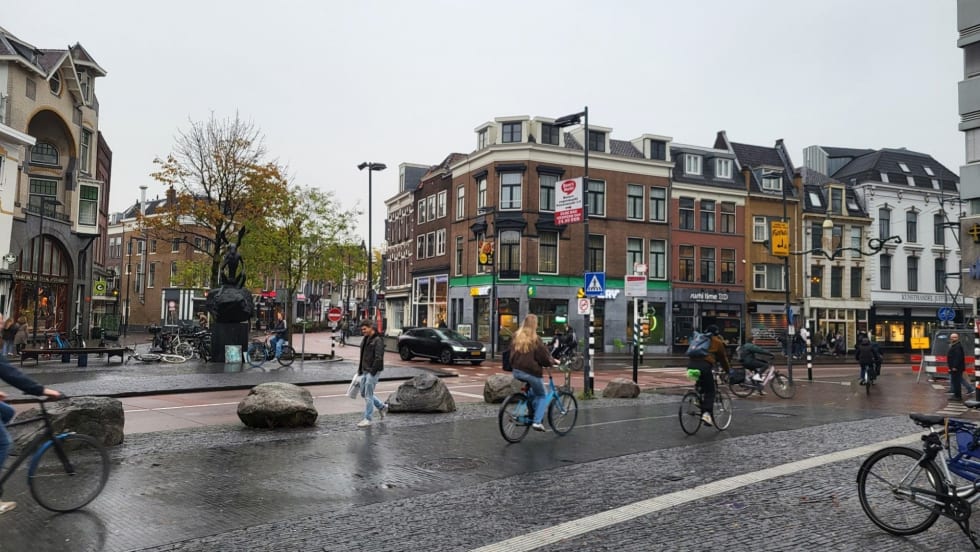
Latest Trends in Urban Mobility from Polis Conference 2025
Polis comprises cities and regions, as well as corporate partners, from across Europe, promoting the development and implementation of sustainable mobility. This year’s event had over a thousand attendees across various policy forums and an exhibition.
Read More →
Why Transit Leaders Require Better Tools for Operational Clarity In Today’s Tech-Fragmented Environment
Across North America and beyond, transit agency officials are contending with a perfect storm of operational headaches and strategic challenges that hamper daily service and long-term progress.
Read More →
The Powerless Brokers: Why California Can’t Build Transit
It is no secret that transit in the U.S. is slow and expensive to build.
Read More →
Why Transport Sustainability Should Focus on People Instead of Cars
Simply incentivizing electrification is not enough to make a meaningful impact; we must shift our focus toward prioritizing public transportation and infrastructure.
Read More →