



Why curb-to-curb service is simply not enough
It has been more than 20 years since the passage of the Americans with Disabilities Act, and many transit agencies continue to struggle with the quality of service, costs and the difficulties encountered in contracting the service. One of the most basic policy decisions an agency must make involves whether to provide door-to-door, or only curb-to-curb service.

In many American cities, ADA complementary paratransit service is still evolving. It has been more than 20 years since the passage of the Americans with Disabilities Act, and many transit agencies continue to struggle with the quality of service, costs and difficulties encountered in contracting the service.
One of the most basic policy decisions an agency must make involves whether to provide door-to-door, or only curb-to-curb service. The more I work in the field, and the more I get to know real people with disabilities, the more I believe that door-to-door service is the way to go. Why? Because in many cases, curb-to-curb is simply not enough.
RELATED: "METRO's 2013 Paratransit Survey."
In retrospect, I think it is fair to say that most transit agencies were dragged kicking and screaming into the provision of demand-responsive paratransit. A majority of agencies chose the option of providing curb-to-curb service. What many of them lacked, however, was an understanding that the key phrase in the ADA regulations was not curb-to-curb or door-to-door, it was origin to destination:
• The basic mode of service for complementary paratransit is demand-responsive, origin to destination service... The local planning process should decide whether, or in what circumstances, this service is to be provided as door-to-door or curb-to-curb service.
— 49 CFR, Part 37.129.
In a recent survey of the websites of 34 agencies, 14 say that they provide door-to-door ADA service, 16 are clearly curb-to-curb and four are unclear. Of the 16 agencies that identified themselves as “curb-to-curb,” only six specifically mention that they will provide additional (i.e. door-to-door) service upon request. Interestingly, two of the largest agencies in the country prohibit going beyond the curb.
There have been a number of clarifications issued by the Federal Transit Administration on the subject of origin to destination service, since at least as early as 2005. Here is one of the most definitive:
• The U.S. Department of Transportation issued an item of “Disability Law Guidance” entitled Origin-to-Destination Service, dated Sept. 1, 2005. The purpose of the guidance, as stated in the introduction, is to answer the question: “What are the obligations of transit providers to ensure that eligible passengers receive ‘origin-to-destination’ service?”
The document discusses the subject at length and concludes:
• Under the ADA rule, it is not appropriate for a paratransit provider to establish an inflexible policy that refuses to provide service to eligible passengers beyond the curb in all circumstances. On an individual, case-by-case basis, paratransit providers are obliged to provide an enhancement to service when it is needed and appropriate to meet the origin-to-destination service requirement. We recognize that making individual, case-by-judgments may require additional effort, but this effort is necessary to ensure that the origin-to-destination requirement is met.
The above also comes with a corresponding requirement that reasonable efforts be made to inform the riding public that such additional service is available.
Given the requirements for “origin-to-destination” service, the choices are to have door-to-door service all the time or some of the time. If the choice is “some of the time,” then the policy is “curb-to-curb, and if you want help from there you have to ask for it.” In addition, such a policy must be communicated to customers, and it must be understood by staff and drivers, as well as customers. It seems complicated and fraught with potential problems.
If you have to provide door-to-door service some of the time, why not just do it all the time? Wouldn’t that be a far better policy decision?
For additional information on this topic, read the related White Paper: "The Benefits of Door-to-Door Service in ADA Complementary Paratransit."
Zavisca is an independent consultant specializing in paratransit. He can be reached at joe@joezavisca.com.
In case you missed it...
Read our METRO blog, "Bus simulation, ensuring its proper place in a training curriculum."
More Blog Posts
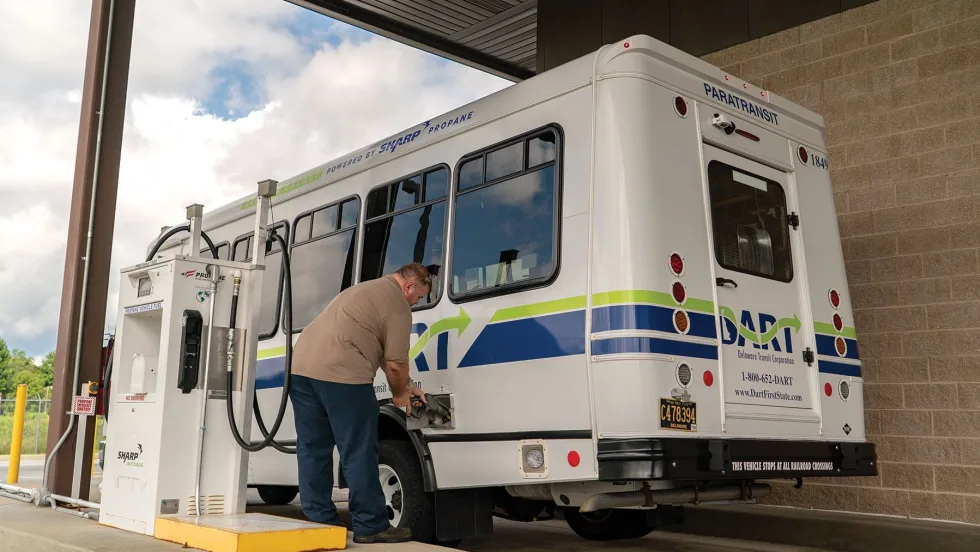
Building a Winning FTA Grant Proposal: Why Propane Autogas is the Pragmatic Choice for Fleet Resilience
With $610 million available through the FY 2026 Buses and Bus Facilities Competitive Program and the Low or No Emission Grant Program, agencies must build a compelling case before the September 21 deadline that balances environmental compliance with operational feasibility.
Read More →
Velo-city Conference 2026: Latest Trends in Cycling as Part of Urban Mobility
The global cycling conference highlighted how cities are integrating bicycles into multimodal transportation networks, expanding cycle tourism and reshaping urban mobility.
Read More →
Kindness Isn’t Soft...It’s Strategic.
Mike Bismeyer — often known as “The Kindness Guy” — has spent more than 17 years in public transit and mobility, serving in industry leadership roles, speaking across North America, and advocating for stronger workplace cultures. But his message doesn’t come from theory. It comes from lived experience.
Read More →
Inside ITF 2026: Transport Reacts to A Challenging World
Transport leaders from around the world gathered in Leipzig, Germany, for the 2026 International Transport Forum to discuss resilience, climate impacts, supply chains and the future of sustainable mobility.
Read More →
Every Ride Tells a Story — But You’re Not Just Selling the Ride
You’re selling the moment, the meaning, and the emotion behind it.
Read More →
How Digital Signage is Reshaping the Traveler Experience at Transportation Hubs
What was once a landscape of static signs has evolved into a responsive, immersive environment powered by real-time visual communication.
Read More →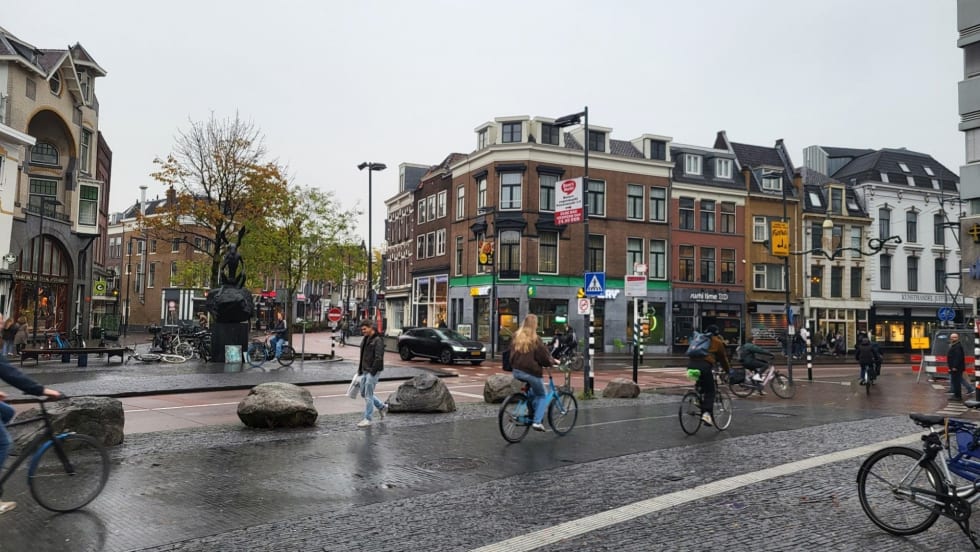
Latest Trends in Urban Mobility from Polis Conference 2025
Polis comprises cities and regions, as well as corporate partners, from across Europe, promoting the development and implementation of sustainable mobility. This year’s event had over a thousand attendees across various policy forums and an exhibition.
Read More →
Why Transit Leaders Require Better Tools for Operational Clarity In Today’s Tech-Fragmented Environment
Across North America and beyond, transit agency officials are contending with a perfect storm of operational headaches and strategic challenges that hamper daily service and long-term progress.
Read More →
The Powerless Brokers: Why California Can’t Build Transit
It is no secret that transit in the U.S. is slow and expensive to build.
Read More →
Why Transport Sustainability Should Focus on People Instead of Cars
Simply incentivizing electrification is not enough to make a meaningful impact; we must shift our focus toward prioritizing public transportation and infrastructure.
Read More →