



Why is no one offering same-day ADA paratransit service?
From a customer service standpoint, the convenience and immediacy of same-day paratransit service would be a huge improvement. And from an operating standpoint, it offers the opportunity to increase productivity by filling holes in schedules left by cancellations and no-shows.

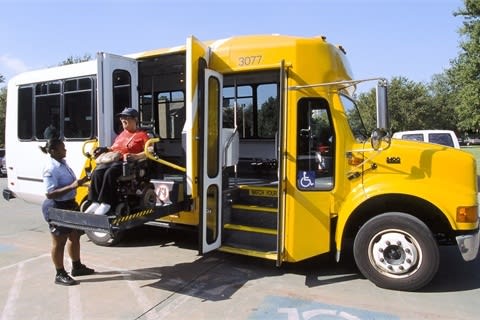
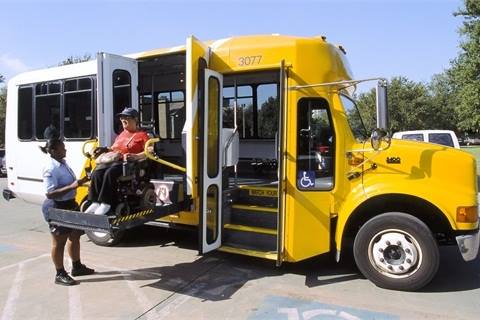
In a recent review of the websites of transit authorities in major cities, I was struck by the fact that seemingly everyone still requires day-before reservations for their ADA complementary paratransit service. Why is that?
Certainly, the technology and dispatching capabilities are available for transit agencies to provide same-day, virtually immediate service. Taxi providers are built on the concept of immediate service, and their livelihoods are built on the principle of immediate response.
From a customer service standpoint, the convenience and immediacy of same-day service would be a huge improvement. And from an operating standpoint, it offers the opportunity to increase productivity by filling holes in schedules left by cancellations and no-shows.
So why aren’t ADA and other paratransit providers offering the same degree and quality of service to their customers that taxi companies do? There are, of course, two obvious, knee-jerk answers, neither of which is satisfactory, or even acceptable. The first is that it would increase costs, and the second is that “we’ve never done it before.”
RELATED:Why curb-to-curb service is simply not enough
As to why it has never been done before, there may once have been operational reasons why it was impractical, but no longer. Other than the need to overcome inertia, there is another hurdle, which is the psychological history of ADA transportation. That psychology has always been one of restricting demand whenever possible, rather than encouraging demand.
The rationale (or rationalization) for that psychology has always been cost. Would same-day service increase the overall costs of paratransit service in a given location? Probably. But would it have a significant impact on a transit authority’s overall costs? Probably not. In nearly all agencies, ADA paratransit represents a single-digit percentage of overall costs. And while the cost per trip is higher than on other modes, even a modest increase in this small segment of expenses will not have a large negative effect on the total costs of an agency.
RELATED:Partnerships, Subsidies Help Curb Paratransit Costs
Additionally, there is the matter of what was called in the original ADA regulations “capacity constraints.” This term was used to prohibit “any operational pattern or practice that significantly limits the availability of service [to] ADA paratransit eligible persons.” (49 CFR 37, Appendix D, Part 131, page 484) Originally, capacity constraints targeted practices like the creation of waiting lists or limiting the number of trips an individual could take in one day. But isn’t requiring advance reservations just another way to restrict access to the service?
While the ADA regulations on capacity constraints specifically address ADA complementary paratransit, there is no reason same-day service couldn’t also be implemented in other forms of paratransit. For example, the PennDOT Senior Shared-Ride and Persons with Disabilities Programs come to mind. When the Senior Shared-Ride program was implemented in the 1980’s, same-day service was legislatively prohibited on the logic that it would unfairly compete with private taxi companies. But since taxi companies often participate in public paratransit programs, and since few paratransit customers can afford regular taxi rates, it would seem that this kind of prohibition hurts both private businesses and customers.
“Disruptive innovation” is a term coined by the Harvard professor, Clayton M. Christensen. It has been overused in business circles, but could certainly be applied more frequently as a concept in public transportation. We certainly need more innovation, in paratransit more than in any other mode. And while it might be disruptive for agency managers, such innovations as same-day service will mightily benefit paratransit customers.
Two more questions also come to mind when thinking about this issue:
• Are we serious about customer service, or not?
• As my friend, Bob Schmitt, likes to say, “Are we in the business of providing people service, or denying people service?”
If the answers to those two questions are “Yes,” and “Providing people service,” then same-day paratransit should have happened a long time ago. At the very least, it should happen now.
In case you missed it...
Read our previous blog, "Testing whether Night Owl rail services can fly’"
More Blog Posts
Building a Winning FTA Grant Proposal: Why Propane Autogas is the Pragmatic Choice for Fleet Resilience
With $610 million available through the FY 2026 Buses and Bus Facilities Competitive Program and the Low or No Emission Grant Program, agencies must build a compelling case before the September 21 deadline that balances environmental compliance with operational feasibility.
Read More →
Velo-city Conference 2026: Latest Trends in Cycling as Part of Urban Mobility
The global cycling conference highlighted how cities are integrating bicycles into multimodal transportation networks, expanding cycle tourism and reshaping urban mobility.
Read More →
Kindness Isn’t Soft...It’s Strategic.
Mike Bismeyer — often known as “The Kindness Guy” — has spent more than 17 years in public transit and mobility, serving in industry leadership roles, speaking across North America, and advocating for stronger workplace cultures. But his message doesn’t come from theory. It comes from lived experience.
Read More →
Inside ITF 2026: Transport Reacts to A Challenging World
Transport leaders from around the world gathered in Leipzig, Germany, for the 2026 International Transport Forum to discuss resilience, climate impacts, supply chains and the future of sustainable mobility.
Read More →
Every Ride Tells a Story — But You’re Not Just Selling the Ride
You’re selling the moment, the meaning, and the emotion behind it.
Read More →
How Digital Signage is Reshaping the Traveler Experience at Transportation Hubs
What was once a landscape of static signs has evolved into a responsive, immersive environment powered by real-time visual communication.
Read More →
Latest Trends in Urban Mobility from Polis Conference 2025
Polis comprises cities and regions, as well as corporate partners, from across Europe, promoting the development and implementation of sustainable mobility. This year’s event had over a thousand attendees across various policy forums and an exhibition.
Read More →
Why Transit Leaders Require Better Tools for Operational Clarity In Today’s Tech-Fragmented Environment
Across North America and beyond, transit agency officials are contending with a perfect storm of operational headaches and strategic challenges that hamper daily service and long-term progress.
Read More →
The Powerless Brokers: Why California Can’t Build Transit
It is no secret that transit in the U.S. is slow and expensive to build.
Read More →
Why Transport Sustainability Should Focus on People Instead of Cars
Simply incentivizing electrification is not enough to make a meaningful impact; we must shift our focus toward prioritizing public transportation and infrastructure.
Read More →