




In addition to the benefit of a cleaner neighborhood and a reduced environmental impact, helping to keep railroad tracks clear of litter and debris helps to reduce the risk of fires, environmental contamination through run-off and damage to trains.
Keolis commemorates Earth Month through neighborhood cleanups
Activities will advance previous work to clean and beautify the commuter rail network.
April 9, 2019
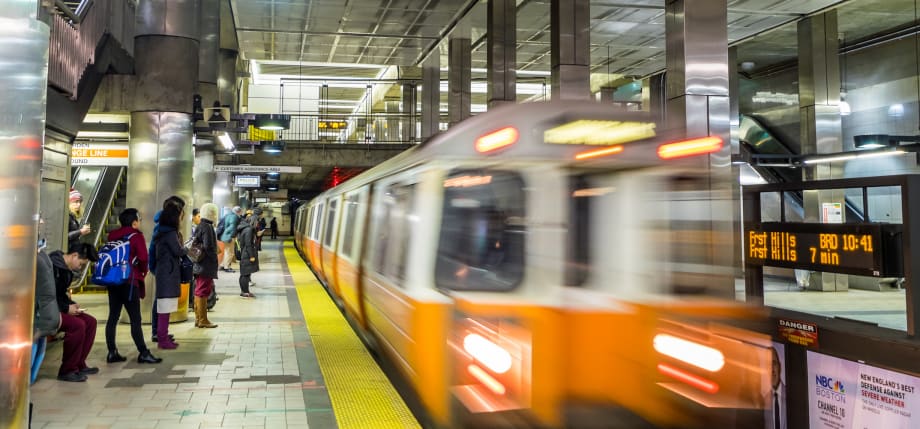
To commemorate Earth Month, employees and volunteers from Keolis Commuter Services will help beautify, improve and clean up neighborhoods around MBTA's commuter rail stations.
MBTA
2 min to read
To commemorate Earth Month, employees and volunteers from Keolis Commuter Services will help beautify, improve and clean up neighborhoods around MBTA's commuter rail stations.
MBTA
To commemorate Earth Month, employees and volunteers from Keolis Commuter Services (Keolis) will dedicate time and resources during April to help beautify, improve and clean up neighborhoods around Massachusetts Bay Transportation Authority's commuter rail stations.
Earth Month is a global commemoration promoting environmental awareness and advancement, and throughout the month, Keolis volunteers will organize and participate in clean ups and other activities in Boston, Brockton, Framingham and Lynn.
During April, Keolis teams will be picking up litter along the right of way and beautifying landscape areas at and around Boston’s Four Corners/Geneva Station, Brockton’s Campello Station and Lynn Station. At Four Corners/Geneva Station. Keolis teams will also host a free gardening workshop for residents who live in the surrounding neighborhood. In addition to the benefit of a cleaner neighborhood and a reduced environmental impact, helping to keep railroad tracks clear of litter and debris helps to reduce the risk of fires, environmental contamination through run-off and damage to trains.
“While our Keolis teams work diligently to implement and maintain sustainable processes every day, Earth Month allows us the opportunity to recognize these achievements and share them with the general community,” said David Scorey, Keolis General Manager and CEO.
In addition to these cleanup and community activities, on Saturday, April 27, employee volunteers will participate in the Framingham Earth Month festival with giveaways and to demonstrate the environmental benefits of public transportation as a climate-friendly choice when compared to driving a single occupancy vehicle. According to APTA, the average motorist contributes 10,000 pounds of carbon emissions per year.
Since assuming operations of commuter rail in July 2014, Keolis teams have volunteered thousands of hours focused on community cleanup and related activities.
Keolis
Keolis employees will benefit from a tour of the Casella Waste Systems recycling plant in Charlestown as part of a training program to implement more effective recycling practices. Additional training opportunities will be provided to employees that focus on environmental policies, safe work practices and the benefits of transit systems to public health.
Since assuming operations of commuter rail in July 2014, Keolis teams have volunteered thousands of hours focused on community cleanup and related activities and have removed several tons of trash from the right of way and other areas around commuter rail stations, some of which is above and beyond contractual obligations.
More Management

METRO Opens Submissions for 2026 Motorcoach Awards
Nominations are now being accepted for METRO Magazine’s Operator of the Year and Innovative Operator of the Year awards.
Read More →
New York MTA Advances Final Contract for Second Avenue Subway Expansion
Contract Four is the largest in the Second Avenue Subway Phase 2 project and includes construction of station infrastructure, tracks, and signals for the subway expansion, MTA officials said. Work on Contract Four will begin in 2027.
Read More →
Transit Agencies Highlight Safety Gains at National Summit
Leaders from 15 major transit systems shared crime-reduction results and safety initiatives while discussing the role of continued federal support.
Read More →

NITA Names New Leadership, Expands Reduced-Fare Program at First Board Meeting
The new regional transit authority appointed its first board chair and interim executive director while extending reduced fares across CTA, Metra, and Pace for eligible riders.
Read More →
Beyond the Checklist: A Structured Approach to Transit Maintenance
Reliability-Centered Maintenance helps transit agencies move beyond routine checklists to focus limited resources on the assets and failures that have the greatest impact on safety, reliability, and service.
Read More →
APTA 2026 Nominating Committee Selects Leadership Slate, Names Chair and Vice Chair Nominees
Leadership changes will help shape the association’s priorities and its representation of the transportation industry during the 2026–2027 term.
Read More →
DART Launches Major Security, Fare Enforcement Initiative
The 90-day demonstration will deploy coordinated security teams at five light rail stations while testing controlled access and gathering data to guide future investments.
Read More →
Sponsored•September 9, 2026
Advancing Fare Collection Through Technology and Innovation
Learn about delivering 1300 gates at 91 stations while managing fare evasion. Explore the large scale deployment, solution customization and real-world results that affect the region. Prepare for deployment in your region now.
Read More →
Game Day in Motion: Moving Millions During the 2026 World Cup
Between packed transit stations and team motorcoaches, see how agencies and operators across North America tackled the transportation demands of the 2026 FIFA World Cup.
Read More →
Surface Transportation Extension Averts Shutdown, Leaves Transit Funding Gap
The stopgap keeps federal transportation programs moving, but missing advance funding could complicate the transit and rail projects agencies are planning next.
Read More →