



How are agencies innovating to generate revenue, saving money?
Top execs from agencies around the country, including Las Vegas and Dayton, Ohio, answer our Question of the Day.

Forbes
What are you doing, or planning to do, at your agency that is innovative to generate revenue or save money?
Quigley
Tina Quigley
GM
Regional Transportation Commission of Southern Nevada
Las Vegas
The RTC is always looking at innovative ways to successfully generate revenue and save money. For example, we have generated nearly $130 million through grant funding, tax rebates, and fuel savings as we convert our fleet from diesel to compressed natural gas. We also generate millions in revenue through a competitive bus advertising program and saved 52 percent in paratransit operating costs through partnerships with Lyft and Tango.
Kelsey
Doug Kelsey
GM
TriMet
Portland, Oregon
One of our larger, long-term projects, which will simultaneously create new revenue, save money, and boost ridership, is expanding our Transit Oriented Development (TOD) goals. While TOD is not a new concept, we are looking to leverage our air-rights and adjacent real estate in aggressive new ways. We want to create accessible communities and encourage creative and sustainable development. We believe this will ultimately result in transit centers becoming community hubs, directly woven into our social fabric.
Forbes
Clinton B. Forbes
Executive Director
Palm Tran
West Palm Beach, Florida
Palm Tran recently identified $5 million in savings by eliminating unproductive segments and routes that was reinvested into a new bus network system. Prior to September 2018, Palm Tran’s bus network had not been updated in 22 years. Many inefficiencies existed in the system, such as routes going into apartment complexes with very few passengers boarding at the stops. This was the motivation for the Route Performance Maximization project, or RPM, which created more direct routes. The 62,000 hours, or $5 million, saved was utilized to extend hours on several routes and increase the frequency of buses. On-time performance went from 72 percent to 79 percent.
Benning
Ed Benning
GM/CEO
Flint Mass Transportation Authority
Flint, Michigan
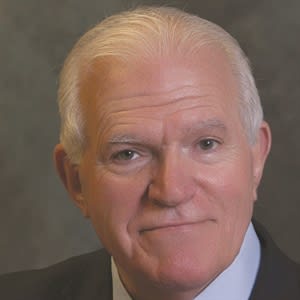
The MTA has developed an innovative service model that is transforming public transportation in our community today. This model includes a variety of new on-demand special services that better address rides to medical appointments, groceries, and work-related expansion — all possible through extensive partnerships with local agencies and businesses. The MTA is building a sustainable future through the use of alternative fuels, partnerships, new technology, and an aggressive approach to providing the on-demand services needed today.
S. Donaghy
Shawn M. Donaghy
CEO
C-TRAN
Vancouver, Washington
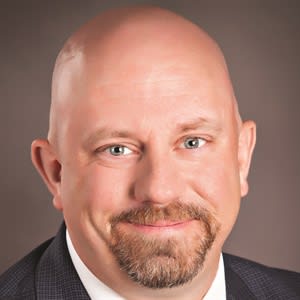
In recent years, C-TRAN has raised tens of thousands of dollars in sponsorship money to provide special services and expand our advertising reach without using agency funds. Sponsor contributions from local partners covered the entire cost of shuttles to special events and, most recently, system-wide free service and extended hours on New Year’s Eve in 2018 — a public health initiative we believe can save lives by reducing drunk driving. C-TRAN raised $15,000 from sponsors in 2018 and has secured $30,000 so far in 2019.
M. Donaghy
Mark Donaghy
CEO
Greater Dayton RTA
Dayton, Ohio
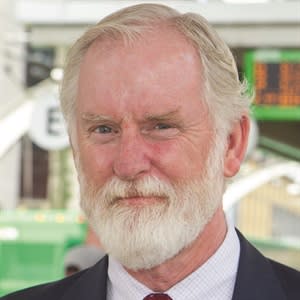
Transit systems can’t ‘bake sale’ their way to fiscal nirvana. That said, we should be constantly looking for additional resources. In Dayton, our list includes acting as the Greyhound Agent for our region, leasing space at our transit centers, courting sponsors for targeted services, and our experiment with TNCs in underserved areas to redirect the unproductive fixed-route service hours to a better purpose like our new Flyer circulator. A huge success.
Makinen
Robbie Makinen
CEO
Kansas City Area Transportation Authority
Kansas City
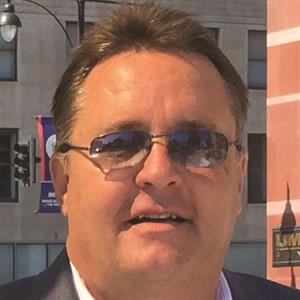
KCATA is getting the fares off the bus by diversifying our funding streams to include non-traditional partnership subsidies. More than 85 percent of operator assaults are related to collecting $1.50 fare. The related claims, lost time, legal expenses, fare collection costs, and impacts on schedule adherence cancel out that $1.50 and more. I am convinced that the advantages of getting the fares off the bus far outweigh the tiny revenue generated by $1.50 fare and result in a safer, more efficient, and cost-effective service.

Mazza
Erika Mazza
CEO/GM
Mountain Line
Flagstaff, Arizona
Mountain Line is funding an on-demand pilot program to address areas that are marginally served or not served at all. We’ve seen a 30 percent increase in paratransit costs, but it’s coupled with a reduction in demand as many clients have moved to our taxi program or onto fixed route. We are looking at ways to utilize the space in the paratransit vehicles and provide a new level of service to underserved areas.
More Management

LIT Marks 10-Year Milestone at Annual Summit
Hosted by the COTA from September 10 to 13, the Summit carried the theme “Celebrating 10 Years of Excellence, Leadership, and Impact,” with every part of the program honoring the people, agencies, and partners who built LIT over its first decade.
Read More →
People Movement: Dan Dipert Coaches Adds Third-Generation Leader, Keolis Names New Valley Metro VP/GM, and More
In this edition, we also cover recent appointments and announcements at the Wabtec, SilverRide, HNTB, and more, showcasing the individuals helping to shape the future of transportation.
Read More →
METRO Opens Submissions for 2026 Motorcoach Awards
Nominations are now being accepted for METRO Magazine’s Operator of the Year and Innovative Operator of the Year awards.
Read More →

New York MTA Advances Final Contract for Second Avenue Subway Expansion
Contract Four is the largest in the Second Avenue Subway Phase 2 project and includes construction of station infrastructure, tracks, and signals for the subway expansion, MTA officials said. Work on Contract Four will begin in 2027.
Read More →
Transit Agencies Highlight Safety Gains at National Summit
Leaders from 15 major transit systems shared crime-reduction results and safety initiatives while discussing the role of continued federal support.
Read More →
NITA Names New Leadership, Expands Reduced-Fare Program at First Board Meeting
The new regional transit authority appointed its first board chair and interim executive director while extending reduced fares across CTA, Metra, and Pace for eligible riders.
Read More →
Beyond the Checklist: A Structured Approach to Transit Maintenance
Reliability-Centered Maintenance helps transit agencies move beyond routine checklists to focus limited resources on the assets and failures that have the greatest impact on safety, reliability, and service.
Read More →
APTA 2026 Nominating Committee Selects Leadership Slate, Names Chair and Vice Chair Nominees
Leadership changes will help shape the association’s priorities and its representation of the transportation industry during the 2026–2027 term.
Read More →
DART Launches Major Security, Fare Enforcement Initiative
The 90-day demonstration will deploy coordinated security teams at five light rail stations while testing controlled access and gathering data to guide future investments.
Read More →
Advancing Fare Collection Through Technology and Innovation
Learn about delivering 1300 gates at 91 stations while managing fare evasion. Explore the large scale deployment, solution customization and real-world results that affect the region. Prepare for deployment in your region now.
Read More →