



4ONE wins multiple bus seating orders
Agencies ordering the company's products, which are now in at least half of all new U.S. and Canadian transit buses, include L.A. Metro, Chicago Transit Authority and New York City Transit.

4ONE, North American designer and manufacturer of seating solutions for transportation vehicles, announced that big city transit authorities awarded sizable contracts for hundreds of its passenger and bus-operator seats in the U.S., including Los Angeles, New York City and Chicago, as well as in British Columbia and Winnipeg, Canada.
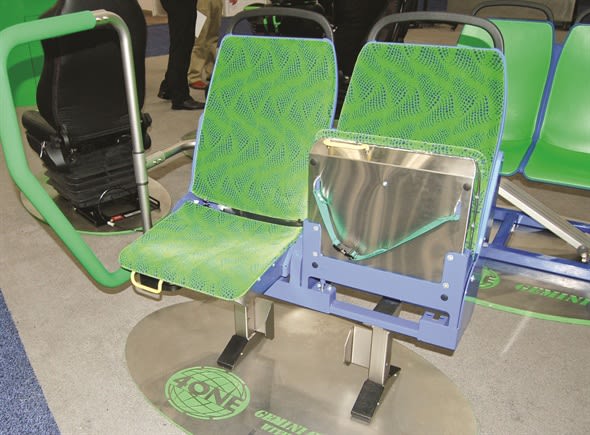
4ONE will supply the Los Angeles County Metropolitan Transportation Authority with Aries passenger seats for 350 New Flyer Xcelsior heavy-duty buses, in addition to an original order for 550 already in production for a total of 900 buses. The company will also supply New York City Transit with Angel passenger seats for 120 New Flyer Xcelsior heavy-duty buses, while the Chicago Transit Authority will continue receiving 4One’s ultra-light Gemini passenger seats for its new Nova buses.
“These orders are a reflection of 4ONE’s steady growth, resulting from its dedication to superior design and development of next-generation seating technologies and a firm commitment to comfort, safety and durability,” said Ray Melleady, managing director, North America, for USSC Group.
4ONE’s passenger seats are designed and made by 4ONE, a joint venture with Freedman Seating in Chicago.
“4ONE products are now in at least half of all new U.S. and Canadian transit buses. We are proud of achieving this milestone,” said Dan Cohen, executive VP, Freedman Seating.
With more than 12,000 bus sets installed in North America alone, the stainless steel, White-book and ADA-compliant flip-up and fixed Aries passenger seats withstand the daily rigors of use throughout the bus lifecycle. A proprietary ergonomically designed contour provides more hip-to-knee room, added leg room and ease of entering and exiting. It also contains identical quick change and tough-to-cut vandal inserts and a sturdy back shell meets Head Impact Criteria.
The ADA-compliant Q’POD by 4One, with more than 7,000 systems in use, features a stabilizing bumper, scooter ring and integrated shoulder strap. The one-of-a-kind seating solution ensures the rider’s highest independence level and combines superior comfort with maximum safety.
More Bus

New York MTA Plans Largest Bus Fleet Upgrade in More Than a Decade
The agency is seeking manufacturers for 650 new CNG buses to replace aging vehicles, improve reliability, and advance its broader fleet modernization strategy.
Read More →
Building a Flexible Path to Transit Electrification
John Hroncich discusses BAE Systems’ modular and scalable approach, lessons learned from decades of real-world operations, and how agencies can identify electrification strategies that fit their fleets.
Read More →
Bus Tech Talk: Keeping Transit Technicians Ahead of the Technology Curve
LA Metro’s Obed Mejia discusses technician training, evolving maintenance technology, fleet replacement, and strategies for getting the most out of today’s transit fleets.
Read More →
Biz Briefs: RIPTA Unveils New Frontrunners, Clevland RTA Adds New Siemens, and More
In METRO's latest installment, we take a look at recent news from Siemens, Prevost, Dodge, and more partnerships making headlines across the transportation sector.
Read More →
People Movement: Holly Arnold Joins Transdev and More
In this edition, we also cover recent appointments and announcements at Pace, CamTran, MCI, and more, showcasing the individuals helping to shape the future of transportation.
Read More →
The High Cost of Transit Buses: Industry Leaders Look to Procurement Reform
Transit leaders and policymakers examine how standardized bus designs, streamlined procurement, and predictable funding could help agencies stretch budgets and deliver better service.
Read More →
The Business Voice Behind Public Transportation
As chair of APTA’s Business Members Board of Governors, Ray Melleady explains how more than 850 business members are partnering with transit agencies to advance funding, innovation, and industry-wide collaboration.
Read More →
From Surviving to Thriving: Building Stronger Transportation Organizations
Bus Business Consultants founder Brian Dickson shares lessons on leadership, organizational health, and creating options for long-term success in a changing transportation industry.
Read More →
Finding the ‘Happy Medium’: Optimizing Maintenance Without Sacrificing Reliability
The key to maintenance optimization isn’t doing less work—it’s doing the right work at the right time on the right assets.
Read More →
LA Metro, City of West Hollywood, and Partners Advance Smarter Bus Lane Enforcement
The award-winning partnership combines AI-powered detection with human oversight to improve bus reliability, accessibility, and enforcement efficiency.
Read More →