



6 ways next-gen bus scheduling impacts business
Scheduling/planning tech, which most people think of as slow and complex software, is strategic to the future of public transportation.
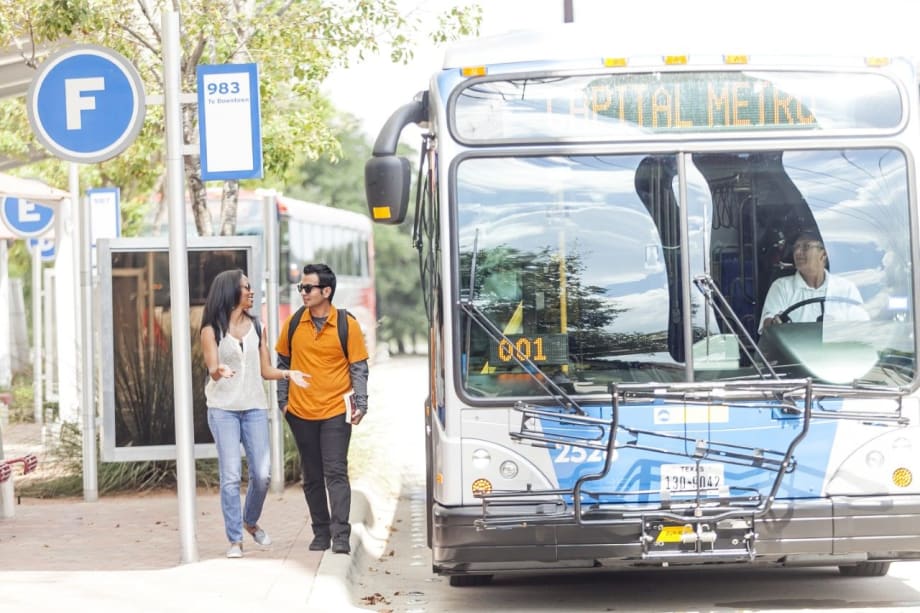
Better route and timetable planning can address one of the core requirements passengers have — which is avoiding transfers to get to their destinations as much as possible.
Capital Metro
Better route and timetable planning can address one of the core requirements passengers have — which is avoiding transfers to get to their destinations as much as possible.
Capital Metro
New forms of mobility are changing the public transportation landscape; in turn, those new modes of mobility are enabled by technology innovation. In other words, technology is what caused today’s unprecedented mobility revolution. Ride-sharing, ride-hailing, and other forms of mobility are driven by vehicle location technologies and the superior processing power of cloud-native applications.
If these technologies have revolutionized how we think about the traditional business of taxis and van-based transportation, bikes, and scooters, what is the technology that will transform bus transportation? Our answer is that next-generation, cloud-native planning and scheduling technology — using Artificial Intelligence — will bring a similar transformation to public transportation.
Scheduling and planning technology, which most people think of as slow and complex software, is strategic to the future of public transportation. As planning and scheduling software modernizes, becomes quick and cloud-native, it holds the key to rejuvenating public transportation and bringing it to the world of mobility. Here are six ways in which next generation scheduling changes the business of mass transportation:
1. Properly addressing underlying cost issues
Good optimization saves money; it isn’t done for its own sake. Saving money means a better chance at dealing with budget issues, or freeing funds to improve service through more frequent trips on certain core lines and more.
When optimizations run slowly, often there isn’t time to run multiple scenarios — and therefore the best one can’t be selected. Quick optimization therefore doesn’t just make work easier — it also increases the likelihood of finding the best solution.
Legacy scheduling and planning systems make it difficult to fully express rules and preferences related to the transportation network. This means once the initial optimization is over, additional manual work is required, rendering some of the optimization inefficient, therefore, creating a less than optimal schedule or roster.
Two classic examples of manual work added after the optimization is done are rosters and relief vehicles. In many cases, rosters are optimized manually, losing the opportunity to save money by applying optimization and not reducing enough overtime. Similarly, when relief vehicles are used, a different manual schedule is created for them, ignoring the savings inherent in good relief operations. When relief scheduling is optimized too, as part of the general rules and preferences, these costs can be saved, delivering a better return on the relief fleet operation.
2. Improving ridership
No one will argue increasing ridership is simple. It’s tricky, but it can be done with the proper technology infrastructure. Passenger surveys typically indicate they prefer more frequent trips (e.g. every 10 minutes instead of every 20 minutes), better on time performance, and shorter trips with no transfers. These needs can be addressed through better scheduling. As mentioned above, budget savings can be translated into more trips.
Other impacts is using scheduling to create better on-time performance. For instance, some modern platforms use artificial intelligence to predict the likelihood of on-time performance for each and every trip, producing automated scheduling suggestions to improve it while keeping costs in check. From now on, scheduling doesn’t just optimize resources, but it also optimizes on-time performance.
3. Routes
Better route and timetable planning can address one of the core requirements passengers have — which is avoiding transfers to get to their destinations as much as possible, and having efficient routes that take the shortest possible path.
Better route planning capabilities can allow planners to simply and easily consider what if scenarios, generate travel times based on real data, validate routes and timetables against rules, and add additional data layers, such as origin-destination matrices, to make better route planning decisions.
Scheduling and planning technology, which most people think of as slow and complex software, is strategic to the future of public transportation.
Optibus
4. Addressing underlying business issues
In our experience, public transportation executives are often most worried about driver shortages, more than cost savings or on-time performance.
Scheduling can be a strategic tool to deal with driver shortages.
In the shorter term, good quality scheduling can help create schedules with a constrained number of drivers as one of their determining factors, finding the optimal way of operating the service given the limited driver count.
In the long run, scheduling can be used to develop quality duties — fewer split shifts, better beginning and end times and locations — and quality rosters, giving drivers a better work life balance.
Scheduling can also be used strategically in union negotiations, allowing quick expression and implementation of labor rules, such as break times. This can allow unions and operators to quickly agree on win-win scenarios and agree on the basic facts relating to driver schedules, creating consensus and understanding implications.
5. Powering innovation
Modern scheduling platforms can support innovation. For instance, as electric vehicles enter mainstream bus fleets, new rules, and preferences need to be dealt with at the scheduling level. Many electric vehicles have non-linear battery charging and battery usage profiles, supporting different ranges and charging times, charging station capacities, and minimum battery thresholds. These need to be properly accounted for in any scheduling plan, to maximize electric miles and minimize diesel miles, as well as help understand how to manage all-electric fleets or mixed electric and diesel fleets.
6. The power of the cloud and artificial intelligence
Do next generation planning and scheduling platforms need to be based on the cloud? The answer is yes. Let’s assume you launch a Mobility-as-a-Service (MaaS) platform (covering bus, shared scooters, and ride-hailing). To do so, you would need “the cloud”: passengers would use apps to indicate demand and reserve scooters, rides, etc. Scooter, bus, and ride operators would need input from the app to better plan their resources, locate their assets, and schedule their operations. MaaS can’t work on premises, disconnected from the world of supply and demand, in real time.
But there is another reason modern scheduling platforms are cloud native, built for cloud — cloud native apps are typically faster and more powerful, and scheduling is a complex enough problem that requires these capabilities.
Mass transit providers will need to upgrade their core technology infrastructure to cloud-native applications, so that they can modernize and remain competitive and, most importantly, so that they can take part in the future of MaaS.
Amos Haggiag is the CEO and co-founder of Optibus.
More Technology

From Hardware to Digital Partner: Luminator Charts Its Next Chapter
CEO Magnus Friberg discusses Luminator’s shift toward becoming a digital partner, the growing importance of software and interoperability, and how AI can help agencies improve operations and passenger experience.
Read More →
Beyond the Checklist: A Structured Approach to Transit Maintenance
Reliability-Centered Maintenance helps transit agencies move beyond routine checklists to focus limited resources on the assets and failures that have the greatest impact on safety, reliability, and service.
Read More →
NJ TRANSIT Advances Bus Technology Upgrades Across Statewide Fleet
More than 1,500 buses now feature upgraded technology designed to improve arrival predictions and provide free Wi-Fi, with deployment expected to reach nearly 2,000 buses by the end of 2026.
Read More →

Building a Flexible Path to Transit Electrification
John Hroncich discusses BAE Systems’ modular and scalable approach, lessons learned from decades of real-world operations, and how agencies can identify electrification strategies that fit their fleets.
Read More →
Biz Briefs: Alstom Lands Canadian Contract, LYT to Supply California TSP, and More
In METRO's latest installment, we take a look at recent news from Complete Coach Works, Beep, FlixBus, and more partnerships making headlines across the transportation sector.
Read More →
From Legacy Silos to Conversational Intelligence
What if transit leaders could ask any operational question and get a trusted answer in seconds? Conversational AI is transforming how agencies use their data.
Read More →
USDOT Announces Rail Vehicle Replacement Grants, Chattanooga AV Shuttle Funding
More than $191 million in federal funding will help three transit agencies replace aging rail vehicles and support a new autonomous shuttle service in Chattanooga.
Read More →
Bus Tech Talk: Keeping Transit Technicians Ahead of the Technology Curve
LA Metro’s Obed Mejia discusses technician training, evolving maintenance technology, fleet replacement, and strategies for getting the most out of today’s transit fleets.
Read More →
Biz Briefs: RIPTA Unveils New Frontrunners, Clevland RTA Adds New Siemens, and More
In METRO's latest installment, we take a look at recent news from Siemens, Prevost, Dodge, and more partnerships making headlines across the transportation sector.
Read More →
Why Simulating Pedestrian Movement Has Become Essential for Modern Rail Stations
Pedestrian microsimulation is helping rail planners identify bottlenecks, test station designs, and prepare complex transit hubs for growing passenger volumes.
Read More →