



Biz Briefs: Stadler, Clean Energy, and More
Biz Briefs covers the latest supplier news in the motorcoach and public transit industries.

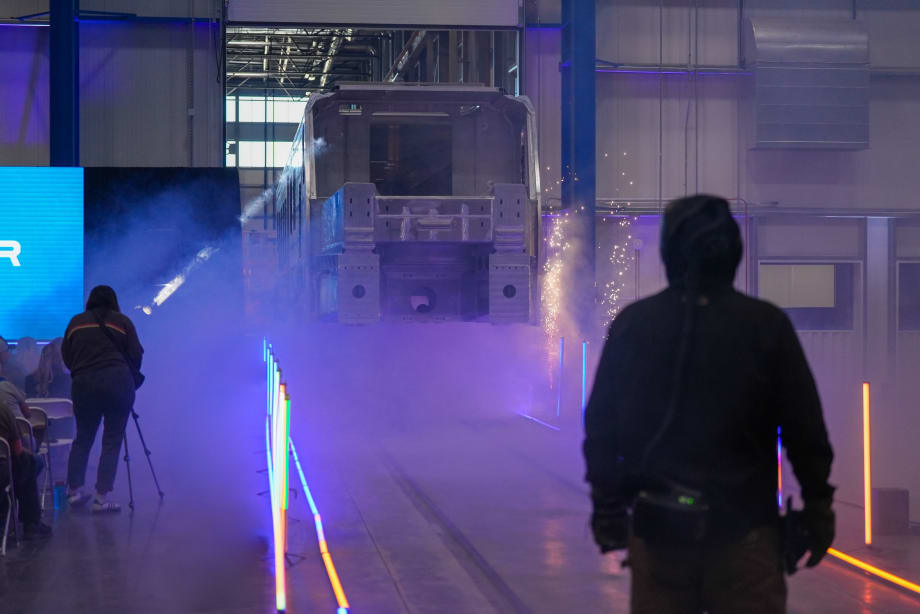
For the first time, aluminum car bodies are now being welded on-site rather than shipped from Stadler welding facilities in Europe — slashing transit time as well as increasing the local manufacturing footprint and domestic content of Stadler’s trains.
Photo: Stadler
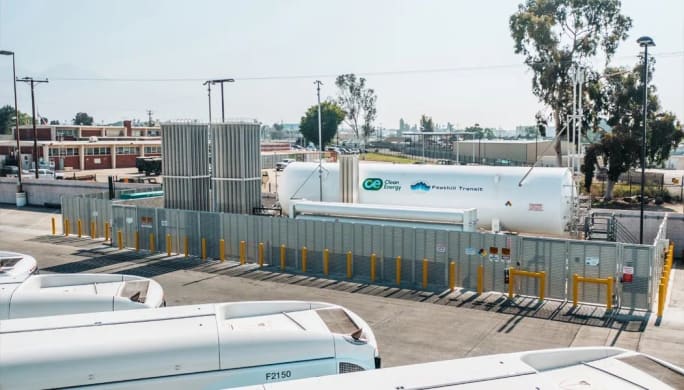
The new station will be located at Foothill Transit’s Arcadia bus yard, which also serves as a fueling depot for its renewable natural gas bus fleet.
Photo: Clean Energy
Biz Briefs covers the latest supplier news in the motorcoach and public transit industries.
In METRO's latest installment, we take a look at the latest news from suppliers including Clean Energy, Stadler, Forest River, and more.
Clean Energy to Design, Build, and Maintain Foothill Transit Hydrogen Station
Clean Energy Fuels Corp. was awarded the contract to design, build, and maintain a second hydrogen fueling station for West Covina, California’s Foothill Transit, continuing an over 20-year partnership to support the agency’s growing fleet of low-emissions buses.
The new station will be located at Foothill Transit’s Arcadia bus yard, which also serves as a fueling depot for its renewable natural gas bus fleet. An initial order of 19 new hydrogen fuel cell buses will be delivered to operate out of the site. This $11.3 million design-build project will be partially funded using federal and state grant assistance.
Foothill Transit carries over 11 million customers a year across the San Gabriel Valley, Pomona Valley, and downtown Los Angeles, with 33 zero-emission hydrogen fuel cell buses currently operating out of its Pomona station — the first hydrogen station Foothill commissioned Clean Energy to construct in 2021. The Pomona station has been operating since June 2023, and Clean Energy continues to oversee its operations and maintenance.
The new Arcadia station, which will store liquid hydrogen and dispense it in gaseous form, is currently in the design stage with construction scheduled to begin in mid-2026.
TSI Lands Contract to Refurbish Buses for Hele-On
Transit Sales International (TSI) was awarded a contract from Soderholm Sales & Leasing Inc. (SSL) to provide three fully-refurbished 45-foot MCI D4500 buses for the County of Hawaii’s Hele-On transit system.
The buses will undergo extensive refurbishment at Complete Coach Works' (CCW) facility in Riverside, California.
The 2003 MCI D4500 buses will undergo a comprehensive overhaul, including the replacement of Detroit Diesel Series 60 engines, Allison B500 transmissions, and axles and suspension components, as well as the refurbishment of the wheelchair lift and restoration of the body and undercarriage. Interior and exterior upgrades include flooring, reupholstered seats, LED lighting, and a Hele-On branded paint scheme and decals.
Each bus will also be equipped with a new HVAC system, new wheels and tires, and key safety and tech features, including a five-camera surveillance system, Wi-Fi, electronic signage, and an automated passenger counting system. Additional upgrades include a Genfare Fast Fare farebox and GPS/AVL integration to meet modern transit standards.
SacRT, Masabi Launch ‘Transit Connect’ Fare Payment System
The Sacramento Regional Transit District (SacRT) announced the launch of Transit Connect, a new regional fare payment system powered by Masabi.
With Transit Connect, riders can now purchase and activate tickets anytime, anywhere, using their smart device, and board by simply showing their digital ticket to the driver or fare inspector, eliminating the need for cash or paper tickets.
The first phase of Transit Connect introduces SacRT's full-fare mobile ticketing, along with rider-friendly features such as an in-app stored value wallet, group ticketing, and multi-agency support. These enhancements create a faster, more flexible, and more convenient way to pay for transit, while laying the foundation for future capabilities, including additional agency integrations, account-based ticketing, smartcard support, and fare capping, according to agency officials.
Eventually, this will extend to all agencies and modes of transit across the Sacramento region.
Stadler Opens New Welding Facility in Salt Lake City
Stadler celebrated the opening and start of operations at its new welding facility in Salt Lake City on September 25. The facility is part of the expansion of the current Stadler US factory, where passenger trains for the US market are produced.
The 50,000-square-foot (4,600 square meter) welding hall on Stadler’s Salt Lake City campus creates up to 20 new positions for local welders and technicians by the end of 2026. During this ramp-up phase, Stadler’s top welding experts from the company’s competence center in Hungary are on-site in Salt Lake City to share best practices and ensure a seamless transfer of expertise.
For the first time, aluminum car bodies are now being welded on-site rather than shipped from Stadler welding facilities in Europe — slashing transit time as well as increasing the local manufacturing footprint and domestic content of Stadler’s trains.
With the new welding facility and car body production, Stadler is further strengthening its domestic content creation in the US, increasing it to around 80%. Of the remaining 20%, a large proportion of supplies comes from Europe. Stadler is currently analyzing all supply chains to further reduce the proportion of foreign components, according to company officials.
Forest River Bus & Van Lands Patent for Gamechanger Lift Door.
Forest River Bus & Van has announced that its Gamechanger rear curbside lift door, designed for MobilityTRANS and Forest River Vans, has officially been awarded U.S. Patent No. 12,370,097.
The Gamechanger door was engineered to provide safer, more efficient access for passengers requiring mobility assistance. By relocating the lift door to the rear curbside of the van, the design maximizes interior space, improves passenger flow, and enhances curbside safety, said Forest River officials.
“This patent approval is a major step forward, not just for Forest River Bus & Van, but for the agencies, operators, and passengers who rely on accessible transportation every day,” said Nate Ritchie, GM of Forest River Van and MobilityTRANS. “The Gamechanger door lives up to its name; it sets a new industry standard for convenience, safety, and innovation.”
More Technology

From Hardware to Digital Partner: Luminator Charts Its Next Chapter
CEO Magnus Friberg discusses Luminator’s shift toward becoming a digital partner, the growing importance of software and interoperability, and how AI can help agencies improve operations and passenger experience.
Read More →
Beyond the Checklist: A Structured Approach to Transit Maintenance
Reliability-Centered Maintenance helps transit agencies move beyond routine checklists to focus limited resources on the assets and failures that have the greatest impact on safety, reliability, and service.
Read More →
NJ TRANSIT Advances Bus Technology Upgrades Across Statewide Fleet
More than 1,500 buses now feature upgraded technology designed to improve arrival predictions and provide free Wi-Fi, with deployment expected to reach nearly 2,000 buses by the end of 2026.
Read More →

Building a Flexible Path to Transit Electrification
John Hroncich discusses BAE Systems’ modular and scalable approach, lessons learned from decades of real-world operations, and how agencies can identify electrification strategies that fit their fleets.
Read More →
Biz Briefs: Alstom Lands Canadian Contract, LYT to Supply California TSP, and More
In METRO's latest installment, we take a look at recent news from Complete Coach Works, Beep, FlixBus, and more partnerships making headlines across the transportation sector.
Read More →
From Legacy Silos to Conversational Intelligence
What if transit leaders could ask any operational question and get a trusted answer in seconds? Conversational AI is transforming how agencies use their data.
Read More →
USDOT Announces Rail Vehicle Replacement Grants, Chattanooga AV Shuttle Funding
More than $191 million in federal funding will help three transit agencies replace aging rail vehicles and support a new autonomous shuttle service in Chattanooga.
Read More →
Bus Tech Talk: Keeping Transit Technicians Ahead of the Technology Curve
LA Metro’s Obed Mejia discusses technician training, evolving maintenance technology, fleet replacement, and strategies for getting the most out of today’s transit fleets.
Read More →
Biz Briefs: RIPTA Unveils New Frontrunners, Clevland RTA Adds New Siemens, and More
In METRO's latest installment, we take a look at recent news from Siemens, Prevost, Dodge, and more partnerships making headlines across the transportation sector.
Read More →
Why Simulating Pedestrian Movement Has Become Essential for Modern Rail Stations
Pedestrian microsimulation is helping rail planners identify bottlenecks, test station designs, and prepare complex transit hubs for growing passenger volumes.
Read More →