



Biz Briefs: Bus and Railcar Orders, Tech, and More
In this edition of Biz Briefs, we highlight the latest developments shaping the future of mobility — from manufacturers and technology providers to transit agencies and motorcoach service operators.

Stay informed with these quick takes on the projects and companies driving progress across the transportation landscape.
METRO
- This edition of Biz Briefs discusses significant advancements in the mobility sector.
- Highlights include contributions from manufacturers, tech providers, and transit agencies.
- The brief covers developments impacting motorcoach service operators.
*Summarized by AI
From strategic partnerships to acquisitions and service expansions, the industry continues to evolve at a rapid pace.
In this edition of Biz Briefs, we highlight the latest developments shaping the future of mobility — from manufacturers and technology providers to transit agencies and motorcoach service operators. Stay informed with these quick takes on the projects and companies driving progress across the transportation landscape.
In METRO's latest installment, we take a look at the latest news from suppliers including SBL, Masabi, TRC, and more.
Edmonton, Hyundai Rotem Sign Purchase Contract for Light Rail Vehicles
The City of Edmonton completed its procurement process to purchase high-floor light rail vehicles (LRV) required for the Metro Line Northwest Phase 1 and Capital Line South Phase 1 expansion projects, and to replace the City’s fleet of Siemens U2 LRVs that have been operating in Edmonton for more than 45 years.
Based on technical and financial evaluation scores, the contract has been awarded to Hyundai Rotem Company (HRC). Representatives from the City and HRC signed the agreement this morning in Edmonton. Design and manufacturing of 32 vehicles is expected to begin later this year, with delivery anticipated in 2029 and 2030.
The City followed a rigorous, fair, and competitive international procurement process. Three shortlisted proponents submitted competitive bids, and HRC received the highest combined score.
In 2021, HRC signed a contract with the City of Edmonton to deliver 46 low-floor LRVs for the Valley Line West project.
SBL Lands Two-Bus Lease from Ozark Regional Transit Authority
Shuttle Bus Leasing (SBL), in collaboration with its affiliate Complete Coach Works (CCW), has been awarded a contract to prepare two 40-foot Gillig Low Floor buses for lease to Ozark Regional Transit Authority (Ozark RTA) in Springdale, Arkansas.
The lease agreement includes an initial 12-month term with delivery scheduled for early this year.
The project includes the pre-lease preparation and refurbishment of two 2010 Gillig Low Floor diesel buses. All work will be performed at one of SBL’s satellite production facilities located in Tucson, Arizona.
Under the awarded contract, CCW will complete SBL’s standard pre-lease scope of work.
Iowa’s Sioux City Adds Masabi ABT System
Iowa’s Sioux City Transit launched MyRide Sioux City, a new Account-Based Ticketing (ABT) system powered by Masabi.
Using either the MyRide Sioux City Smart Cards and mobile app, riders can now tap to pay their fare when boarding, making journeys faster, easier, and more convenient than ever before.
The new system comes with fare capping, ensuring riders will never pay more than $1.80 per ride, $5 per day, or $48 per month. Riders who frequently use Sioux City Transit will automatically receive the best available price, without needing to purchase passes in advance. Riders can load funds onto their smart cards at the dispatch office or ticketing office in the Sioux City Transportation Center, as well as online via a new web portal.
To support the launch, 29 new validators have been installed across the Sioux City Transit fleet. The launch of MyRide Sioux City reflects the agency’s commitment to improving access to transit in a region where many residents rely on cars. With the new system, Sioux City Transit aims to attract new riders, including students at Morningside University, Briar Cliff University, and Western Iowa Tech Community College, by offering a more modern, flexible, and cost-effective travel option, according to the agency.
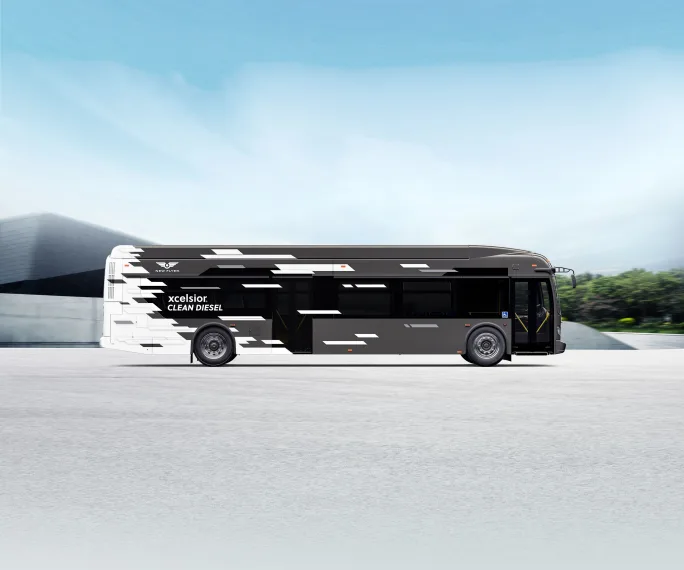
With this additional portion of the contract, NJ TRANSIT can continue replacing aging buses with New Flyers without compromising service
New Flyer
New Jersey Transit Orders Additional 375 New Flyer Clean-Diesel Buses
New Flyer of America Inc. received an additional order from New Jersey Transit Corporation (NJ TRANSIT) for 375 Xcelsior 40-foot, clean-diesel transit buses. The order is part of a larger, previously announced multi-phase fleet replacement program, with orders placed in the third and fourth quarters of 2025.
The original contract, awarded in the first quarter of 2024, included a base order of 550 Xcelsior 40-foot, clean-diesel transit buses to be delivered in three distinct lots, along with options for an additional 750 units.
With this newly announced order, NJ TRANSIT has now completed the full base order of 550 buses, leaving all 750 option buses available for future procurement.
With this additional portion of the contract, NJ TRANSIT can continue replacing aging buses without compromising service. Building and deploying these replacement vehicles strengthens domestic manufacturing, secures good local jobs, and ensures taxpayers get maximum utility from their investment in public transit.
TRC Forges 5-Year Partnership in Ohio
The Routing Company (TRC) announced a five-year partnership with Fairfield County Transit to support transit operations for deviated fixed routes and demand response programs through the Ohio Department of Transportation (ODOT).
The deployment marks another significant milestone, increasing accessibility and connectivity for suburban and rural transportation by expanding multiple transit services in Fairfield County. TRC is powering all of Fairfield County’s public transit (The Link), including deviated fixed routes and demand response programs. All services are scheduled to launch fully in April 2026.
TRC’s Pingo platform will power Fairfield County Transit’s services to bridge mobility gaps, particularly in rural communities, with real-time ride booking, trip planning, and optimized routing to enhance riders’ convenience.
Looking forward, TRC envisions all-in-one transit becoming a cornerstone of modern mobility solutions.
Quick Answers
This edition covers developments in mobility, including updates from manufacturers, technology providers, transit agencies, and motorcoach service operators.
*Summarized by AI
More Technology

From Hardware to Digital Partner: Luminator Charts Its Next Chapter
CEO Magnus Friberg discusses Luminator’s shift toward becoming a digital partner, the growing importance of software and interoperability, and how AI can help agencies improve operations and passenger experience.
Read More →
Beyond the Checklist: A Structured Approach to Transit Maintenance
Reliability-Centered Maintenance helps transit agencies move beyond routine checklists to focus limited resources on the assets and failures that have the greatest impact on safety, reliability, and service.
Read More →
NJ TRANSIT Advances Bus Technology Upgrades Across Statewide Fleet
More than 1,500 buses now feature upgraded technology designed to improve arrival predictions and provide free Wi-Fi, with deployment expected to reach nearly 2,000 buses by the end of 2026.
Read More →

Building a Flexible Path to Transit Electrification
John Hroncich discusses BAE Systems’ modular and scalable approach, lessons learned from decades of real-world operations, and how agencies can identify electrification strategies that fit their fleets.
Read More →
Biz Briefs: Alstom Lands Canadian Contract, LYT to Supply California TSP, and More
In METRO's latest installment, we take a look at recent news from Complete Coach Works, Beep, FlixBus, and more partnerships making headlines across the transportation sector.
Read More →
From Legacy Silos to Conversational Intelligence
What if transit leaders could ask any operational question and get a trusted answer in seconds? Conversational AI is transforming how agencies use their data.
Read More →
USDOT Announces Rail Vehicle Replacement Grants, Chattanooga AV Shuttle Funding
More than $191 million in federal funding will help three transit agencies replace aging rail vehicles and support a new autonomous shuttle service in Chattanooga.
Read More →
Bus Tech Talk: Keeping Transit Technicians Ahead of the Technology Curve
LA Metro’s Obed Mejia discusses technician training, evolving maintenance technology, fleet replacement, and strategies for getting the most out of today’s transit fleets.
Read More →
Biz Briefs: RIPTA Unveils New Frontrunners, Clevland RTA Adds New Siemens, and More
In METRO's latest installment, we take a look at recent news from Siemens, Prevost, Dodge, and more partnerships making headlines across the transportation sector.
Read More →
Why Simulating Pedestrian Movement Has Become Essential for Modern Rail Stations
Pedestrian microsimulation is helping rail planners identify bottlenecks, test station designs, and prepare complex transit hubs for growing passenger volumes.
Read More →