



BYD America expands executive leadership
Milo Victoria will serve as GM, while Bobby Hill has been promoted to VP, U.S. sales.

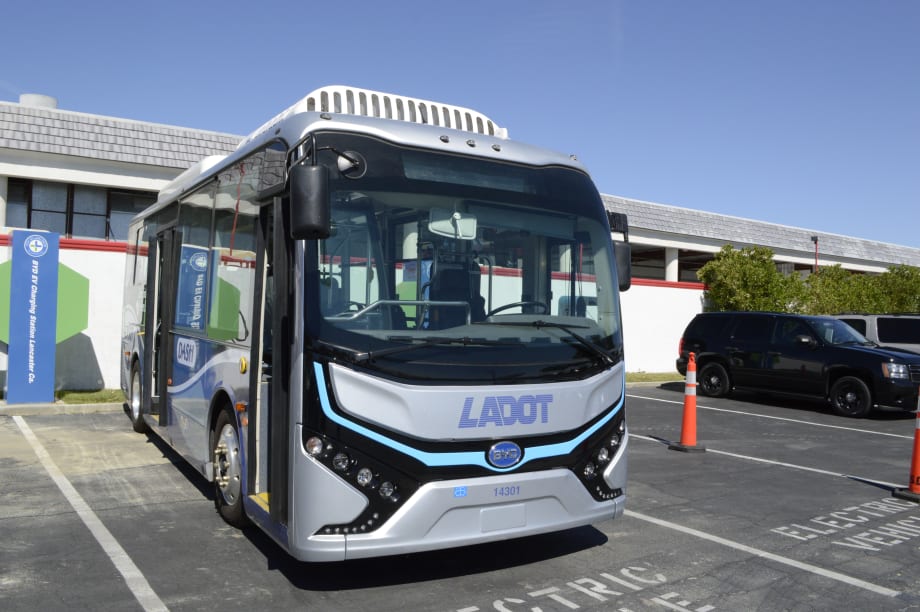
BYD hired Milo Victoria, an industry veteran with 41 years transit industry experience, to serve in the role GM for BYD Coach and Bus. Victoria will oversee the day-to-day operations of BYD’s battery-electric transit bus manufacturing facility in Lancaster, Calif., filling the role in response to BYD’s continued growth and expansion in the U.S.
Victoria began his career as a transit bus mechanic at LA Metro before moving up the ladder and into roles such as the COO/asst. GM for Metrobus, the Washington Metropolitan Area Transit Authority, and the CEO of Omnitrans in San Bernardino County, Calif.
Additionally, BYD also announced the promotion of Bobby Hill to VP, U.S. Sales, for BYD Coach and Bus. In his new role, Hill will manage all U.S. based transit sales responsibilities — including managing day-to-day activity of sales staff, demonstration scheduling, and marketing coordination.
In addition to overseeing BYD Coach and Bus operations in the U.S., Hill’s scope will also include responsibility for the Caribbean — a direct response to BYD’s rapid developments in the region. Hill previously served as the company’s midwest regional sales manager and will continue to report directly to Macy Neshati, sr. VP of BYD Heavy Industries.
“Milo Victoria is a well-respected veteran of the transit industry, having started as a mechanic who worked his way up to executive leadership positions at several of the country’s largest and busiest transit authorities,” said Neshati. “He is knowledgeable on every aspect of transit bus operations, and we are pleased to count him as part of the BYD Coach and Bus family now.”
Neshati continued, “Bobby Hill has been an invaluable asset to BYD for more than two years and this promotion is in recognition of that,” “His customer service and sales expertise is unmatched, especially in one of the most important divisions in the company — Coach and Bus.”
BYD continues to expand its operations in Los Angeles County in response to demand for its advanced technology, zero-emission transit buses. The company employs nearly 700 individuals in California and expects to add more than 500 jobs in the coming years.
More Management

FTA Ends Direct Oversight of MBTA Safety Actions
The federal agency closed its remaining special directive to the Massachusetts Department of Public Utilities following a safety review that began in 2022.
Read More →
Report: Transit Bus Manufacturing Supports 34,100 Jobs, $5.1B in GDP
The “Buses Mean Business” report examines the transit bus manufacturing industry’s economic footprint, supply chain, and rising demand for vehicle replacements.
Read More →
LIT Marks 10-Year Milestone at Annual Summit
Hosted by the COTA from September 10 to 13, the Summit carried the theme “Celebrating 10 Years of Excellence, Leadership, and Impact,” with every part of the program honoring the people, agencies, and partners who built LIT over its first decade.
Read More →

People Movement: Dan Dipert Coaches Adds Third-Generation Leader, Keolis Names New Valley Metro VP/GM, and More
In this edition, we also cover recent appointments and announcements at the Wabtec, SilverRide, HNTB, and more, showcasing the individuals helping to shape the future of transportation.
Read More →
METRO Opens Submissions for 2026 Motorcoach Awards
Nominations are now being accepted for METRO Magazine’s Operator of the Year and Innovative Operator of the Year awards.
Read More →
New York MTA Advances Final Contract for Second Avenue Subway Expansion
Contract Four is the largest in the Second Avenue Subway Phase 2 project and includes construction of station infrastructure, tracks, and signals for the subway expansion, MTA officials said. Work on Contract Four will begin in 2027.
Read More →
Transit Agencies Highlight Safety Gains at National Summit
Leaders from 15 major transit systems shared crime-reduction results and safety initiatives while discussing the role of continued federal support.
Read More →
NITA Names New Leadership, Expands Reduced-Fare Program at First Board Meeting
The new regional transit authority appointed its first board chair and interim executive director while extending reduced fares across CTA, Metra, and Pace for eligible riders.
Read More →
Beyond the Checklist: A Structured Approach to Transit Maintenance
Reliability-Centered Maintenance helps transit agencies move beyond routine checklists to focus limited resources on the assets and failures that have the greatest impact on safety, reliability, and service.
Read More →
APTA 2026 Nominating Committee Selects Leadership Slate, Names Chair and Vice Chair Nominees
Leadership changes will help shape the association’s priorities and its representation of the transportation industry during the 2026–2027 term.
Read More →