




5 Things to Consider When Naming and Designing Brand Identities
Calif. transit agency marks 75th year, rebrands
Gardena Municipal Bus Lines had always been respected by its riders, but the agency wasn’t very well known within the larger community, which made attracting new riders a challenge. The solution? Rebranding the agency as GTrans.
August 20, 2015
3 min to read
To mark its 75th year operating as a regional bus service in South Bay communities near downtown Los Angeles, Gardena Municipal Bus Lines (GMBL) began undergoing the biggest, most radical transformation in its long and illustrious history. And in the process, it was giving other transit agencies a roadmap to follow in their own rebranding efforts.
GMBL had always been respected by its riders, who came to appreciate its safe, reliable and friendly service throughout the years, but the agency wasn’t very well known within the larger community, which made attracting new riders a challenge.
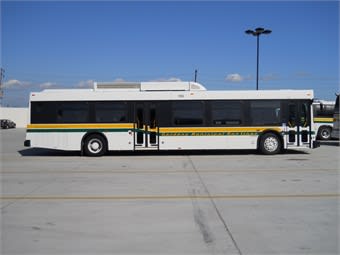
City leaders at GMBL believed this lack of recognition came in part from having such an overly complicated name and a fleet with an uninspiring, outdated design.
“It’s pretty obvious that ‘Gardena Municipal Bus Lines’ was a real mouthful to say, and a lot of words for people to remember,” said Paula Faust, Gardena’s deputy director, transportation. “And the plain old buses weren’t exactly winning any design awards, either.”
So, Faust and her team decided to give Gardena’s bus service a great big birthday gift — a complete and total system rebranding.
GMBL partnered with Pulsar, a Los Angeles-based advertising and marketing agency with decades of transportation industry experience, to begin the rebranding effort. The first step was making sure key stakeholders had a voice in the process.
“When you’re working with a public transportation agency, it’s important to remember that many people can take ownership of it,” said Alberto Gonzalez, Pulsar’s president/CEO. “Bus lines belong to the employees, riders, government officials and even the non-riding public — so whenever you make a change, you have to make sure all those groups are on board with it.”
And that’s exactly what they did.
The GMBL and the Pulsar team interviewed Gardena employees to determine the city’s goals and the agency’s core values, which helped form the project’s creative brief. They conducted multiple focus groups with riders and non-riders to get customer feedback on potential new names and bus designs as they were being developed. And they worked closely with the GMBL staff along with city staff on the bus’s new look, so that when it came time to present the finished product to the city council, it was unanimously approved.
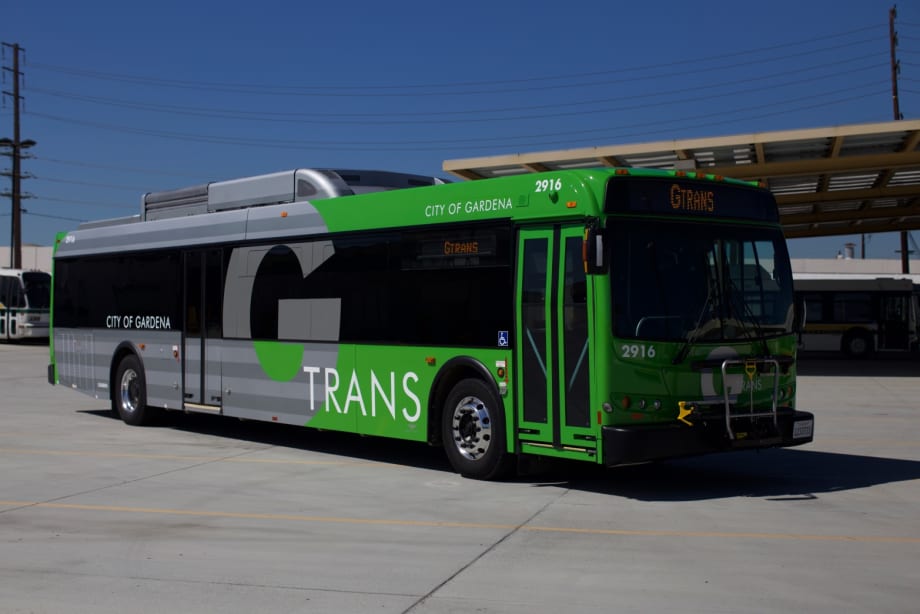
The results have been extremely well received. The “Gardena Municipal Bus Lines” name changed to the easier-to-remember, quicker-to-say and more meaningful name “GTrans.”
“The ‘G’ reminds us of our home city of Gardena as well as our commitment to green, environmentally friendly initiatives,” Faust said. “The ‘Trans’ is all about the work we do best — transporting our customers everywhere they want to go.”
The GTrans fleet is now sporting a new paint job, too. The sleek, modern, green and silver design makes the vehicles easy to identify, while also making the service feel more inviting to potential riders who are considering taking their first ride.
Along with these changes, GTrans also unveiled a new website, RideGTrans.com, along with an ad campaign featuring the tagline “It all starts with GTrans.” The work has helped get current and potential riders excited about their ride, boost recognition of GTrans in the community, and ultimately, increase ridership.
And it’s been a total team effort.
“We found the KEY to our success was to be all inclusive from the start,” commented Faust. “Our goal was to make this a collaborative process so that everyone felt involved and on board with the revitalization of our brand.”
More Management

METRO Opens Submissions for 2026 Motorcoach Awards
Nominations are now being accepted for METRO Magazine’s Operator of the Year and Innovative Operator of the Year awards.
Read More →
New York MTA Advances Final Contract for Second Avenue Subway Expansion
Contract Four is the largest in the Second Avenue Subway Phase 2 project and includes construction of station infrastructure, tracks, and signals for the subway expansion, MTA officials said. Work on Contract Four will begin in 2027.
Read More →
Transit Agencies Highlight Safety Gains at National Summit
Leaders from 15 major transit systems shared crime-reduction results and safety initiatives while discussing the role of continued federal support.
Read More →

NITA Names New Leadership, Expands Reduced-Fare Program at First Board Meeting
The new regional transit authority appointed its first board chair and interim executive director while extending reduced fares across CTA, Metra, and Pace for eligible riders.
Read More →
Beyond the Checklist: A Structured Approach to Transit Maintenance
Reliability-Centered Maintenance helps transit agencies move beyond routine checklists to focus limited resources on the assets and failures that have the greatest impact on safety, reliability, and service.
Read More →
APTA 2026 Nominating Committee Selects Leadership Slate, Names Chair and Vice Chair Nominees
Leadership changes will help shape the association’s priorities and its representation of the transportation industry during the 2026–2027 term.
Read More →
DART Launches Major Security, Fare Enforcement Initiative
The 90-day demonstration will deploy coordinated security teams at five light rail stations while testing controlled access and gathering data to guide future investments.
Read More →
Sponsored•September 9, 2026
Advancing Fare Collection Through Technology and Innovation
Learn about delivering 1300 gates at 91 stations while managing fare evasion. Explore the large scale deployment, solution customization and real-world results that affect the region. Prepare for deployment in your region now.
Read More →
Game Day in Motion: Moving Millions During the 2026 World Cup
Between packed transit stations and team motorcoaches, see how agencies and operators across North America tackled the transportation demands of the 2026 FIFA World Cup.
Read More →
Surface Transportation Extension Averts Shutdown, Leaves Transit Funding Gap
The stopgap keeps federal transportation programs moving, but missing advance funding could complicate the transit and rail projects agencies are planning next.
Read More →