



California's OCTA Approves 3-Year Bus Operator Contract
The agreement with Teamsters Local 952 includes wage increases of 14% over the next three years, beginning this month and running through April 2027.

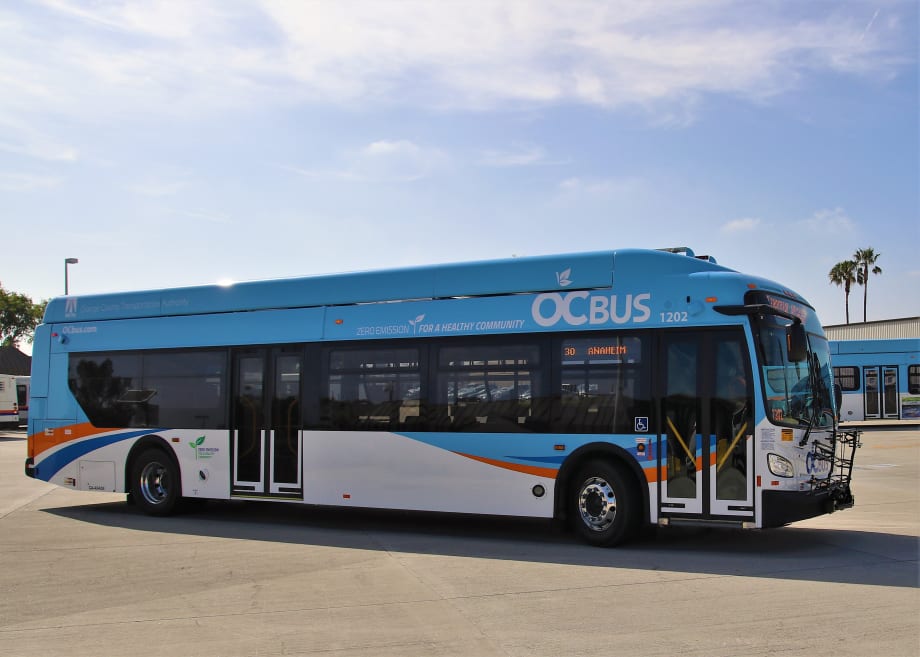
OCTA drivers will also receive higher wages during training, a higher uniform allowance, and bonuses for working days with historically high absentee rates, such as Mother’s Day.
Photo: OCTA
California’s Orange County Transportation Authority (OCTA) approved a new three-year collective bargaining agreement with the union that represents OC Bus drivers, rewarding them for the essential work they perform to keep Orange County moving.
The agreement with Teamsters Local 952 includes wage increases of 14% over the next three years, beginning this month and running through April 2027.
“We appreciate the Teamsters efforts to negotiate in good faith and reach a fair and competitive deal for our valued employees,” said OCTA Chair Tam T. Nguyen. “Our coach operators perform a vital service and are often the face of OCTA, the people that tens of thousands of bus passengers rely on for the highest level of safe and reliable service.”
OCTA’s New Bus Operator Contract
OCTA directly employees approximately 600 coach operators, while another approximately 330 are contracted, ensuring both great customer service and the most efficient use of taxpayer money that supports public transit.
Other highlights of the contract, previously approved by a vote of union membership before going to the OCTA board for approval, include an accelerated wage scale that allows coach operators to advance to the top rate after four years instead of five years.
Drivers will also receive higher wages during training, a higher uniform allowance, and bonuses for working days with historically high absentee rates, such as Mother’s Day.
Safety, which remains the top priority at OCTA, is also reinforced in the contract.
OCTA and the union will work together to form a committee to further focus on safety. In the wake of several recent high-profile safety incidents in the region involving bus drivers, OCTA continues to expand safety measures to protect coach operators, including installing more safety barriers on OC Buses and refining training to de-escalate and resolve conflicts on buses.
More Management

METRO Opens Submissions for 2026 Motorcoach Awards
Nominations are now being accepted for METRO Magazine’s Operator of the Year and Innovative Operator of the Year awards.
Read More →
New York MTA Advances Final Contract for Second Avenue Subway Expansion
Contract Four is the largest in the Second Avenue Subway Phase 2 project and includes construction of station infrastructure, tracks, and signals for the subway expansion, MTA officials said. Work on Contract Four will begin in 2027.
Read More →
Transit Agencies Highlight Safety Gains at National Summit
Leaders from 15 major transit systems shared crime-reduction results and safety initiatives while discussing the role of continued federal support.
Read More →

NITA Names New Leadership, Expands Reduced-Fare Program at First Board Meeting
The new regional transit authority appointed its first board chair and interim executive director while extending reduced fares across CTA, Metra, and Pace for eligible riders.
Read More →
Beyond the Checklist: A Structured Approach to Transit Maintenance
Reliability-Centered Maintenance helps transit agencies move beyond routine checklists to focus limited resources on the assets and failures that have the greatest impact on safety, reliability, and service.
Read More →
APTA 2026 Nominating Committee Selects Leadership Slate, Names Chair and Vice Chair Nominees
Leadership changes will help shape the association’s priorities and its representation of the transportation industry during the 2026–2027 term.
Read More →
DART Launches Major Security, Fare Enforcement Initiative
The 90-day demonstration will deploy coordinated security teams at five light rail stations while testing controlled access and gathering data to guide future investments.
Read More →
Advancing Fare Collection Through Technology and Innovation
Learn about delivering 1300 gates at 91 stations while managing fare evasion. Explore the large scale deployment, solution customization and real-world results that affect the region. Prepare for deployment in your region now.
Read More →
Game Day in Motion: Moving Millions During the 2026 World Cup
Between packed transit stations and team motorcoaches, see how agencies and operators across North America tackled the transportation demands of the 2026 FIFA World Cup.
Read More →
Surface Transportation Extension Averts Shutdown, Leaves Transit Funding Gap
The stopgap keeps federal transportation programs moving, but missing advance funding could complicate the transit and rail projects agencies are planning next.
Read More →