



CALSTART’s 2025 ZET Ahead Dashboard Tracks State Zero-Emission Progress
The 2025 update to ZET Ahead includes detailed profiles of six new states: Illinois, Michigan, New Mexico, Texas, Georgia, and Florida, as well as progress updates to the 17 states originally featured on the dashboard.

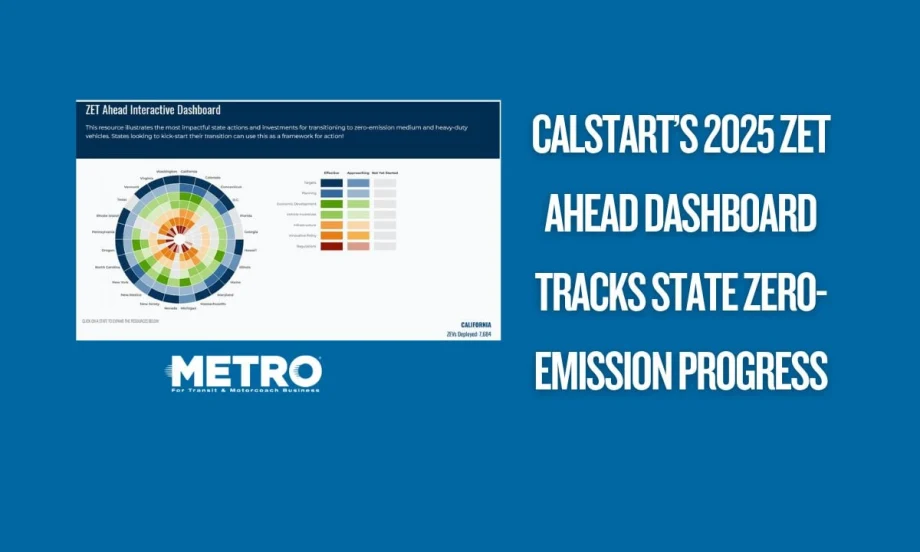
In an era of constrained funding and increasingly complex and competing priorities, the ZET Ahead Dashboard provides state staff with a concise playbook for initiating, growing, and sustaining an ecosystem for zero-emission medium- and heavy-duty vehicles, according to CALSTART officials.
Photo: CALSTART/METRO
CALSTART released the 2025 update to its ZET Ahead Dashboard, an interactive visualization of the progress 23 states (and the District of Columbia) have made toward accelerating the adoption of zero-emission buses, vans, and trucks. A Q&A blog post accompanies the release.
CALSTART’s Updated ZET Ahead
The 2025 update to ZET Ahead includes detailed profiles of six new states: Illinois, Michigan, New Mexico, Texas, Georgia, and Florida, as well as progress updates to the 17 states originally featured on the dashboard.
This year’s dashboard update also adds a new Economic Development market dimension, analyzing complementary tax and workforce development policies that encourage clean transportation investment.
The ZET Ahead Dashboard is used by policymakers, investors, industry stakeholders, and advocates to stay informed about the most impactful state actions and investments supporting zero-emission trucking. The dashboard also provides a framework for states looking to kick-start their transition to zero-emission medium- and heavy-duty vehicles.
The Benefits of ZET Ahead
In an era of constrained funding and increasingly complex and competing priorities, the ZET Ahead Dashboard provides state staff with a concise playbook for initiating, growing, and sustaining an ecosystem for zero-emission medium- and heavy-duty vehicles, according to CALSTART officials.
Based on three decades of experience, CALSTART said it has identified the most impactful actions for states working to decarbonize their transport sector, using a strategy that requires not just one program or one policy, but rather a suite of complimentary deployments across a range of targeted areas such as: Targets, Planning, Economic Development, Vehicles Incentives, Infrastructure, Innovative Policy, and Regulations.
What is equally noteworthy in this year’s release is the newly added Economic Development dimension, which encompasses industry strategy and clustering, public financing, tax incentives, streamlined permitting, business assistance, and workforce development, among other key areas. Low-carbon, zero-emitting technologies, vehicles, and infrastructure are critical growth areas for the global economy, and states with strong market and regulatory support for these technologies will be attractive sites for manufacturing, service, and support, according to CALSTART.
“Our ZET Ahead dashboard provides actionable information and much-needed guidance. In fact, the data we’re seeing this year make clear that the groundwork to enable zero-emission trucking is no longer regionally clustered. And favorable market conditions are now spreading out across the entire US,” said Alissa Burger, regional policy director at CALSTART. “Every state in the country — red or blue, urban or rural, big or small — can take steps today to enable freight modernization with zero-emission trucks tomorrow.”
More Zero Emissions

Caltrain’s Electrification Drives a New Era of Ridership Growth
The railroad’s shift to electric service has brought more frequent trains, stronger customer satisfaction, and increased ridership, earning it APTA’s Outstanding Public Transportation System award.
Read More →
Building a Flexible Path to Transit Electrification with BAE's John Hroncich
John Hroncich discusses BAE Systems’ modular and scalable approach, lessons learned from decades of real-world operations, and how agencies can identify electrification strategies that fit their fleets.
Read More →
LA Metro Board Awards 220 Battery-Electric Bus Contract to ENC
The contract, which is the largest base award of battery-electric buses by a U.S. transit agency, will be built in Southern California, sustaining good jobs as LA prepares to welcome the world in 2028
Read More →
Public Transit Conference Returning to GFX in 2027, Call for Papers Now Open
The Call for Papers is now open, allowing transit agency professionals and industry experts to help shape the PTC educational program by submitting session ideas for consideration.
Read More →
Report: Transit Bus Manufacturing Supports 34,100 Jobs, $5.1B in GDP
The “Buses Mean Business” report examines the transit bus manufacturing industry’s economic footprint, supply chain, and rising demand for vehicle replacements.
Read More →
Ohio’s METRO RTA Turns Electric Buses into Mobile Power Sources at PorchROKR
See how three Gillig battery-electric buses powered festival stages while the agency’s new Park & Ride service carried approximately 1,000 attendees, demonstrating another potential use for transit agencies’ electric fleets.
Read More →
CALSTART and Forth Combine to Form Catalyst Mobility
The new name represents a renewed vision for the nonprofit focused on advancing clean, equitable, and affordable transportation solutions that move people and goods.
Read More →
Building a Flexible Path to Transit Electrification
John Hroncich discusses BAE Systems’ modular and scalable approach, lessons learned from decades of real-world operations, and how agencies can identify electrification strategies that fit their fleets.
Read More →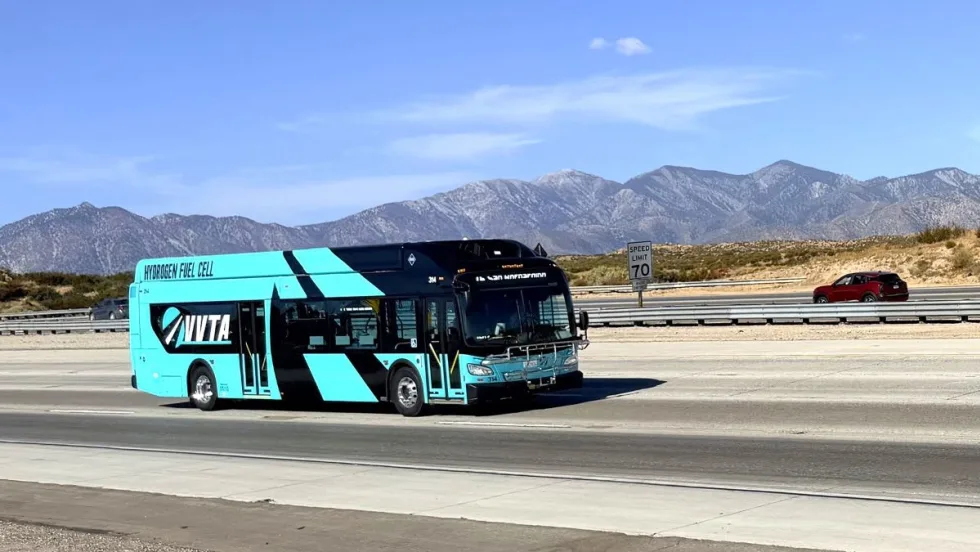
California's VVTA Begins Phased Rollout of Hydrogen Fuel Cell Buses
The agency is introducing 13 zero-emission buses into revenue service while evaluating performance across its urban, rural, and long-distance routes.
Read More →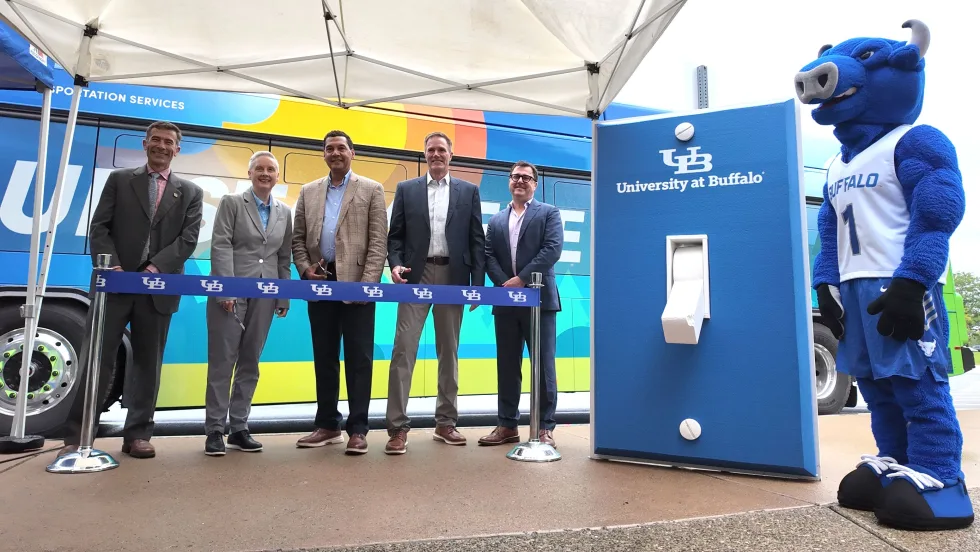
Inside Look: University at Buffalo Puts First 8 Electric Buses Into Stampede Service
UB, transportation solutions provider WeDriveU, and fleet electrification specialist Zenobē marked the deployment in the presence of students, university administrators, and local officials.
Read More →