Canada’s 3 Biggest Transit Agencies Urge Government to Advance Next Wave of Funding
In the joint submission, the transit agencies outline significant challenges they face due to aging infrastructure, an outdated funding model that relies on regressive sources such as transit fares and property taxes, and the exceptional ridership growth forecasted for the coming decades.
In a joint Federal Budget Submission, the TTC, STM, and TransLink called on Ottawa to “advance the commitment of funding under the new federal Permanent Transit Fund by early 2024, instead of 2026.
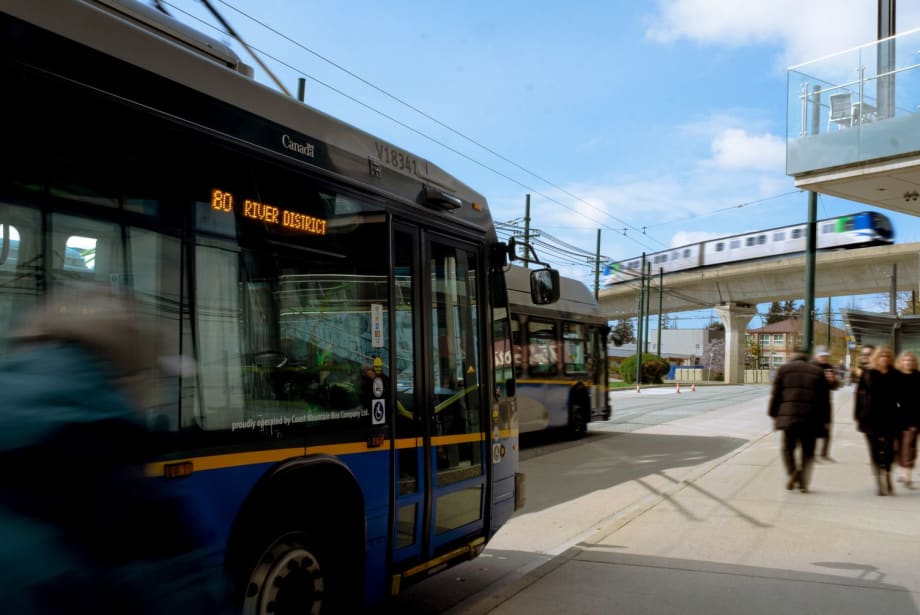
Credit:
TransLink
3 min to read
Chief executives from transit agencies in Toronto, Montreal, and Vancouver are appealing to the Federal Government to launch the promised Permanent Transit Fund (PTF) two years ahead of schedule to help them address growing pressures on their systems.
In a joint Federal Budget Submission, the Toronto Transit Commission (TTC), Société de transport de Montréal (STM), and TransLink called on Ottawa to “advance the commitment of funding under the new federal Permanent Transit Fund by early 2024, instead of 2026, to enable critical projects and programs to advance and support long term capital planning.”
Ad Loading...
Transit Represents Critical Infrastructure
In the joint submission, the transit agencies outline significant challenges they face due to aging infrastructure, an outdated funding model that relies on regressive sources such as transit fares and property taxes, and the exceptional ridership growth forecasted for the coming decades.
With approximately 2.35 million new residents expected before 2050 in the three cities, immediate and sustained investment in transit operations, state of good repair, and building capacity is essential to prepare for this growth.
“We have a rapidly growing population and an urgent need for ongoing sustainable transportation to meet our environmental goals — we cannot afford to wait another two years for access to the Permanent Transit Fund,” said Marie-Claude Léonard, CEO, at STM. “We need that funding now to ensure reliable operation of our networks. It’s unthinkable that we would have to cut public transit services or put off refurbishing and replacing our outdated infrastructure because the available funds were allocated too late.”
With approximately 2.35 million new residents expected before 2050 in the three cities, immediate and sustained investment in transit operations, state of good repair, and building capacity is essential to prepare for this growth.
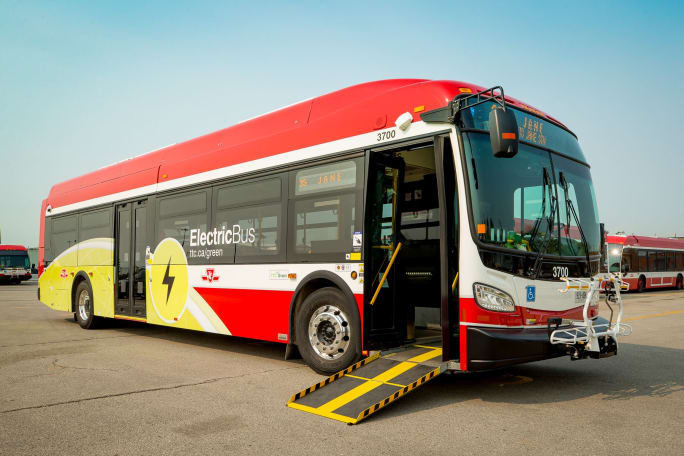
Photo: TTC
Advocating for More Federal Funding
In addition to accelerating delivery of the PTF, the submission also requests that the Government permanently double the Canadian Communities Building Fund (CCBF) as a proven predictable funding stream for municipal infrastructure needs and establish a forum for ongoing tri-partite engagement with all orders of government on the development of a sustainable, long-term funding model for public transit, which considers the full capital and operating costs of providing high-quality transit services.
The transit agencies are warning that if the Government fails to deliver new funding for urban transit systems in the 2024/2025 budget, it will put in jeopardy new transit-oriented developments and reduce access to affordable housing that all three cities are working to deliver with their provincial and federal government partners.
Ad Loading...
“A strong public transit system is fundamental to meeting our affordability and climate action goals. With the City of Toronto and Province of Ontario committing hundreds of millions of dollars toward new subway trains for Line 2, we are hoping the Government of Canada will open the PTF early in order for us to start the process of purchasing the new trains,” said TTC CEO Rick Leary. “While that’s our immediate pressure, we also hope to be able to use this fund for new buses.”
Hosted by the COTA from September 10 to 13, the Summit carried the theme “Celebrating 10 Years of Excellence, Leadership, and Impact,” with every part of the program honoring the people, agencies, and partners who built LIT over its first decade.
In this edition, we also cover recent appointments and announcements at the Wabtec, SilverRide, HNTB, and more, showcasing the individuals helping to shape the future of transportation.
Contract Four is the largest in the Second Avenue Subway Phase 2 project and includes construction of station infrastructure, tracks, and signals for the subway expansion, MTA officials said. Work on Contract Four will begin in 2027.
The new regional transit authority appointed its first board chair and interim executive director while extending reduced fares across CTA, Metra, and Pace for eligible riders.
Reliability-Centered Maintenance helps transit agencies move beyond routine checklists to focus limited resources on the assets and failures that have the greatest impact on safety, reliability, and service.
The 90-day demonstration will deploy coordinated security teams at five light rail stations while testing controlled access and gathering data to guide future investments.
Learn about delivering 1300 gates at 91 stations while managing fare evasion. Explore the large scale deployment, solution customization and real-world results that affect the region. Prepare for deployment in your region now.