



Chicago, Maryland Expand Non-Law-Enforcement Safety, Rider Support
The CTA and MTA are launching new programs aimed at de-escalation, crisis response, rider assistance, and greater transparency.

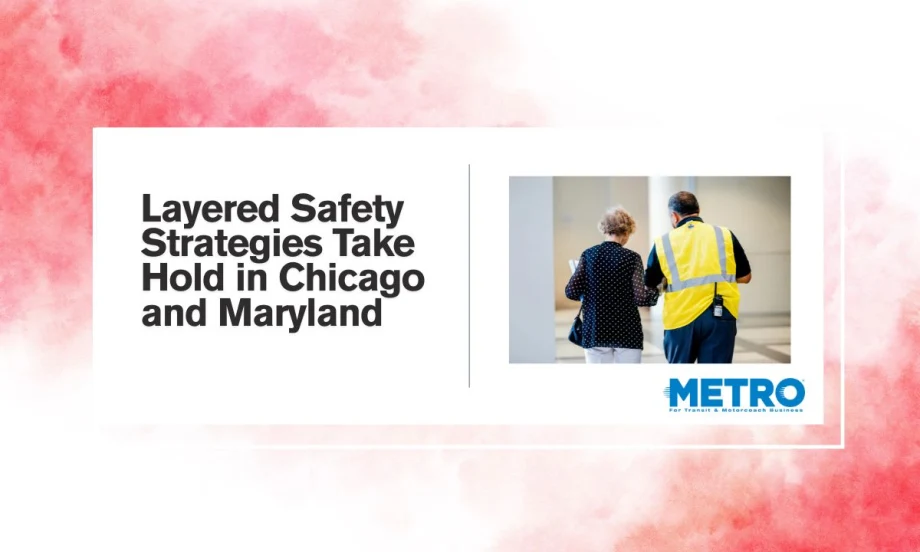
The initiatives reflect a broader shift among transit agencies toward a layered approach to safety that combines police resources with social-service providers, ambassadors, and other personnel who can address situations that do not necessarily require a law-enforcement response.
METRO
- Chicago's CTA and Maryland's MTA introduce initiatives focused on non-law-enforcement approaches to safety and support.
- Programs emphasize de-escalation techniques, crisis intervention, and assisting riders.
- Both transit authorities aim to increase transparency in their operations.
*Summarized by AI
The Chicago Transit Authority (CTA) and Maryland Department of Transportation Maryland Transit Administration (MTA) are expanding their approaches to transit safety, pairing traditional law-enforcement efforts with new programs focused on rider assistance, crisis intervention, community engagement, and greater transparency.
The CTA is launching a $9.6-million Safe Ride Specialists pilot that will place trained, non-law-enforcement professionals on the system to respond to mental health and substance-use crises, engage young people, de-escalate conflicts, and connect riders with housing, health care, and other social services.
At the same time, the Maryland Transit Administration is introducing a CARE Ambassador Team and a public Safety and Security Dashboard designed to provide riders with on-system assistance while offering greater insight into safety incidents.
The initiatives reflect a broader shift among transit agencies toward a layered approach to safety that combines police resources with social-service providers, ambassadors, and other personnel who can address situations that do not necessarily require a law-enforcement response.
“Safety is really about meeting people where they are,” said the CTA’s Acting President Nora Leerhsen in announcing the Safe Ride Specialists program. “This program will help every rider feel welcome, connect vulnerable riders to the support they need, and complement our recent investments to increase law enforcement resources.”
Chicago Expands Crisis Intervention, Outreach
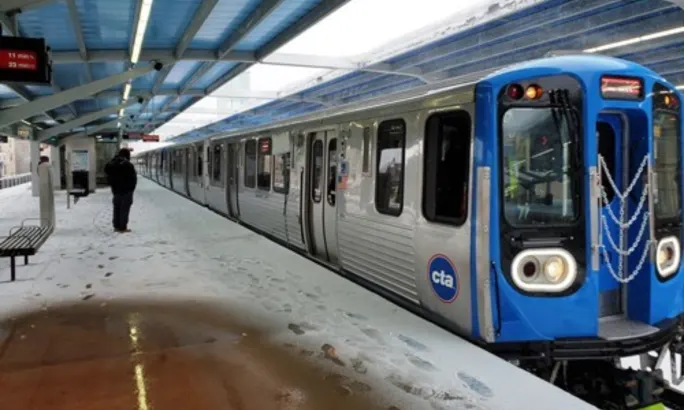
CTA will evaluate the one-year pilot using measures that include incidents de-escalated without law enforcement, reductions in service delays, safety outcomes for riders and front-line employees, connections to wraparound services, and outcomes for vulnerable riders.
Chicago Transit Authority
The CTA program, approved by the Chicago Transit Board, will deploy Safe Ride Specialists on the Blue, Red, and Green lines beginning in September. Four community organizations will provide the personnel.
The specialists will work in teams at targeted stations, on trains, and on buses, maintaining a visible presence while addressing antisocial behavior and connecting riders with services. They will be trained in trauma-informed care, crisis de-escalation, conflict resolution, and anti-bias principles, and will carry outreach materials, care and hygiene kits, and Narcan.
The program includes two primary functions: Crisis Intervention Specialists will work with people experiencing mental health crises and substance-use disorders, while Community Violence Intervention Specialists will engage youth and young adults, build relationships, and work to prevent conflicts from escalating.
The pilot was developed following a Transit Community Safety workshop held in August 2025 that brought together riders, more than 30 mental health and social-service experts, community organizations, and labor partners.
CTA will evaluate the one-year pilot using measures that include incidents de-escalated without law enforcement, reductions in service delays, safety outcomes for riders and front-line employees, connections to wraparound services, and outcomes for vulnerable riders.
The program is part of a larger expansion of CTA's safety and outreach efforts. The agency has also increased law-enforcement resources through partnerships with the Chicago Police Department and Cook County Sheriff's Office.
CTA is separately expanding its partnership with the city's Department of Family and Support Services to provide additional assistance to people experiencing homelessness. The expanded agreement will provide up to $4.2 million annually for the next two years, supporting outreach on the 24-hour Red and Blue lines and at least 30 dedicated shelter beds.
The Blue Line will gain a third outreach team to provide 24/7 coverage, while a nurse will join the existing Red Line outreach team. Outreach workers can connect people with shelters, health care, behavioral health services, substance-use treatment, meals, clothing, showers, and other resources.
Since CTA and DFSS began working together in 2023, the agencies say the partnership has connected thousands of people with outreach services, shelter placements and housing opportunities.
Maryland Emphasizes Rider Assistance, Transparency
In Maryland, the MTA is taking a somewhat different approach, adding a visible customer service presence while providing the public with more information about safety trends across the system.
The new CARE — Customer Assistance and Rider Experience — Ambassador Team will begin working on the Metro Subway and Light Rail system September 1. Ambassadors will help riders with trip planning and navigation, provide service information, explain fare and payment options, and answer questions.
They will also receive de-escalation training, enabling them to address minor issues and promote respectful behavior in accordance with the agency's Code of Conduct.
“The safety of our riders and employees will always be our top priority,” said Maryland Transit Administrator Holly Arnold. “The CARE Ambassadors and Safety dashboard work together with other agency tools, including the Code of Conduct and See Say app, to provide a comprehensive safety approach across the transit system.”
The MTA's new Safety and Security Dashboard provides data on serious crimes and clearance rates, offering riders and stakeholders additional information about safety throughout the system. The agency said Part 1 violent crimes, including robbery, assault and homicide, declined in both 2024 and 2025, while police cleared 76% of serious crime cases over the past two years.
The dashboard is intended to provide context for the MTA, which serves nearly four million trips annually. The agency said safety indicators have continued to improve this year even as ridership increases.
The MTA Police also continue to use a combination of community engagement, station patrols, vehicle checks, and other policing strategies, while working with Baltimore City Police, Baltimore City School Police, the city's Department of Juvenile Services, the Mayor's Office of Youth Violence and other community organizations, and jurisdictions.
Building A Layered Safety Strategy
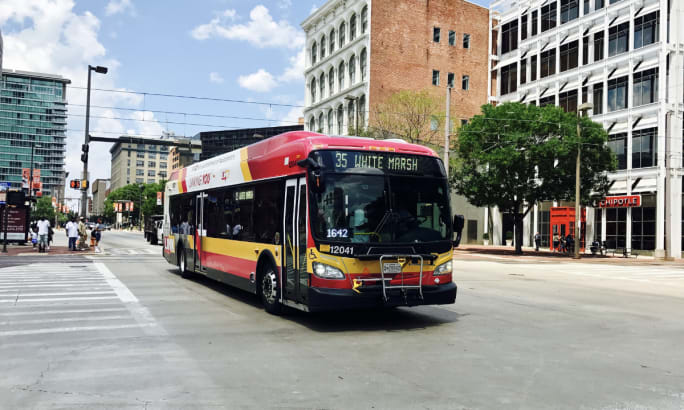
The MTA's new Safety and Security Dashboard provides data on serious crimes and clearance rates, offering riders and stakeholders additional information about safety throughout the system.
Photo: Maryland Transit Administration
Both agencies are positioning their new initiatives as additions to — rather than replacements for — traditional security measures.
Chicago's Safe Ride Specialists will focus on situations where outreach, crisis intervention, or violence prevention may be more appropriate than a police response. At the same time, Maryland's CARE Ambassadors are designed to provide a highly visible customer service presence and help resolve minor issues before they escalate.
The approaches also reflect a growing emphasis on connecting riders experiencing homelessness, mental health challenges, or other crises with services beyond the transit system.
For CTA, the Safe Ride pilot will also help inform regional safety initiatives led by the Northern Illinois Transit Authority. In Maryland, the CARE team and dashboard join other recent initiatives, including the See Say mobile app, launched in October 2025, which allows riders to discreetly report safety concerns directly to MTA Police.
Together, the programs illustrate how transit agencies are broadening the definition of safety — combining enforcement and security with prevention, social services, customer assistance and better communication with riders.
Quick Answers
The CTA and MTA are launching programs focused on de-escalation, crisis response, rider assistance, and enhanced transparency.
*Summarized by AI
More Security and Safety

FTA Ends Direct Oversight of MBTA Safety Actions
The federal agency closed its remaining special directive to the Massachusetts Department of Public Utilities following a safety review that began in 2022.
Read More →
Transit Agencies Highlight Safety Gains at National Summit
Leaders from 15 major transit systems shared crime-reduction results and safety initiatives while discussing the role of continued federal support.
Read More →
DART Launches Major Security, Fare Enforcement Initiative
The 90-day demonstration will deploy coordinated security teams at five light rail stations while testing controlled access and gathering data to guide future investments.
Read More →
RTD Launches NextRide App to Consolidate Trip Planning, Fares, Security Reporting
The app expands on RTD’s existing NextRide web application and allows customers to view real-time vehicle locations and service alerts, purchase and store digital fares, and access customer support.
Read More →
TAPTCO Updates OSHA Compliance Training for Transit Maintenance Operations
The revamped program addresses 26 OSHA standards for maintenance facilities, with TAPTCO pointing to training, documentation, and everyday shop hazards as continuing challenges for transit operations.
Read More →
FRA Announces $5.3B in Rail Investments, Including $2B for Amtrak
Funding will support grade-crossing improvements, infrastructure upgrades, and new Amtrak equipment in 23 states.
Read More →
LA Metro, City of West Hollywood, and Partners Advance Smarter Bus Lane Enforcement
The award-winning partnership combines AI-powered detection with human oversight to improve bus reliability, accessibility, and enforcement efficiency.
Read More →
LA Metro Reports 57% Decline in Homelessness on Transit System Since 2024
The agency's latest homelessness count offers new data on how care-based services and cross-sector partnerships can complement traditional transit security strategies.
Read More →
FTA Launches 'Transit Moves America' Dashboard to Highlight Agency Safety and Performance
The online dashboard transforms National Transit Database information into a public-facing resource that allows users to compare transit agencies on key operational and safety metrics.
Read More →
LA Metro Marks Banner Year, Sets Ambitious Goals for New Fiscal Year
Incoming LA Metro Board Chair and Los Angeles Mayor Karen Bass joined outgoing Board Chair Fernando Dutra and LA Metro CEO Stephanie Wiggins to review accomplishments from fiscal year 2026, which included the opening of new rail extensions, advancement of major transit projects, expanded safety programs, and new rider amenities.
Read More →