




Related: Will Federal Officials Fix the Trust Fund or Just Play Games?
Foxx warns of damaging FHWA cutbacks after MAP-21 expires in August
The Highway Account is anticipated to dip below the $4 billion threshold, triggering cash management procedures and leading to delayed reimbursements to the states. Agency will also have to furlough employees.
July 14, 2015
2 min to read
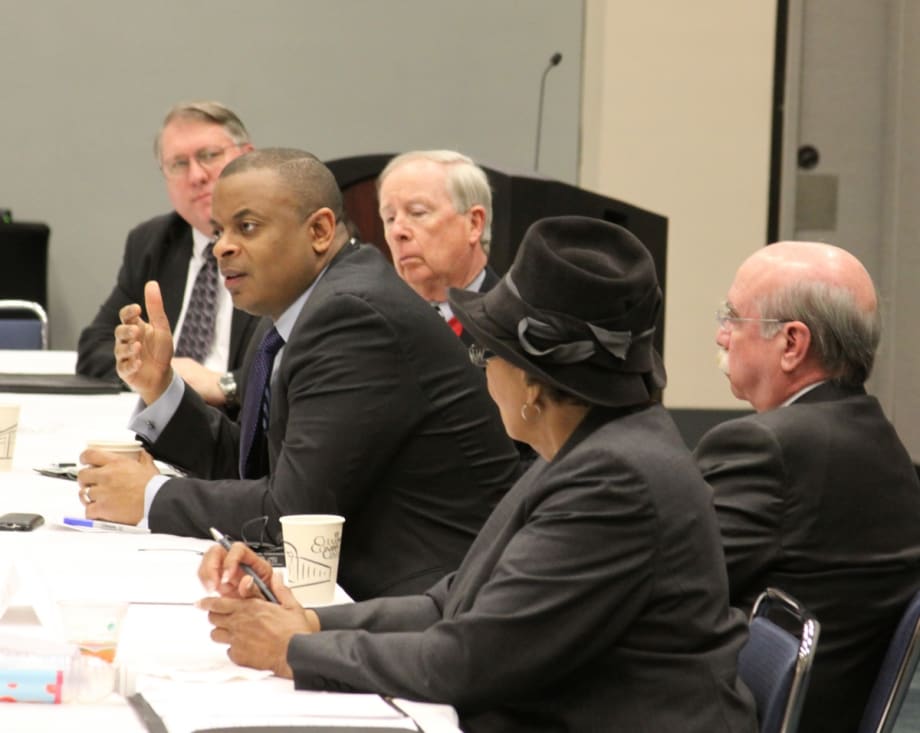
U.S. Transportation Secretary Anthony Foxx sent a letter notifying state department of transportation officials that the Federal Highway Administration (FHWA) will be unable to incur new obligations or make reimbursements to states beginning August 1, 2015, a day after the current MAP-21 surface transportation authority is set to expire.
The U.S. Department of Transportation (U.S. DOT) has published charts showing projected insolvency in the Highway Trust Fund Highway Account by early September and in the Mass Transit Account by early October. However in August, the Highway Account is anticipated to dip below the $4 billion threshold, triggering cash management procedures and leading to delayed reimbursements to the states.
In the letter, Secretary Foxx explains some of the grievous actions that U.S. DOT will be forced to make due to a funding shortfall.
“FHWA will not have the authority to provide project sponsors with any additional contract authority for new or ongoing projects,” Foxx wrote. “Similarly, FHWA will be required to furlough employees, which means your agency will cease having access to personnel who assist with all highway projects, not just with processing payments, but also project approvals, environmental actions and permitting, authorizations for new projects and modifications to existing projects, technical assistance and other vital activities we all rely on FHWA to conduct.”
Earlier this year, the Obama Administration transmitted to Congress an expanded and improved surface transportation program, in the GROW AMERICA Act legislative proposal. That proposal calls for funding growth of almost 50 percent over six years. The funding levels called for in GROW AMERICA are reflected in the Administration’s fiscal year 2016 budget and are fully paid for through existing revenues and by reforming the business tax system while eliminating loopholes that reward companies for moving profits overseas.
GROW AMERICA also includes measures to speed up projects without compromising the environment or structural integrity. It proposes programs to accelerate freight movement and to incentivize states to adopt technologies and processes to match DOT efforts to get projects done faster. GROW AMERICA also proposes ways to bring more private dollars into the work of building our nation's infrastructure through public-private partnerships.
“Congress’s failure to pass a long-term bill is of great concern to all of us who are engaged in the work of building and maintaining our Nation’s transportation infrastructure,” said Foxx. “Careening from self-inflicted crisis to self-inflicted crisis undermines our system. We need Congress to break the cycle of short term extensions; we need a long-term bill with significant growth.”
More Management

METRO Opens Submissions for 2026 Motorcoach Awards
Nominations are now being accepted for METRO Magazine’s Operator of the Year and Innovative Operator of the Year awards.
Read More →
New York MTA Advances Final Contract for Second Avenue Subway Expansion
Contract Four is the largest in the Second Avenue Subway Phase 2 project and includes construction of station infrastructure, tracks, and signals for the subway expansion, MTA officials said. Work on Contract Four will begin in 2027.
Read More →
Transit Agencies Highlight Safety Gains at National Summit
Leaders from 15 major transit systems shared crime-reduction results and safety initiatives while discussing the role of continued federal support.
Read More →

NITA Names New Leadership, Expands Reduced-Fare Program at First Board Meeting
The new regional transit authority appointed its first board chair and interim executive director while extending reduced fares across CTA, Metra, and Pace for eligible riders.
Read More →
Beyond the Checklist: A Structured Approach to Transit Maintenance
Reliability-Centered Maintenance helps transit agencies move beyond routine checklists to focus limited resources on the assets and failures that have the greatest impact on safety, reliability, and service.
Read More →
APTA 2026 Nominating Committee Selects Leadership Slate, Names Chair and Vice Chair Nominees
Leadership changes will help shape the association’s priorities and its representation of the transportation industry during the 2026–2027 term.
Read More →
DART Launches Major Security, Fare Enforcement Initiative
The 90-day demonstration will deploy coordinated security teams at five light rail stations while testing controlled access and gathering data to guide future investments.
Read More →
Sponsored•September 9, 2026
Advancing Fare Collection Through Technology and Innovation
Learn about delivering 1300 gates at 91 stations while managing fare evasion. Explore the large scale deployment, solution customization and real-world results that affect the region. Prepare for deployment in your region now.
Read More →
Game Day in Motion: Moving Millions During the 2026 World Cup
Between packed transit stations and team motorcoaches, see how agencies and operators across North America tackled the transportation demands of the 2026 FIFA World Cup.
Read More →
Surface Transportation Extension Averts Shutdown, Leaves Transit Funding Gap
The stopgap keeps federal transportation programs moving, but missing advance funding could complicate the transit and rail projects agencies are planning next.
Read More →