



FTA: Americans Riding Public Transportation in Greater Numbers
Ridership is up for several agencies by up to 80%, including OKC's EMBARK and Richmond, Va.'s GRTC.
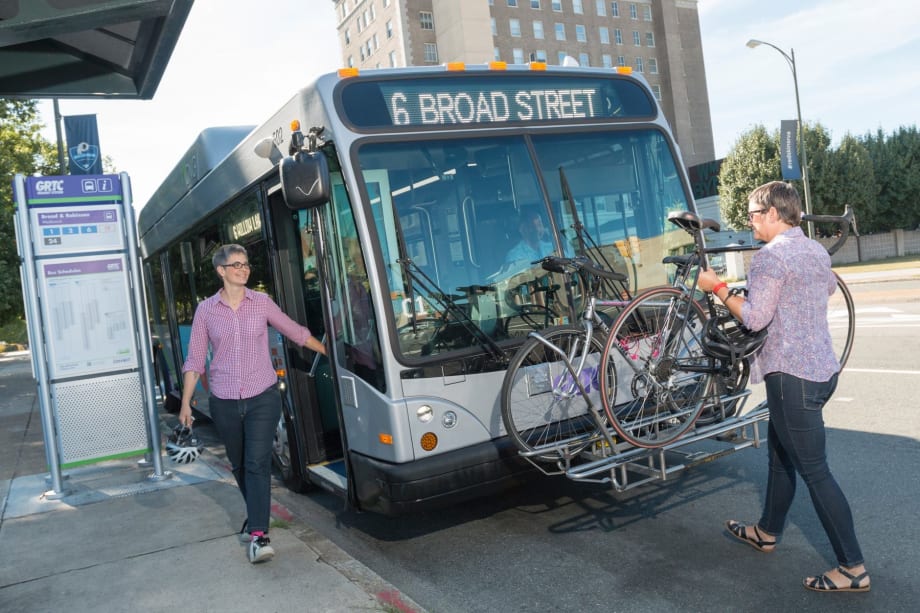
Richmond, Va. also saw 80% of May 2019 riders on their Greater Richmond Transit Company.
GRTC
As Americans are going to work, shopping, and visiting friends and loved ones, they are returning to transit. In some communities, transit ridership is up more than 80% over early 2020 levels, according to Federal Transit Administration (FTA).
“That’s why FTA is facilitating a national conversation about ways transit agencies are attracting riders and growing new ridership,” said FTA Administrator Nuria Fernandez. “FTA’s America’s Open and Transit’s Open initiative is engaging our transit partners through listening sessions and a National Transit Renewal Summit to share best practices and work together to renew ridership across America.”
Oklahoma City saw 81% of riders on its EMBARK bus system compared with May 2019 levels.
“EMBARK’s response over the last year is grounded in our values of safety and service,” said EMBARK Administrator Jason Ferbrache, adding that recent surveys revealed close to 80% of riders felt safe and were satisfied with their bus service. “Oklahoma City and EMBARK’s resilience is a reflection of our commitment to keep residents moving.”
Richmond, Va. also saw 80% of May 2019 riders on their Greater Richmond Transit Company (GRTC).
“During COVID, GRTC developed a laser focus to protect our employees’ health and jobs, realign our resources to critical transit connections for our region’s essential workforce, and protect the physical and economic health and well-being of our staff and riders,” said GRTC CEO Julie Timm. “We are committed to making transit service better and more equitable for our core bus riders who make up the essential workforce, reducing barriers to access and increasing system comfort and reliability.”
Miami-Dade County, Fla., reached 68% of its May 2019 ridership. Miami-Dade is primarily served by Miami-Dade County’s Department of Transportation and Public Works (DTPW) heavy rail, light rail, and buses. DTPW added 120 buses last year as it re-evaluated its ridership and system design, reducing wait times to just five minutes on many routes.
“Public transportation agencies across the country cut service at the beginning of the safer-at-home order, and Miami-Dade Transit was no exception,” said Carlos Cruz-Casas, DTPW assistant director. “But unlike many agencies, soon after, we restored transit service to pre-pandemic levels on most routes — and even added service to go above what we provided before the pandemic.”
Finally, ridership on Kansas City Area Transportation Authority in Kansas City, Mo. rebounded to 69%.
“We’re not going to run away from the people who need us most, we’re going to run toward them,” said Robbie Makinen, KCATA president & CEO, who said that the agency’s zero-fare program has been very popular. “By focusing on social equity and the four pillars of public transit — jobs, education, healthcare and housing – RideKC is able to maximize our ridership.”
The American Rescue Plan and other pandemic relief grants has provided critical funding to transit agencies nationwide, including covering expenses for cleaning and other measures to improve safety. In addition, many agencies have eliminated fares to improve safety for transit drivers and passengers, including KCATA and GRTA, who credit zero-fare initiatives with boosting ridership.
FTA will facilitate a national conversation throughout the summer to help transit agencies across America rebuild and enhance ridership through listening sessions and amplifying best practices from transit agencies that are gaining riders through social media.
More Bus

New York MTA Plans Largest Bus Fleet Upgrade in More Than a Decade
The agency is seeking manufacturers for 650 new CNG buses to replace aging vehicles, improve reliability, and advance its broader fleet modernization strategy.
Read More →
Building a Flexible Path to Transit Electrification
John Hroncich discusses BAE Systems’ modular and scalable approach, lessons learned from decades of real-world operations, and how agencies can identify electrification strategies that fit their fleets.
Read More →
Bus Tech Talk: Keeping Transit Technicians Ahead of the Technology Curve
LA Metro’s Obed Mejia discusses technician training, evolving maintenance technology, fleet replacement, and strategies for getting the most out of today’s transit fleets.
Read More →
Biz Briefs: RIPTA Unveils New Frontrunners, Clevland RTA Adds New Siemens, and More
In METRO's latest installment, we take a look at recent news from Siemens, Prevost, Dodge, and more partnerships making headlines across the transportation sector.
Read More →
People Movement: Holly Arnold Joins Transdev and More
In this edition, we also cover recent appointments and announcements at Pace, CamTran, MCI, and more, showcasing the individuals helping to shape the future of transportation.
Read More →
The High Cost of Transit Buses: Industry Leaders Look to Procurement Reform
Transit leaders and policymakers examine how standardized bus designs, streamlined procurement, and predictable funding could help agencies stretch budgets and deliver better service.
Read More →
The Business Voice Behind Public Transportation
As chair of APTA’s Business Members Board of Governors, Ray Melleady explains how more than 850 business members are partnering with transit agencies to advance funding, innovation, and industry-wide collaboration.
Read More →
From Surviving to Thriving: Building Stronger Transportation Organizations
Bus Business Consultants founder Brian Dickson shares lessons on leadership, organizational health, and creating options for long-term success in a changing transportation industry.
Read More →
Finding the ‘Happy Medium’: Optimizing Maintenance Without Sacrificing Reliability
The key to maintenance optimization isn’t doing less work—it’s doing the right work at the right time on the right assets.
Read More →
LA Metro, City of West Hollywood, and Partners Advance Smarter Bus Lane Enforcement
The award-winning partnership combines AI-powered detection with human oversight to improve bus reliability, accessibility, and enforcement efficiency.
Read More →