



FTA Awards $1.6B in Grants for Low-, No-Emissions Buses
Funded by the President’s Bipartisan Infrastructure Law, more than 1,100 of the 1,800 vehicles being funded will use zero-emissions technology, which reduces air pollution and helps meet the President’s goal of net-zero emissions by 2050.
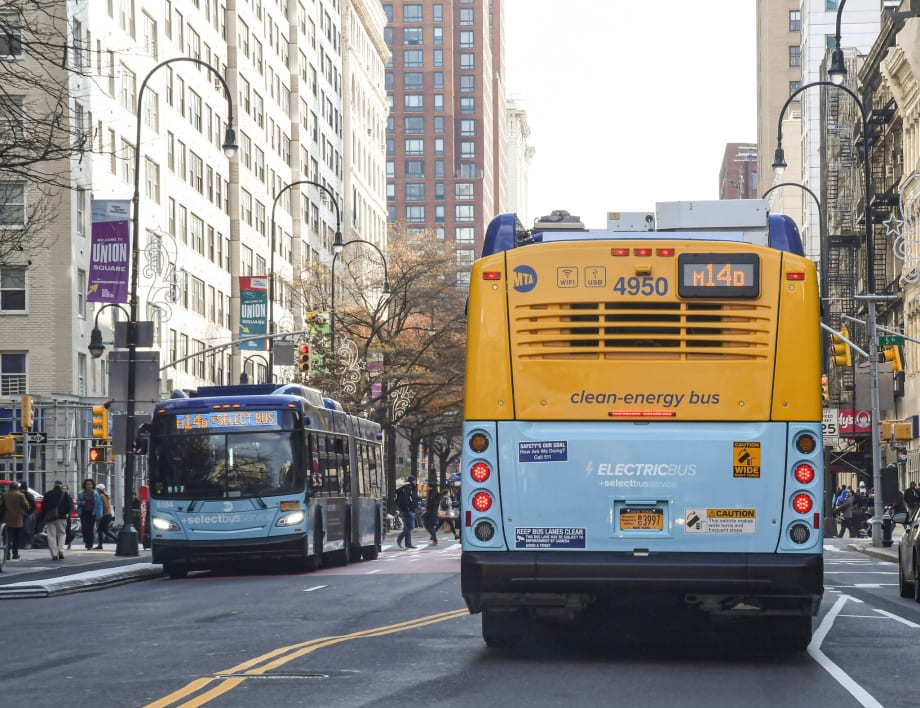
New York's Metropolitan Transportation Authority will receive $116 million to buy approximately 230 battery-electric buses to replace older diesel buses, electrifying nearly 4% of its 5,800-bus fleet and launching a comprehensive workforce training and development program.
MTA/Marc A. Hermann
The Federal Transit Administration (FTA) announced $1.66 billion in grants to transit agencies, territories, and states across the country to invest in 150 bus fleets and facilities in 48 states and territories. Funded by the President’s Bipartisan Infrastructure Law, more than 1,100 of the 1,800 vehicles being funded will use zero-emissions technology, which reduces air pollution and helps meet the President’s goal of net-zero emissions by 2050.
Funding for this year alone nearly doubles the number of no-emission transit buses on America’s roadways. For the first time, 5% of low- and no-emission bus funding will be used to train transit workers on how to maintain and operate new clean bus technology.
The bus grant awards — made under FTA’s Buses and Bus Facilities and Low- and No-Emission Vehicle programs — are FTA’s first competitive grant selections under the Bipartisan Infrastructure Law. The programs support the Biden-Harris Administration’s commitment to expand transportation infrastructure, create and maintain good-paying jobs, and fight climate change in the U.S.
“When a transit door opens, whether it is a bus, train, or ferry, it is a great equalizer for everyone in our nation,” said FTA Administrator Nuria Fernandez. “With this tremendous amount of funding, the President’s Bipartisan Infrastructure Law gives more Americans access to the opportunities that transit creates, more often, in more places. These investments also help us meet our goals of cutting transportation emissions, creating good-paying American manufacturing jobs, and helping America’s transit workers prepare for new vehicle technology.”
FTA’s Low or No Emission (Low-No) Grant Program makes funding available to help transit agencies buy or lease U.S.-built low- or no-emission vehicles, including related equipment or facilities. The Bipartisan Infrastructure Law provides $5.5 billion over five years for the Low-No Program — more than six times greater than the previous five years of funding. For Fiscal Year 2022, approximately $1.17 billion was available for grants under this program.
FTA’s Grants for Buses and Bus Facilities Program supports transit agencies in buying and rehabilitating buses and vans and building bus maintenance facilities. The Bipartisan Infrastructure Law provides nearly $2 billion over five years for the program. For Fiscal Year 2022, approximately $550 million for grants was available under this program.
In response to the Notice of Funding Opportunity, FTA received 530 eligible project proposals totaling approximately $7.72 billion in requests, according to the agency. A full list of recipients is available here. Examples of projects selected to receive funding include:
• The New York Metropolitan Transportation Authority (MTA) will receive $116 million to buy approximately 230 battery-electric buses to replace older diesel buses, electrifying nearly 4% of its 5,800-bus fleet and launching a comprehensive workforce training and development program. The project will improve the safety and reliability of transit service and improve air quality for residents and visitors to New York City.
• The Los Angeles County Metropolitan Transportation Authority (Metro) will receive $104.1 million to buy approximately 160 battery-electric buses to replace older compressed natural gas buses as well as charging equipment. The project will improve safety, air quality and reliability for residents and visitors to the Los Angeles metropolitan area.
• The Memphis Area Transit Authority (MATA) will receive $54 million to build an operations and maintenance facility. The facility, which will be in Memphis, will accommodate more than 300 vehicles and improve safety and ensure a good state of repair for the bus fleet.
• The Colorado Department of Transportation will receive $34.7 million on behalf of Summit Stage, a rural transit agency that provides bus service in Summit, Park, and Lake counties in northeast Colorado, to build a bus depot for electrical charging and storage. It will replace Summit Stage’s aging facility and prepare for a 100-percent electric fleet in the future.
More Bus

New York MTA Plans Largest Bus Fleet Upgrade in More Than a Decade
The agency is seeking manufacturers for 650 new CNG buses to replace aging vehicles, improve reliability, and advance its broader fleet modernization strategy.
Read More →
Building a Flexible Path to Transit Electrification
John Hroncich discusses BAE Systems’ modular and scalable approach, lessons learned from decades of real-world operations, and how agencies can identify electrification strategies that fit their fleets.
Read More →
Bus Tech Talk: Keeping Transit Technicians Ahead of the Technology Curve
LA Metro’s Obed Mejia discusses technician training, evolving maintenance technology, fleet replacement, and strategies for getting the most out of today’s transit fleets.
Read More →
Biz Briefs: RIPTA Unveils New Frontrunners, Clevland RTA Adds New Siemens, and More
In METRO's latest installment, we take a look at recent news from Siemens, Prevost, Dodge, and more partnerships making headlines across the transportation sector.
Read More →
People Movement: Holly Arnold Joins Transdev and More
In this edition, we also cover recent appointments and announcements at Pace, CamTran, MCI, and more, showcasing the individuals helping to shape the future of transportation.
Read More →
The High Cost of Transit Buses: Industry Leaders Look to Procurement Reform
Transit leaders and policymakers examine how standardized bus designs, streamlined procurement, and predictable funding could help agencies stretch budgets and deliver better service.
Read More →
The Business Voice Behind Public Transportation
As chair of APTA’s Business Members Board of Governors, Ray Melleady explains how more than 850 business members are partnering with transit agencies to advance funding, innovation, and industry-wide collaboration.
Read More →
From Surviving to Thriving: Building Stronger Transportation Organizations
Bus Business Consultants founder Brian Dickson shares lessons on leadership, organizational health, and creating options for long-term success in a changing transportation industry.
Read More →
Finding the ‘Happy Medium’: Optimizing Maintenance Without Sacrificing Reliability
The key to maintenance optimization isn’t doing less work—it’s doing the right work at the right time on the right assets.
Read More →
LA Metro, City of West Hollywood, and Partners Advance Smarter Bus Lane Enforcement
The award-winning partnership combines AI-powered detection with human oversight to improve bus reliability, accessibility, and enforcement efficiency.
Read More →