



RELATED: 5 Transit Facility Design Elements to Boost Employee Heath, Well-Being
How implementing biophilic architecture can soothe transit riders
By incorporating simple biophilic principles into station and facility design, cities, and transit agencies can foster stronger connections to nature that improve our overall wellbeing as individuals and as a community.
by By Rachel Bannon-Godfrey and Rebecca Macies
September 13, 2017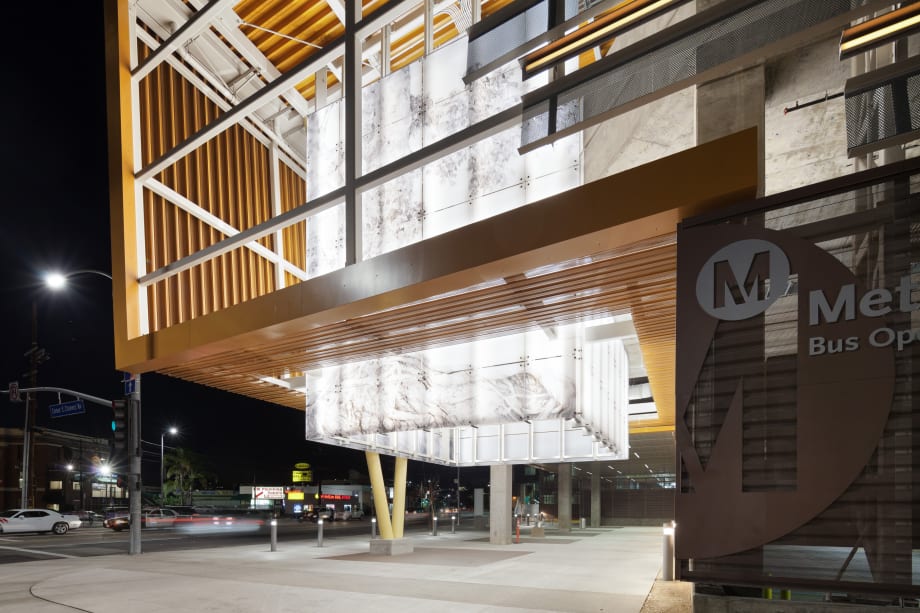
Not all biophilic strategies involve natural materials or patterns. Refuge, defined as a place that is protected from behind and overhead, and can provide withdrawal from environmental conditions or activity, enhances a sense of personal safety. Prospect, an unobstructed view over a distance, also contributes to personal safety and awareness of a situation. Image: RNL
6 min to read
Not all biophilic strategies involve natural materials or patterns. Refuge, defined as a place that is protected from behind and overhead, and can provide withdrawal from environmental conditions or activity, enhances a sense of personal safety. Prospect, an unobstructed view over a distance, also contributes to personal safety and awareness of a situation. Image: RNL
What do a walk in the park, an office with a view, and a wooden bench have in common? All provide the benefits of biophilia, or an innate tendency we humans have to seek connection with nature.
A recent study had students perform a task, then look at an image of either a concrete roof surrounded by other tall buildings, or a roof covered in grasses and wildflowers for 40 seconds. The students then repeated the tasks assigned to them at the beginning of the study. The participants who viewed the green roof performed better on the second task after just 40 seconds of observing nature. It took less than a minute of contact with a bit of nature — a green roof — to restore attention.
In urban environments, we often think of access to nature as a luxury. However, based on what we know about the benefits of biophilic design, we would all be better off if it was accessible to everyone. As two companies focused on creating a built environment that has positive impact on the people in it, we are increasingly considering how cities themselves can be biophilic.
The reality of today’s cities is that finding new spaces to add large parks is challenging. Instead, we must look for opportunities to incorporate more frequent, small-scale nature encounters into the everyday experience of urban residents. To really move the needle, widespread impact is ideal, but where do we start?
Enter public transit. According to a 2015 Pew Research report, 1 in 10 Americans uses public transportation to get to work, and in 2014, there were 10.75 billion passenger trips taken in the U.S. That’s nearly 11 billion moments spent at bus stops and rail stations each year, and each of these moments represents an opportunity. By incorporating simple biophilic principles into station and facility design, cities, and transit agencies can foster stronger connections to nature that improve our overall wellbeing as individuals and as a community.
Biophilia Basics
One concept gaining traction in design is "urban acupuncture," a way of describing small-scale, localized interventions that collectively contribute to relieving stress in a community. For example, pocket parks, farmers markets, street art, or murals. Considering the proven benefits of access to public transit, there is no better opportunity for urban acupuncture than a basic transit stop. (Even the descriptions of biophilic urban intervention approaches sound like they could be describing route maps for a transit agency.) Yet, for many people, the commute begins on a concrete sidewalk, next to a single metal pole by the side of the asphalt road in the heat, cold, wind, or rain. If personal mobility is a human right, why not also make it a human delight?
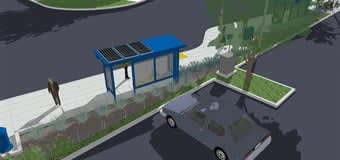
According to a 2015 Pew Research report, 1 in 10 Americans uses public transportation to get to work, and in 2014, there were 10.75 billion passenger trips taken in the United States. Image: RNL
Based on the existing literature, Terrapin has identified 14 design elements, or spatial patterns, that support the desired outcomes of biophilic design. These patterns are not new design elements, but a framework for organizing and thinking about the science behind why we respond to certain traditional design elements.
The 14 patterns can be split into three categories: Nature in the Space, which refers to direct contact with nature, Natural Analogues, which reference nature and natural patterns, and Nature of the Space, which recreate preferred spatial orientations that occur in natural environments.
Nature in the Space
Visual Connection to Nature
Non-Visual Connection to Nature
Non-Rhythmic Sensory Stimuli
Access to Thermal and Air Flow Variability
Presence of Water
Dynamic and Diffuse Light
Connection to Natural Systems
Natural Analogues
Biomorphic Forms and Patterns
Material Connection to Nature
Complexity and Order
Nature of the Space
Prospect
Refuge
Mystery
Risk/Peril
The following projects provide examples of how biophilic strategies have been or could be incorporated into transit infrastructure in meaningful ways.
Nature of the Space: Refuge and Prospect
Not all biophilic strategies involve natural materials or patterns. Refuge, defined as a place that is protected from behind and overhead, and can provide withdrawal from environmental conditions or activity, enhances a sense of personal safety. Prospect, an unobstructed view over a distance, also contributes to personal safety and awareness of a situation. Providing a physical shelter, enclosed on at least one side and with a canopy overhead, located with a long-range view of the street, can help reduce the stress response of waiting passengers. In Virginia Beach for example, RNL, now part of Stantec, redesigned the rail station shelters to be more open and accessible from all sides, rather than just from the rail side, in order to be more inviting to the passengers and to create a visually safe environment.
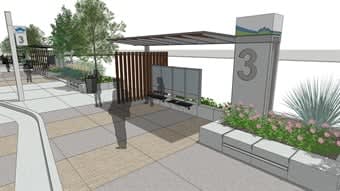
Foothill Transit’s Covina Park & Ride and Transit Center shelters in Covina, Calif. draw attention to, and celebrate, rainfall in this notoriously drought-prone region. Designed to specifically integrate into the surrounding landscape, the bus shelters are comprised of a wood canopy and wood-colored vertical screen. Image: RNL
Natural Analogues: Incorporate Natural Patterns
Even if wood or other natural materials are not practical in a particular location, consider incorporating natural patterns or imagery to create a connection to nature. Due to be completed in September 2017, the Greeley Evans Transit station in Greeley, Colo., features a perforated metal screen with a representation of the surrounding area’s prairie grasses, creating a buffer between the administration offices and the public seating areas, and instilling a sense of identity and connection to the local landscape. The public seating areas are comprised of IPE wood benches under a shade canopy.
Nature Analogues: Reuse Natural Materials
Consider use of salvaged wood for benches, shade canopies (where appropriate for the climate), and paving. For the City of Durham Department of Water Management’s Mist Lake complex, RNL is creating a walking path for employees on site that will link multiple city facilities together. Construction of the pathway will require the removal of several trees. Wood from these trees will be repurposed into benches and other landscape features.
Nature in the Space: Celebrate Rainfall
Foothill Transit’s Covina Park & Ride and Transit Center shelters in Covina, Calif. draw attention to, and celebrate, rainfall in this notoriously drought-prone region. Designed to specifically integrate into the surrounding landscape, the bus shelters are comprised of a wood canopy and wood-colored vertical screen. The canopy drainage, which feeds adjacent planters of native and adaptive plants, is integrated into the signage pylon so that rainfall, when it happens, becomes a highly visible event.
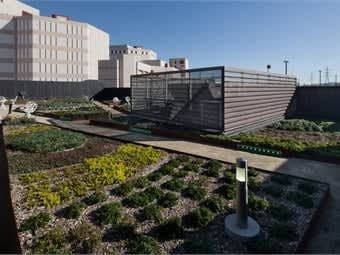
LA Metro's Division 13 Bus Operations & Maintenance facility features a rooftop garden. Photo: Chang Kim-Maintenance Design Group for Metro
Nature in the Space: Green Roofs, Green Walls
While cost-prohibitive on a large scale, consider installing green roofs or green walls in a select number of transit shelters in communities most affected by poor air quality, or most isolated from access to nature. As compared to a larger building, the smaller, human-scale of transit shelters means a green roof or green walls will have an even more immediate impact, psychologically and biologically, on the people using it, as well as on the occupants of surrounding buildings with a view of the shelter. In addition to providing a direct connection to nature, using greenery has the added benefit of providing much-needed shade for stops in the Valley Metro Light Rail system in Phoenix. The greenscreen panels used in Phoenix are reportedly up to 30% cooler than hardscaped areas exposed to full sun.
Nature in the Space: Creating a Sense of Place
In a location otherwise dominated by concrete and asphalt, LA Metro’s Division 13 Bus Operations & Maintenance facility features a large-scale reference to nature in the form of a giant lantern etched with the image of a 400-year-old sycamore tree, know locally as El Aliso, that once stood on the site. The panels connect passersby to the history of the site, and the natural elements that were once there.
Regardless of whether you incorporate one or a combination of biophilic design elements into a transit project, a little "urban acupuncture" could be just the shot a station or facility needs to help passengers and passersby alike feel a bit more connected.
Rachel Bannon-Godfrey is director of sustainability at RNL, now part of Stantec, and Rebecca Macies is director of operations at Terrapin Bright Green.
More Management
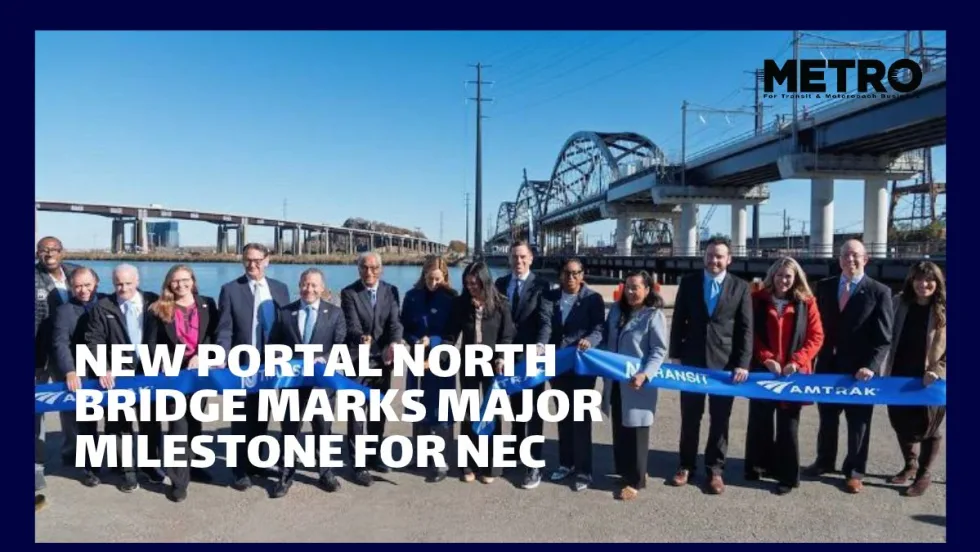
Amtrak, NJ TRANSIT Launch Full Service on New Portal North Bridge
The completion of the two-track bridge over the Hackensack River eliminates a longstanding source of delays for NJ TRANSIT and Amtrak customers. It marks a major milestone for the Gateway Program.
Read More →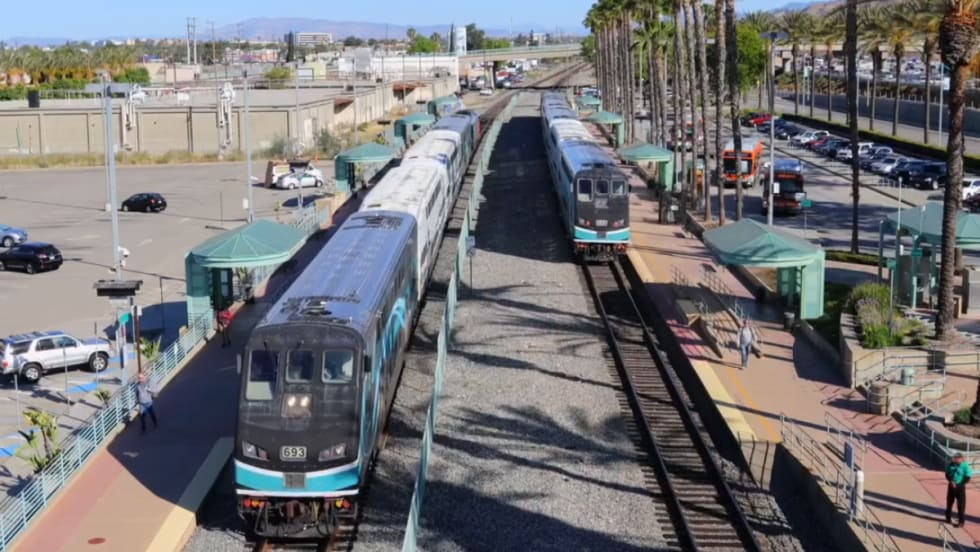
Southern California’s Metrolink Approves $508.8M Budget, Avoids Service Cuts
A $20 million state allocation allows the regional rail agency to maintain existing weekday and weekend service through fiscal year 2028, although longer-term funding challenges remain.
Read More →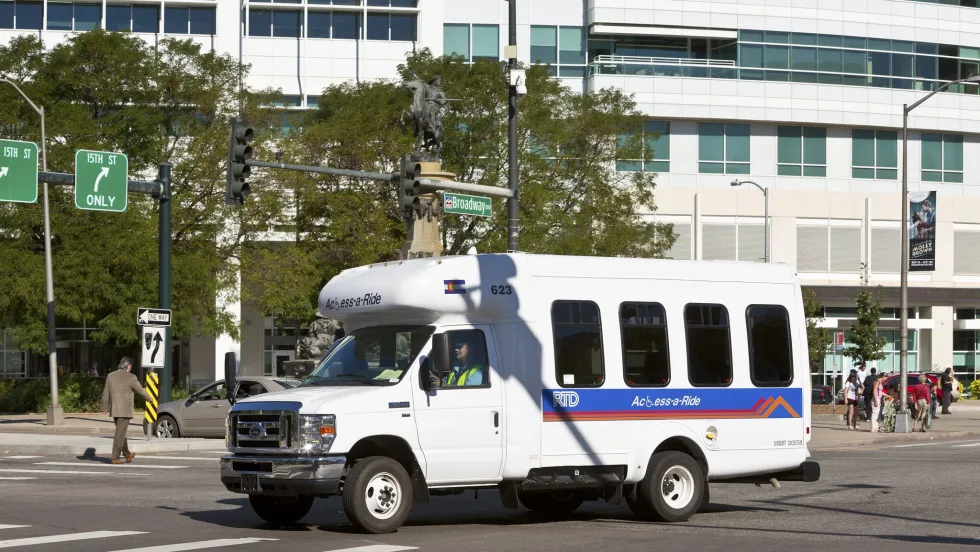
Denver RTD Committee to Review Paratransit Services, Improve Accessibility
The committee will oversee an independent study of paratransit operations, gather customer feedback, and recommend improvements to service reliability, accessibility, and accountability.
Read More →
Castro to Lead RTC of Southern Nevada and More in People Movement
In this edition, we also cover recent appointments and announcements at the STV, MCI, and more, showcasing the individuals helping to shape the future of transportation.
Read More →
STraffic Expands North American Presence with Fare Collection Technology
John Moon, Associate Director, Product Strategy at STraffic, discusses the company's growth in North America, its efforts to reduce fare evasion, and more.
Read More →
Study: Denver RTD Generates $2.1 Billion in Annual Economic Activity
An economic impact study finds the agency supports approximately 17,500 jobs, delivers $1.6 billion in annual community and mobility benefits, and generates $2.42 in economic value for every dollar invested.
Read More →
Mark Aesch Nominated to Lead Federal Transit Administration
The former Rochester transit chief and TransPro founder, who has also contributed to METRO Magazine, brings decades of industry experience and a focus on performance, accountability, and financial sustainability to the nomination.
Read More →
Best and Worst U.S. Cities for Public Transportation in 2026
A new analysis of 50 major U.S. urban areas ranks public transit systems based on accessibility, affordability, usefulness, and safety, highlighting where transit performs best and where challenges remain.
Read More →
Laketran Cuts Fuel Costs, Boosts Efficiency with Propane-Powered Fleet
The Ohio transit agency is using propane-powered vehicles and on-site fueling infrastructure to cut fuel and maintenance costs while meeting growing demand for paratransit services.
Read More →
Canada’s Public Transit Supports $65.6 Billion in Annual GDP
New research from the Canadian Chamber of Commerce examines transit's economic contributions, including job creation and the financial implications of transportation investment.
Read More →