



Ind.'s Transpo adds first New Flyer CNG bus
The vehicle is the first of 16 new vehicles the agency is adding and the first new bus at the agency in 11 years.

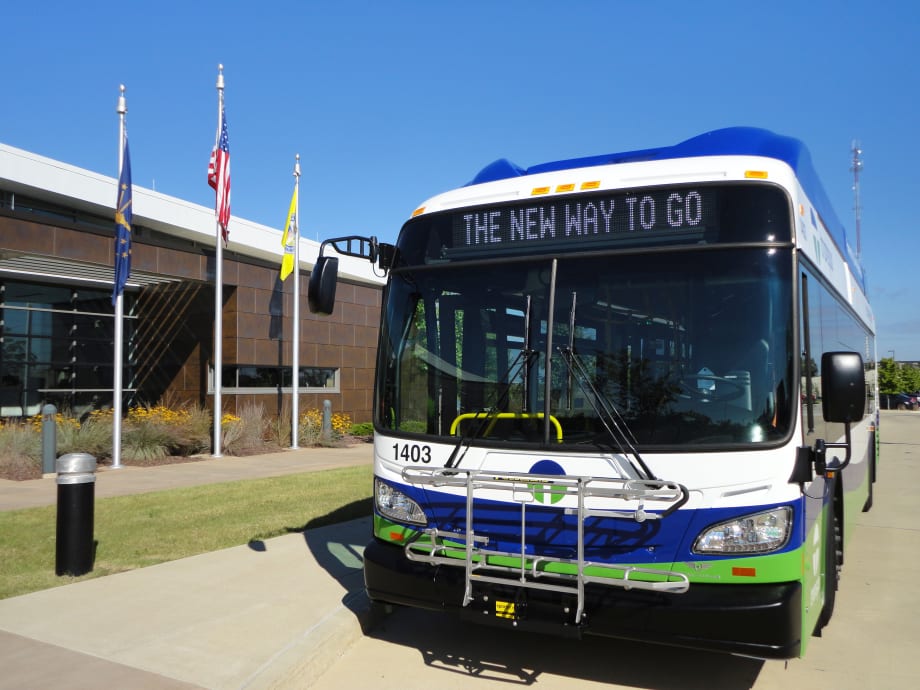
Indiana’s South Bend Public Transportation Corp. (Transpo) received the first new bus in over 11 years at the Emil “Lucky” Renzik Administration, Maintenance and Operations Facility. There will be a total of 16 new fixed-route buses to replace 15-year old vehicles that have reached and exceeded their useful life.
Transpo selected the New Flyer Xcelsior to replace the aging Gillig Phantoms and low-floor buses. The bus is built in the U.S. and Transpo worked with New Flyer to utilize as many “Made in Indiana” components as possible. A complete list of Indiana suppliers is included in the attached vehicle overview.
The new buses are powered by compressed natural gas (CNG). The New Flyer Xcelsior is the same length, at 35 feet, as the older buses, but offers four additional seats per vehicle and features a sleek, contemporary look representing the connectivity that Transpo provides throughout South Bend and Mishawaka.
Transpo and the City of South Bend previously announced a partnership to build the first fast-fuel CNG facility in the region that will be open to the public. Transpo expects to break ground on the new facility later this year which will be located on their current property. The fueling center is expected to be operational in early 2015.
Transpo expects to have all 16 new buses on property by the end of year. Once the vehicles are on site, inspections will be completed, equipment installed, and operator and maintenance training will take place. The buses should be ready to go into service in early 2015.
More Bus

People Movement: Dan Dipert Coaches Adds Third-Generation Leader, Keolis Names New Valley Metro VP/GM, and More
In this edition, we also cover recent appointments and announcements at the Wabtec, SilverRide, HNTB, and more, showcasing the individuals helping to shape the future of transportation.
Read More →
New York MTA Plans Largest Bus Fleet Upgrade in More Than a Decade
The agency is seeking manufacturers for 650 new CNG buses to replace aging vehicles, improve reliability, and advance its broader fleet modernization strategy.
Read More →
Building a Flexible Path to Transit Electrification
John Hroncich discusses BAE Systems’ modular and scalable approach, lessons learned from decades of real-world operations, and how agencies can identify electrification strategies that fit their fleets.
Read More →
Bus Tech Talk: Keeping Transit Technicians Ahead of the Technology Curve
LA Metro’s Obed Mejia discusses technician training, evolving maintenance technology, fleet replacement, and strategies for getting the most out of today’s transit fleets.
Read More →
Biz Briefs: RIPTA Unveils New Frontrunners, Clevland RTA Adds New Siemens, and More
In METRO's latest installment, we take a look at recent news from Siemens, Prevost, Dodge, and more partnerships making headlines across the transportation sector.
Read More →
People Movement: Holly Arnold Joins Transdev and More
In this edition, we also cover recent appointments and announcements at Pace, CamTran, MCI, and more, showcasing the individuals helping to shape the future of transportation.
Read More →
The High Cost of Transit Buses: Industry Leaders Look to Procurement Reform
Transit leaders and policymakers examine how standardized bus designs, streamlined procurement, and predictable funding could help agencies stretch budgets and deliver better service.
Read More →
The Business Voice Behind Public Transportation
As chair of APTA’s Business Members Board of Governors, Ray Melleady explains how more than 850 business members are partnering with transit agencies to advance funding, innovation, and industry-wide collaboration.
Read More →
From Surviving to Thriving: Building Stronger Transportation Organizations
Bus Business Consultants founder Brian Dickson shares lessons on leadership, organizational health, and creating options for long-term success in a changing transportation industry.
Read More →
Finding the ‘Happy Medium’: Optimizing Maintenance Without Sacrificing Reliability
The key to maintenance optimization isn’t doing less work—it’s doing the right work at the right time on the right assets.
Read More →