




More Work: L.A. Metro Extends Popular GoPass Pilot
L.A. Metro Launches Equity Information Data Hub
The Equity Information Hub is a website that provides data and resources necessary to identify and reduce racial, socioeconomic, and gender barriers.
May 9, 2023
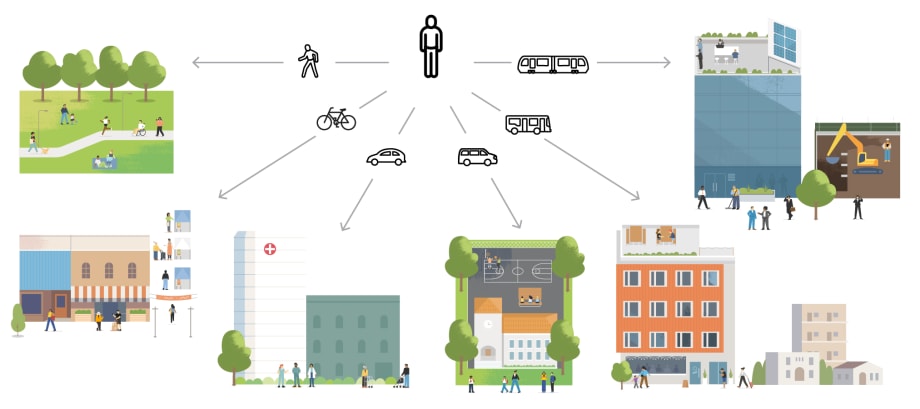
The Equity Information Hub provides links to many of Metro’s equity tools, engagement resources, case studies, and industry best practices in a centralized virtual location.
Photo: Metro
3 min to read
The Los Angeles County Metropolitan Transportation Authority (Metro) announced it has launched an Equity Information Hub under its Metro Equity Platform.
The data hub aims to enable community members access to its equity-focused initiatives and resources encouraging active inclusion in the agency’s planning process.
Equity Information Hub
The Equity Information Hub is a website that provides data and resources necessary to identify and reduce racial, socioeconomic, and gender barriers and ensure all Angelenos have equitable access to agency services and programs.
It provides links to many of Metro’s equity tools, engagement resources, case studies, and industry best practices in a centralized virtual location. Language translation capabilities are also available.
"Through its Equity Platform, Metro is dedicated to finding ways to increase access to Metro’s projects, programs, and initiatives for all our customers," said Ara J. Najarian, Metro Board chair. "It is through these efforts that Metro can become the transportation of choice as well as an economic catalyst for our county."
The Equity Information Hub highlights the Equity Planning and Evaluation Tool pilots, including one that is being implemented for the Long Beach - East L.A. Corridor Mobility Investment Plan (formerly I-710 Task Force).
Metro said it seeks to offer multimodal options to help improve air quality and mobility for people and goods.
The plan includes engaging residents in the cities of Bell, Bell Gardens, Vernon, Los Angeles, Maywood, Huntington Park, South Gate, Cudahy, Downey, Lynwood, Compton, Paramount, Signal Hill, and Long Beach. Unincorporated communities of East L.A. and Walnut Park are also part of the corridor.
"Equity is a fundamental part of every aspect of Metro's work, whether it's building affordable housing near transit stations, offering reduced fares to families, children, students, and seniors, or collaborating with community-based organizations to reach marginalized communities," said Jacquelyn Dupont-Walker, Metro Board first vice chair. "We must use the equity information hub and other advanced tools to help in our efforts to enhance the quality of life for all residents of Los Angeles."
The Long Beach to East L.A. Corridor Mobility Investment Plan will implement projects recommended by local community members. Projects could include new bike lanes, more ADA-compliant pedestrian bridges and sidewalks, incentivizing telecommuting programs, micro-distribution hubs, and synchronized street signals between cities.
Metro's Community-Based Organization Partnering Strategy
As part of its equity toolbox, Metro has developed specific programs to address inequities that transit customers regularly face within marginalized communities such as South Los Angeles and portions of the San Fernando Valley, among others.
One tool to improve equity for customers is Metro’s CBO Partnering Strategy. This is a guiding document that allows Metro to standardize its approach to building community relationships and working with grassroots community organizations.
"Angelenos depend on Metro as their primary mode of transportation, which is why we must ensure that our planning, engagement, and decisions are equitable for all of our customers as we expand our transit system," said Hilda Solis, L.A. County Supervisor. "To that end, we must be attentive to the concerns of our customers—regardless of where they live, work, or recreate."
Metro’s CBO strategy has been used successfully on the Vermont Transit Corridor Project, which is now studying the possible implementation of a rail line along Vermont Boulevard from Hollywood to South Los Angeles that would connect four active Metro Rail lines.
"This platform will help Metro address the inequities of the past that continue to have an impact today and guarantee transportation investments are prioritized by communities with the highest need," said Holly J. Mitchell, L.A. County supervisor. "Our goal through this work is to ensure that the voices of our customers are heard, no matter their socioeconomic status, ethnic background, or where they reside in the county."
More Management

New York MTA Launches Historic $1.9B Signal, Track Modernization Project
Funded in part by congestion pricing revenue, the project will replace nearly century-old signals along the A and C lines in Brooklyn and Queens.
Read More →
Brian Dickson on Building Stronger, More Resilient Transportation Organizations
Bus Business Consultants Founder Brian Dickson discusses the leadership principles, operational discipline, and strategic planning that separate transportation companies positioned for long-term success from those stuck in survival mode.
Read More →
LA Metro Breaks Ground on Vermont BRT Project
The 12.4-mile corridor is projected to serve 66,200 daily riders, reduce travel times by up to 24%, and create the nation's busiest bus rapid transit corridor.
Read More →
Building Stronger Leaders, More Resilient Transit Teams
Dr. Carol Parker Walsh discusses leadership development, employee retention, workplace culture, and preparing transit’s workforce for AI and automation.
Read More →
Roman Cornell on ABC Companies’ Evolution and the Future of Passenger Transportation
The company’s CEO discusses carrying forward a third-generation family legacy, ABC’s continued evolution in passenger transportation, support for increasingly complex fleets, and how technology and continued investment could help operators improve uptime.
Read More →
CATS Launches West Charlotte Microtransit Zone, Expands Transit Services
The new microtransit zone connects residents to key destinations as Charlotte Area Transit System rolls out the first phase of its 2055 Transit System Plan.
Read More →
VIA Bus Ridership Grows 10.1% Through August 2026
San Antonio's VIA Metropolitan Transit reported the highest bus ridership growth among major Texas transit systems. Federal Transit Administration data ranked it second among the nation's 50 largest transit systems.
Read More →
CSA Group Releases Climate Resilience Standard for Transit, Passenger Rail
Developed with support from the Standards Council of Canada, CSA D700 guides assessing climate-related risks and planning adaptation measures for transit and passenger rail systems.
Read More →
ETA CEO John Maglio on Transit Technology, Innovation, and Building Agency Trust
ETA founder and CEO John Maglio explores the evolution of transit technology, the importance of reliable systems, and how stronger partnerships can help agencies improve operations and the passenger experience.
Read More →
COTA Launches First Customer Experience Action Plan to Improve Transit Service
The new plan outlines improvements to service reliability, accessibility, communication, and the overall rider experience across Central Ohio's transit system.
Read More →