



L.A. Metro, Partners Break Ground on Affordable Housing Project
The joint development project, scheduled for completion in 2024, is Metro’s latest effort to add critically needed affordable housing to the L.A. region and provide new opportunities for Metro customers to live adjacent to transit in their own communities.

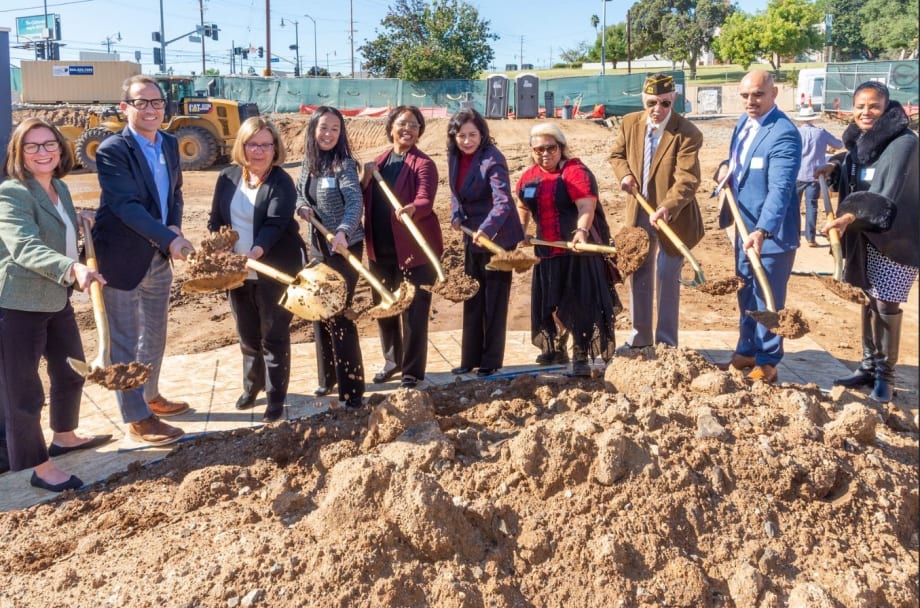
L.A. Metro’s joint development sites are a gateway to the Metro transit system and hold unique potential to advance community development goals while attracting new riders to the Metro system.
L.A. Metro
The Los Angeles County Metropolitan Transportation Authority (Metro) and A Community of Friends, a nonprofit specializing in developing supportive housing, broke ground on construction of a new affordable housing development called Lorena Plaza located at the intersection of 1st and Lorena Streets in Boyle Heights. Low-income veterans will receive preference for half of all units in the development.
The joint development project, scheduled for completion in 2024, is Metro’s latest effort to add critically needed affordable housing to the L.A. region and provide new opportunities for Metro customers to live adjacent to transit in their own communities.
Located next to the L Line (Gold) about a quarter mile from the Indiana Station, the development will be home to a four-story apartment building that will include 49 affordable housing units. This includes a mix of studio, one-, two-, and three-bedroom apartments. It will also feature 7,500 square feet of commercial space. Thirty-two of the 49 apartments will go to unhoused individuals and families, another 16 to low-income families and the remaining unit will go to a resident manager.
Of the 48 apartments to be leased, half will go to veterans who are either unhoused or low-income. In addition to housing, the Lorena Plaza project will also provide supportive services to its tenants.
Onsite amenities will include a large community room with kitchen that opens into a private, landscaped interior courtyard with outdoor seating. There will also be a barbecue area, play area for children, on-site laundry rooms, offices for case management staff and property manager, bicycle parking, computer room, fitness center, and elevators.
As a part of the original Spanish land grant that established the City of Los Angeles in 1781, Boyle Heights was one of the first neighborhoods to develop outside of Downtown Los Angeles. When Lorena Plaza is completed, it will help the Boyle Heights community maintain its rich history of vibrancy and diversity and help its residents avoid displacement.
Metro’s joint development sites are a gateway to the Metro transit system and hold unique potential to advance community development goals while attracting new riders to the Metro system. In June 2021, the Metro board adopted an updated Joint Development Policy with a mandate to build as much affordable housing near transit for those who need it most, as soon as possible.
"This project demonstrates what holistic approaches, strong partnerships and perseverance can achieve. We are grateful to the many members of the community who were involved in making this project a reality," said Metro CEO Stephanie Wiggins. "We are excited to partner with A Community of Friends to bring much-needed affordable housing to Boyle Heights."
In 2022, 300 affordable housing units have begun construction on Metro-owned property. This is in addition to the 2,200 existing units already in Metro’s portfolio. Last June, Metro celebrated the groundbreaking of Los Lirios, another Boyle Heights affordable housing development. With the addition of Lorena Plaza, 111 affordable housing units are now under construction in Boyle Heights.
Metro’s overall joint development efforts are designed to help reduce auto use and increase transit ridership by directly linking Metro’s transportation network with housing, employment, retail and commercial opportunities.
More Management

METRO Opens Submissions for 2026 Motorcoach Awards
Nominations are now being accepted for METRO Magazine’s Operator of the Year and Innovative Operator of the Year awards.
Read More →
New York MTA Advances Final Contract for Second Avenue Subway Expansion
Contract Four is the largest in the Second Avenue Subway Phase 2 project and includes construction of station infrastructure, tracks, and signals for the subway expansion, MTA officials said. Work on Contract Four will begin in 2027.
Read More →
Transit Agencies Highlight Safety Gains at National Summit
Leaders from 15 major transit systems shared crime-reduction results and safety initiatives while discussing the role of continued federal support.
Read More →

NITA Names New Leadership, Expands Reduced-Fare Program at First Board Meeting
The new regional transit authority appointed its first board chair and interim executive director while extending reduced fares across CTA, Metra, and Pace for eligible riders.
Read More →
Beyond the Checklist: A Structured Approach to Transit Maintenance
Reliability-Centered Maintenance helps transit agencies move beyond routine checklists to focus limited resources on the assets and failures that have the greatest impact on safety, reliability, and service.
Read More →
APTA 2026 Nominating Committee Selects Leadership Slate, Names Chair and Vice Chair Nominees
Leadership changes will help shape the association’s priorities and its representation of the transportation industry during the 2026–2027 term.
Read More →
DART Launches Major Security, Fare Enforcement Initiative
The 90-day demonstration will deploy coordinated security teams at five light rail stations while testing controlled access and gathering data to guide future investments.
Read More →
Advancing Fare Collection Through Technology and Innovation
Learn about delivering 1300 gates at 91 stations while managing fare evasion. Explore the large scale deployment, solution customization and real-world results that affect the region. Prepare for deployment in your region now.
Read More →
Game Day in Motion: Moving Millions During the 2026 World Cup
Between packed transit stations and team motorcoaches, see how agencies and operators across North America tackled the transportation demands of the 2026 FIFA World Cup.
Read More →
Surface Transportation Extension Averts Shutdown, Leaves Transit Funding Gap
The stopgap keeps federal transportation programs moving, but missing advance funding could complicate the transit and rail projects agencies are planning next.
Read More →