



L.A. Metro Releases Measure M 5-Year Assessment, Equity Report
The 189-page report provides an overview of the first five years of Measure M funding (July 2017 to June 2022), and a fresh approach to assessing sales tax revenue through an equity framework that focuses on people first and the role Measure M, and Metro by extension, play in quality-of-life outcomes.

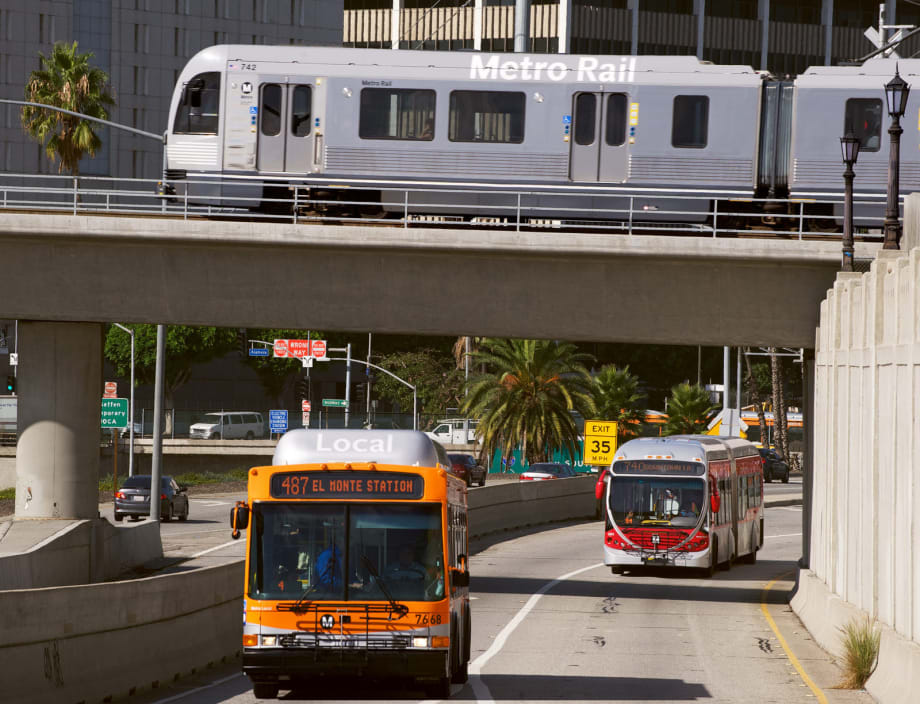
While Metro was able to shift gears in response to the COVID-19 pandemic and other impacts, the related disruption shifted the baseline for Measure M, as well as the future of Los Angeles.
Photo: LA Metro
The Los Angeles County Metropolitan Transportation Authority (Metro) released its first assessment and equity report on Measure M, a sales tax supported by over 70% of voters in 2016, to invest in Los Angeles and a better transportation system.
The robust 189-page report provides an overview of the first five years of Measure M funding (July 2017 to June 2022), and a fresh approach to assessing sales tax revenue through an equity framework that focuses on people first and the role Measure M, and Metro by extension, play in quality-of-life outcomes.
Measure M Oversight
Earlier this month, the Measure M Independent Taxpayer Oversight Committee (the MMITOC) met and unanimously voted to accept the findings and recommendations of the five-year assessment and equity report of Metro’s Measure M sales tax program.
The MMITOC is a panel of citizens whose mission is to ensure sales tax revenues are spent as intended. The assessment reviewed the projects and programs funded by Measure M, evaluated the program for its effectiveness and made a series of recommendations as Metro continues to implement Measure M.
The Measure M Expenditure Plan was conceived as a road map to guide 40 years of transit investment in LA County. The measure’s original eight goals ranged from reducing traffic congestion, to expanding regional transit and improving neighborhood streets, allowing Angelenos to get around more safely and easily.
While Metro was able to shift gears in response to the COVID-19 pandemic and other impacts, the related disruption shifted the baseline for Measure M, as well as the future of Los Angeles. This five-year assessment has primarily shown that Metro made difficult course adjustments, while heightening its focus on equity and customer experience; however, the longer-term successes of these adaptations remain to be measured.
Metro’s Measure M Report
The report concluded that overall, Metro has advanced projects, programs, and services that address many of the Measure M goals, particularly congestion management, transit expansion, local infrastructure repair, and efforts around safety and affordability. Much was accomplished before and during the pandemic, but there is more work to be done, and Metro is primed to continue adapting and working to bring a world-class transportation system to every county resident, employee, traveler, and visitor, according to the agency.
The assessment period of the report was notably marked by the COVID-19 pandemic, which upended the way people approach health, work, and travel and, by extension, the patterns and values driving the transportation industry. At the same time, Metro was initiating the largest transportation investment program in the country, while it continued to fulfill its role as a regional service provider, employer, economic development catalyst, and funder — all while elevating a commitment to equity.
"When LA County voters approved Measure M in 2016, they declared their intention to remake our region into a more equitable, multimodal, accessible, and economically prosperous place where the mobility benefits of transportation projects reached every corner of the county," said Metro CEO Stephanie Wiggins. "Though the last five years have brought tremendous change, at Metro, our priorities related to Measure M remain the same: to deliver on our promises to LA County voters in an equitable, timely and cost-effective manner."
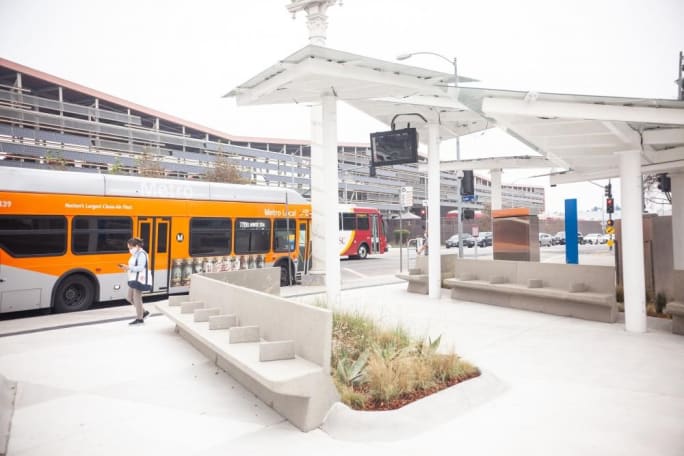
Earlier this month, the Measure M Independent Taxpayer Oversight Committee met and unanimously voted to accept the findings and recommendations of the five-year assessment and equity report of Metro’s Measure M sales tax program.
Photo: LA Metro
Key takeaways from the assessment are as follows:
Efficiency and effectiveness in delivery - In its first five years, Measure M sustained Metro’s service and project delivery by strengthening LA’s "local match" competitiveness for other grants, helping to leverage over $3 billion in state and federal funding in the five-year period.
Potential barriers in the delivery - The COVID-19 pandemic disrupted every aspect of people’s lives. Transit agencies saw dwindling ridership, except for essential workers and those without other mobility options, and had to adjust to altered travel behavior. Metro worked to adapt and pivot during this period, adopting new strategies for project delivery and strategically leveraging funding opportunities.
Opportunities for process improvement - Led by its focus on equity and customer experience, Metro has further prioritized community engagement in project planning processes which sometimes impacted early project schedules but focused on community input and ownership for stronger future project outcomes.
Best practices to be used going forward - The tumultuous change that characterized much of the five-year assessment period has underscored the value of adaptability, partnerships, and equity for Measure M implementation.
Metro continues to work to incorporate equity into Measure M implementation, doubling down on reliable tactics, such as robust community engagement and equity data-driven service planning while initiating innovative ones, such as incorporating cultural competency strategies into project implementation for the East San Fernando Valley Light Rail Transit Corridor project.
More New Mobility

From Hardware to Digital Partner: Luminator Charts Its Next Chapter
CEO Magnus Friberg discusses Luminator’s shift toward becoming a digital partner, the growing importance of software and interoperability, and how AI can help agencies improve operations and passenger experience.
Read More →
Biz Briefs: Alstom Lands Canadian Contract, LYT to Supply California TSP, and More
In METRO's latest installment, we take a look at recent news from Complete Coach Works, Beep, FlixBus, and more partnerships making headlines across the transportation sector.
Read More →
CharterUP’s Armir Harris on Technology, AI, and the Future of Group Mobility
In a recent episode of METROspectives, CharterUP Founder/CEO Armir Harris discussed the company’s evolution from an online charter bus marketplace into a technology platform supporting public- and private-sector mobility and much more.
Read More →
Jacksonville’s NAVI Project Charts a New Course for Autonomous Public Transportation
Through its NAVI program, JTA is showing how autonomous vehicles, intelligent infrastructure, and coordinated operations can work together to deliver everyday public transportation.
Read More →
Biz Briefs: Luminator Marks Milestone and More
From manufacturers and suppliers to transit agencies and motorcoach operators, these updates offer a snapshot of the projects, partnerships and business moves driving the industry forward.
Read More →
New Tricks for Old Bureaucracies: Joshua Schank on Making Transit Innovation Stick
Former LA Metro Chief Innovation Officer Joshua Schank discusses why good ideas aren't enough, how transit agencies can overcome resistance to change, and why today's challenges demand more innovation.
Read More →
How DART's GoPass Is Redefining Regional Mobility
Serving 14 transit agencies, GoPass simplifies multimodal travel by allowing riders to plan, pay for, and manage an entire trip through one app.
Read More →
Biz Briefs: OCTA Taps Clean Energy for Hydrogen Station, Stadler to Supply Via Rail Vehicles, and More
From manufacturers and suppliers to transit agencies and motorcoach operators, these updates offer a snapshot of the projects, partnerships and business moves driving the industry forward.
Read More →CharterUP Expands Into New Mobility and Autonomous Transportation
Vice President of New Mobility Stephen Joos discusses how CharterUP is leveraging its nationwide transportation network, technology platform, and autonomous vehicle partnerships to expand into workforce mobility, campus shuttles, and transit solutions.
Read More →
METRO Magazine Announces 2026 Innovative Solutions Awards Winners
Projects Recognized for Advancing Mobility Through Technology, Accessibility, Workforce Innovation, and Operational Excellence
Read More →