




Miss This? LA Metro Names Inaugural Chief to Lead New Public Safety Department
LA Metro Board Approves 2026 Transit Fund Allocations to Local Jurisdictions, Transit Operators
An estimated $2.9 billion in allocations will fund pedestrian projects and local transportation improvements to prevent delays.
July 8, 2025
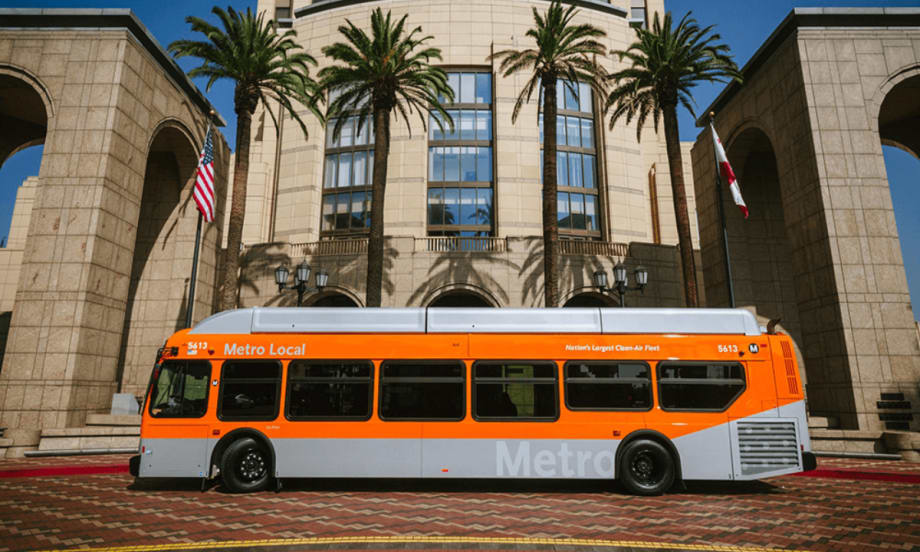
As the Regional Transportation Planning Agency for Los Angeles County, LA Metro provides oversight and distributes state and federal pass-through grants.
Photo: Los Angeles County Metropolitan Transportation Authority
3 min to read
In an effort to help municipal and local transit operators access federal, state, and local funding, the Los Angeles County Metropolitan Transportation Authority board approved $2.9 billion in Fiscal Year 2026 transit fund allocations.
“The $2.9 billion in Fiscal Year 2026 transit fund allocations represents almost 30% of the metro’s budget and will ensure continued mobility improvements throughout Los Angeles County, including those areas, such as Avalon, Lancaster, and Santa Clarita, that LA Metro doesn’t currently serve directly,” said LA Metro Board Chair and Whittier City Council Member, Fernando Dutra.
As the Regional Transportation Planning Agency for Los Angeles County, LA Metro provides oversight and distributes state and federal pass-through grants.
These grants along with funding from locally imposed and collected sales taxes provide an immediate infusion of resources to 66 transit operators and 89 local jurisdictions for a wide range of local transportation improvements.
Countywide Transit and Mobility Upgrades
The board approval allows the continued funding of transportation projects, programs, and services throughout Los Angeles County, including:
California Transportation Development Act (TDA) Article 4, State Transit Assistance & SB1 Funds: These programs provide much-needed operating and capital funding for 17 municipal transit operators throughout LA County.
California TDA Article 3 Funds: These funds are allocated to all 89 jurisdictions based on population and fund the maintenance of regionally significant Class I bike paths, pedestrian enhancements, and other bike improvements.
California TDA Article 8 Funds: Allocations for areas within Los Angeles County but outside the LA Metro service area. This includes allocations to Avalon, Lancaster, Palmdale, Santa Clarita, and portions of unincorporated areas of Los Angeles County for transit, street, and road projects.
Clean Fuel Bus Capital Facilities and Rolling Stock Fund: The Measure R ordinance also provides a lump sum allocation of $150.0 million over the life of the ordinance for clean fuel and bus facilities. This fund is allocated to the authority and LA County Municipal Operators at $10 million every even year.
Local Return Funding: Over $800 million is estimated to be awarded in FY26 to all LA County jurisdictions from the local sales tax measures to support local transportation within their jurisdictional boundaries. Examples include transit services, roadway improvements, bicycle and pedestrian infrastructure, traffic signal coordination, and senior dial-a-ride services.
Measure R 20% Bus Operations: Measure R, approved by voters in November 2008, allocates 20% of the revenues for bus service operations, maintenance, and expansion.
Proposition C (Prop C) Municipal Operators Service Improvement Program (MOSIP): The program is intended to provide bus service improvements to the transit-dependent in Los Angeles County by reducing overcrowding and expanding services.
Prop C Transit Service Expansion Program (TSE): Created in 1990 to increase ridership by providing funds for additional services to relieve congestion, the TSE Program continues for eight Municipal Operators, including Culver City, Foothill Transit, Gardena, Long Beach, Torrance, Antelope Valley, Santa Clarita, and LADOT, for expansion or introduction of fixed-route bus service in congested corridors.
“LA Metro strives to ensure that all people, regardless of where they live in LA County, can benefit from healthier, stronger, and safer communities,” LA Metro CEO Stephanie Wiggins said. “Thanks to the LA Metro Board’s action, $2.9 billion will be distributed throughout Los Angeles County to ensure local street, sidewalk, bike lane, and active local transportation improvements can continue without delay.”
Fund dispersal will begin in July 2025 and continue throughout Fiscal Year 2026.
More Management

METRO Opens Submissions for 2026 Motorcoach Awards
Nominations are now being accepted for METRO Magazine’s Operator of the Year and Innovative Operator of the Year awards.
Read More →
New York MTA Advances Final Contract for Second Avenue Subway Expansion
Contract Four is the largest in the Second Avenue Subway Phase 2 project and includes construction of station infrastructure, tracks, and signals for the subway expansion, MTA officials said. Work on Contract Four will begin in 2027.
Read More →
Transit Agencies Highlight Safety Gains at National Summit
Leaders from 15 major transit systems shared crime-reduction results and safety initiatives while discussing the role of continued federal support.
Read More →

NITA Names New Leadership, Expands Reduced-Fare Program at First Board Meeting
The new regional transit authority appointed its first board chair and interim executive director while extending reduced fares across CTA, Metra, and Pace for eligible riders.
Read More →
Beyond the Checklist: A Structured Approach to Transit Maintenance
Reliability-Centered Maintenance helps transit agencies move beyond routine checklists to focus limited resources on the assets and failures that have the greatest impact on safety, reliability, and service.
Read More →
APTA 2026 Nominating Committee Selects Leadership Slate, Names Chair and Vice Chair Nominees
Leadership changes will help shape the association’s priorities and its representation of the transportation industry during the 2026–2027 term.
Read More →
DART Launches Major Security, Fare Enforcement Initiative
The 90-day demonstration will deploy coordinated security teams at five light rail stations while testing controlled access and gathering data to guide future investments.
Read More →
Sponsored•September 9, 2026
Advancing Fare Collection Through Technology and Innovation
Learn about delivering 1300 gates at 91 stations while managing fare evasion. Explore the large scale deployment, solution customization and real-world results that affect the region. Prepare for deployment in your region now.
Read More →
Game Day in Motion: Moving Millions During the 2026 World Cup
Between packed transit stations and team motorcoaches, see how agencies and operators across North America tackled the transportation demands of the 2026 FIFA World Cup.
Read More →
Surface Transportation Extension Averts Shutdown, Leaves Transit Funding Gap
The stopgap keeps federal transportation programs moving, but missing advance funding could complicate the transit and rail projects agencies are planning next.
Read More →