



LA Metro receives proposal for aerial gondola linking station, ballpark
The aerial system would get fans from downtown to Dodger Stadium in about five minutes.

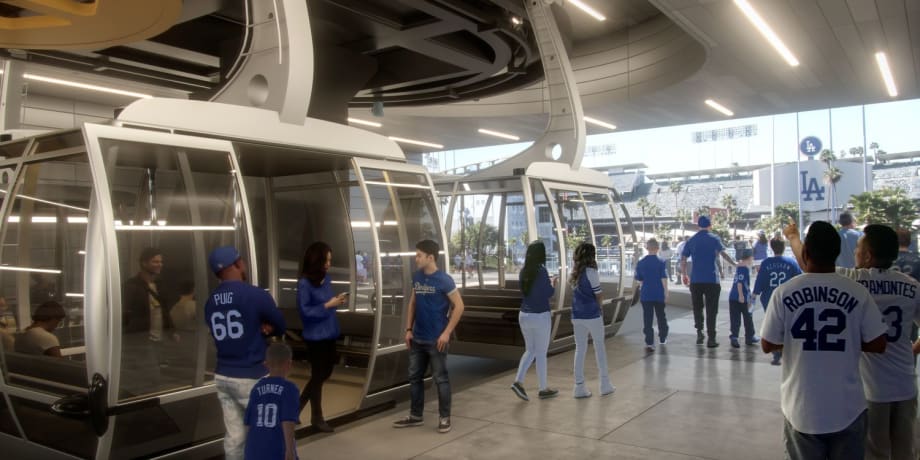
The aerial system would get fans from downtown to Dodger Stadium in about five minutes. Image: Aerial Rapid Transit Technologies LLC
The aerial system would get fans from downtown to Dodger Stadium in about five minutes. Image: Aerial Rapid Transit Technologies LLC
The Los Angeles County Metropolitan Transportation Authority (Metro) received an unsolicited proposal from Aerial Rapid Transit Technologies LLC (ARTT) on Wednesday that calls for building an aerial tram that would carry passengers between Dodger Stadium and Los Angeles Union Station.
Metro’s Unsolicited Proposal policy allows the private sector to submit ideas to improve Metro projects, programs and services. All proposals are subject to a Phase One analysis within 60 days of being received. Metro can then choose to advance proposals with merit to a more detailed Phase Two review.
Aerial transit is a proven technology providing scenic, efficient and clean transportation for millions of people in major cities, including New York and London, every year, according to ARRT officials. The proposed system could move 5,000-plus riders per hour in each direction, benefiting surrounding communities by reducing traffic on local roadways. The aerial system would get fans from downtown to Dodger Stadium in about five minutes.
In its concept proposal to Metro, ARTT proposes to provide funding for the innovative mobility partnership which will design and construct the aerial transit system. Total project costs are estimated to be approximately $125 million and ARTT plans to obtain private financing for construction.
“Dodger Stadium is one of the crown jewels of baseball and draws fans from across our region and the nation,” said Metro CEO Phillip A. Washington. “We take seriously any idea that provides a good alternative to driving, and we’re eager to consider this proposal from the private sector and advise our Metro Board accordingly.”
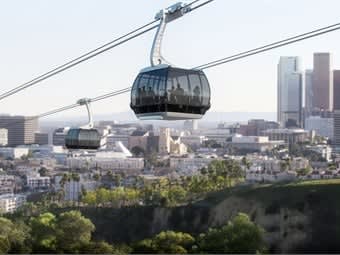
Image: Aerial Rapid Transit Technologies LLC
A gondola and other options for improving access to Dodger Stadium was part of an informational study in 1990 by the Los Angeles County Transportation Commission, which later merged with the RTD to form Metro. The idea was never pursued beyond the study.
“We set up the Unsolicited Proposal process to encourage outside-the-box thinking when it comes to mobility and building new transportation infrastructure,” said Metro Chief Innovation Officer Joshua Schank. “The Dodgers’ proposal is intriguing and we’re looking forward to reviewing the details.”
Metro has run the popular Dodger Stadium Express free bus service from Union Station since 2010. A second route between Harbor Gateway Transit Center in the South Bay and the ballpark was added in 2015.
More Technology

From Hardware to Digital Partner: Luminator Charts Its Next Chapter
CEO Magnus Friberg discusses Luminator’s shift toward becoming a digital partner, the growing importance of software and interoperability, and how AI can help agencies improve operations and passenger experience.
Read More →
Beyond the Checklist: A Structured Approach to Transit Maintenance
Reliability-Centered Maintenance helps transit agencies move beyond routine checklists to focus limited resources on the assets and failures that have the greatest impact on safety, reliability, and service.
Read More →
NJ TRANSIT Advances Bus Technology Upgrades Across Statewide Fleet
More than 1,500 buses now feature upgraded technology designed to improve arrival predictions and provide free Wi-Fi, with deployment expected to reach nearly 2,000 buses by the end of 2026.
Read More →

Building a Flexible Path to Transit Electrification
John Hroncich discusses BAE Systems’ modular and scalable approach, lessons learned from decades of real-world operations, and how agencies can identify electrification strategies that fit their fleets.
Read More →
Biz Briefs: Alstom Lands Canadian Contract, LYT to Supply California TSP, and More
In METRO's latest installment, we take a look at recent news from Complete Coach Works, Beep, FlixBus, and more partnerships making headlines across the transportation sector.
Read More →
From Legacy Silos to Conversational Intelligence
What if transit leaders could ask any operational question and get a trusted answer in seconds? Conversational AI is transforming how agencies use their data.
Read More →
USDOT Announces Rail Vehicle Replacement Grants, Chattanooga AV Shuttle Funding
More than $191 million in federal funding will help three transit agencies replace aging rail vehicles and support a new autonomous shuttle service in Chattanooga.
Read More →
Bus Tech Talk: Keeping Transit Technicians Ahead of the Technology Curve
LA Metro’s Obed Mejia discusses technician training, evolving maintenance technology, fleet replacement, and strategies for getting the most out of today’s transit fleets.
Read More →
Biz Briefs: RIPTA Unveils New Frontrunners, Clevland RTA Adds New Siemens, and More
In METRO's latest installment, we take a look at recent news from Siemens, Prevost, Dodge, and more partnerships making headlines across the transportation sector.
Read More →
Why Simulating Pedestrian Movement Has Become Essential for Modern Rail Stations
Pedestrian microsimulation is helping rail planners identify bottlenecks, test station designs, and prepare complex transit hubs for growing passenger volumes.
Read More →