



LA Metro Releases Industry Guide for Improving Transit to Major Events
The Playbook was developed through Metro’s SetGo Program, a national workshop series conducted with the American Public Transportation Association.

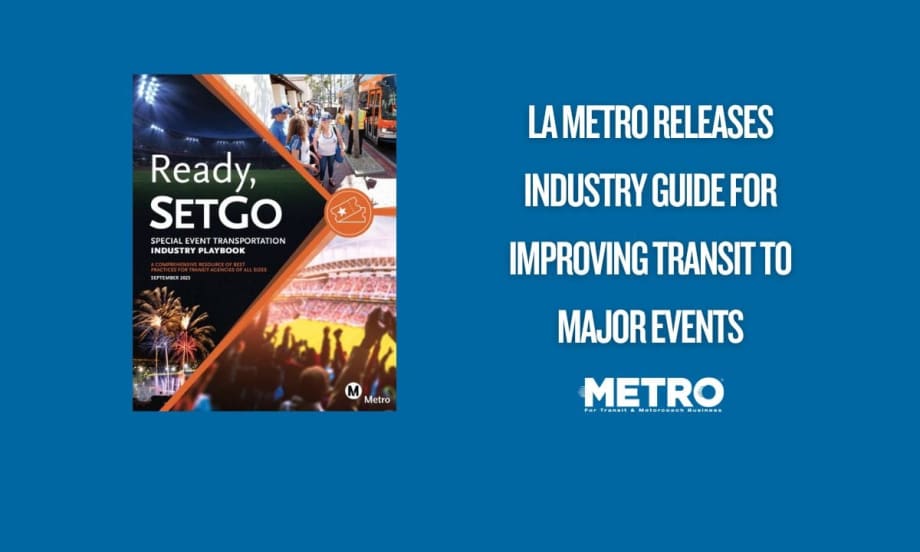
Beyond its primary emphasis on major sporting events, the Playbook also draws on lessons from a broader spectrum of special events, recognizing that many of the same principles of planning, delivery, and after-action evaluation apply across these event types and sizes.
Photo: METRO/LA Metro
Drawing on lessons from mega sporting events, political conventions, mega concerts, and other large-scale events from around the world, the Los Angeles County Metropolitan Transportation Authority (Metro) announced the release of the "Special Event Transportation — Guidance and Opportunities (SetGo) Playbook," a comprehensive resource of best practices for transit agencies of all sizes to deliver transportation for major sports, entertainment, and cultural events.
The Playbook was developed through Metro’s SetGo Program, a national workshop series conducted with the American Public Transportation Association (APTA). It draws on lessons from international and domestic events, including the Olympic and Paralympic Games (Atlanta 1996, Salt Lake 2002, London 2012), the Las Vegas Formula One Grand Prix, major concert tours, conventions, and more.
The Playbook
Beyond its primary emphasis on major sporting events, the Playbook also draws on lessons from a broader spectrum of special events, recognizing that many of the same principles of planning, delivery, and after-action evaluation apply across these event types and sizes.
“These major events allow us to showcase what our agencies can do when tested to our limits,” said Metro CEO and APTA Mega Events Task Force Co-Chair Stephanie Wiggins. “The SetGo Playbook isn’t just about the 2028 Games or the 2026 World Cup, it’s about ensuring every event we serve, whether global, regional or local, strengthens our ability to deliver universal mobility and excellent service for attendees and everyday riders by advancing the latest approaches in wayfinding, safety and security, crowd management, and even ‘surprise and delight’.”
The Playbook identifies transit service strategies for upcoming international-scale events in the U.S., including the FIFA World Cup 2026, the Los Angeles 2028 Olympic and Paralympic Games, and the Utah 2034 Olympic and Paralympic Winter Games.
Key Focus Areas
Designed as a living document, it will evolve as agencies continue to test and refine approaches through future events. It will also serve as a guide for elected officials and host committees to help them understand the critical transportation practices that need to be deployed to make their event world-class.
The Playbook organizes best practices across five subject areas:
Purpose & Need: Mission alignment, advocacy, and coordination inside and outside the agency.
Service Plan: Demand forecasting, supplemental service, first/last mile strategies, and speed and reliability.
Safety & Emergency Management: Crowd management, security, and Emergency Operations Center (EOC) planning.
Customer Experience: Accessibility, signage and wayfinding, integrated ticketing, ambassadors, and “surprise and delight” activations.
Agency-Wide Success Strategies: Budgeting, workforce readiness, training, technology, contingency planning, and after-action processes
For each of these focus areas, the Playbook provides guiding questions that agencies can use to evaluate readiness during planning, adjust strategies in real-time during delivery, and capture lessons learned in after-action reviews.
This approach not only helps agencies implement best practices and align service with mission and long-term goals, but also promotes consistency across the country, ensuring riders experience the same reliable, high-quality service no matter where they travel, according to LA Metro officials.
“The SetGo Playbook reflects the power of partnership across our industry,” said APTA Chair Leanne Redden. “By pooling knowledge from agencies nationwide, we now have a shared framework that ensures we’re not starting from scratch as the U.S. prepares for a decade of global events, freeing agencies to focus on delivering safe, reliable, and unforgettable customer experiences.”
The development of the Playbook was supported by WSP, one of the world’s leading professional services firms, whose expertise in major events helped capture lessons from global case studies and ensure the Playbook reflects both international best practices and the unique needs of U.S. transit agencies.
More Management

METRO Opens Submissions for 2026 Motorcoach Awards
Nominations are now being accepted for METRO Magazine’s Operator of the Year and Innovative Operator of the Year awards.
Read More →
New York MTA Advances Final Contract for Second Avenue Subway Expansion
Contract Four is the largest in the Second Avenue Subway Phase 2 project and includes construction of station infrastructure, tracks, and signals for the subway expansion, MTA officials said. Work on Contract Four will begin in 2027.
Read More →
Transit Agencies Highlight Safety Gains at National Summit
Leaders from 15 major transit systems shared crime-reduction results and safety initiatives while discussing the role of continued federal support.
Read More →

NITA Names New Leadership, Expands Reduced-Fare Program at First Board Meeting
The new regional transit authority appointed its first board chair and interim executive director while extending reduced fares across CTA, Metra, and Pace for eligible riders.
Read More →
Beyond the Checklist: A Structured Approach to Transit Maintenance
Reliability-Centered Maintenance helps transit agencies move beyond routine checklists to focus limited resources on the assets and failures that have the greatest impact on safety, reliability, and service.
Read More →
APTA 2026 Nominating Committee Selects Leadership Slate, Names Chair and Vice Chair Nominees
Leadership changes will help shape the association’s priorities and its representation of the transportation industry during the 2026–2027 term.
Read More →
DART Launches Major Security, Fare Enforcement Initiative
The 90-day demonstration will deploy coordinated security teams at five light rail stations while testing controlled access and gathering data to guide future investments.
Read More →
Advancing Fare Collection Through Technology and Innovation
Learn about delivering 1300 gates at 91 stations while managing fare evasion. Explore the large scale deployment, solution customization and real-world results that affect the region. Prepare for deployment in your region now.
Read More →
Game Day in Motion: Moving Millions During the 2026 World Cup
Between packed transit stations and team motorcoaches, see how agencies and operators across North America tackled the transportation demands of the 2026 FIFA World Cup.
Read More →
Surface Transportation Extension Averts Shutdown, Leaves Transit Funding Gap
The stopgap keeps federal transportation programs moving, but missing advance funding could complicate the transit and rail projects agencies are planning next.
Read More →