



MARTA moving forward with 'customer-focused' budget
Includes buying CNG buses, creating Riders' Advisory Council, launching customer experience program, and rehabbing rail stations.

As mobility options grow and competition for ride-share intensifies, MARTA is redoubling efforts to provide the world-class transit experience that customers demand and deserve.
MARTA
As mobility options grow and competition for ride-share intensifies, MARTA is redoubling efforts to provide the world-class transit experience that customers demand and deserve.
MARTA
The Metropolitan Atlanta Rapid Transit Authority (MARTA) board of directors adopted the authority’s fiscal year 2020 Operating and Capital Budget. The nearly $1.1 billion budget includes $523.9 million in operating funds and $579.7 million for capital programming, with a projected reserve balance of $203.5 million.
MARTA’s FY 20 budget aligns with leadership’s strategic vision for the organization, which pivots on maintaining current levels of service of bus, rail, and paratransit while providing for capital projects aimed at transit expansion, enhancing connectivity, and spurring economic growth.
In the coming months, MARTA will solicit applicants for a Riders’ Advisory Council. Comprised of representatives from each member jurisdiction, the council will meet regularly to discuss customer concerns, advise MARTA on actionable service improvements, and serve as a sounding board for transit initiatives.
Linked to that initiative is the launch of a customer experience program to help identify and resolve issues that impact ridership or rider satisfaction. A chief of customer experience — a C-suite position — will be hired in the fiscal year to coordinate and manage rider-related programs and activities.
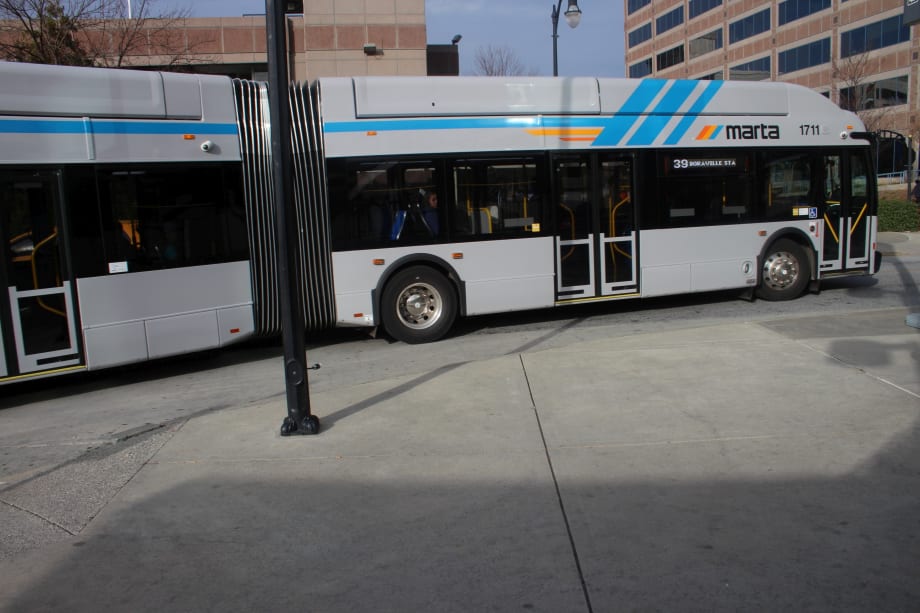
To reduce air pollution and minimize delays, MARTA will spend $25 million on compressed natural gas buses in the FY 20 budget as it begins replacing much of its aging fleet with vehicles equipped with state-of-the-art features and customer amenities.
MARTA also anticipates spending $40 million to begin replacing its railcar fleet, a major procurement that will cost $630 million during the next 10 years.
Before the new vehicles are placed into service, MARTA has also earmarked more than $16 million to rehabilitate its rail stations.
In addition, MARTA will spend $6.6 million on the installation of its audio/visual information system (AVIS) with upgraded digital signage and speakers that will enable staff to communicate more clearly and effectively with rail station customers.
To bolster its largest and most extensive transit mode, MARTA is allocating funding for “The Year of the Bus,” a long-term initiative aimed at ensuring high-quality service on all 110 bus routes that traverse nearly 33 million vehicle miles annually.
Also aimed at enhancing its bus riders’ user experience — and the most immediately impactful — is the addition of 1,000 bus shelters and other amenities in the next five years. So far in DeKalb County, 20 shelters have been completed, with another 70 scheduled for completion in 2019. Bus shelters and amenities are forthcoming in Atlanta, Fulton County, and Clayton County, as well.
MARTA is pursuing ongoing plans to transform real estate at its rail stations into “community hubs” that are centers of art, commerce, and recreation. Leveraging the success of its increasingly popular transit-oriented developments at rail stations, MARTA is working with Soccer in the Streets to add more playing fields in addition to those already at Five Points and West End. Artbound, MARTA’s award-winning, creative placemaking program, will be unveiling a slate of inspiring new performances, concerts, and exhibits.
More Management

METRO Opens Submissions for 2026 Motorcoach Awards
Nominations are now being accepted for METRO Magazine’s Operator of the Year and Innovative Operator of the Year awards.
Read More →
New York MTA Advances Final Contract for Second Avenue Subway Expansion
Contract Four is the largest in the Second Avenue Subway Phase 2 project and includes construction of station infrastructure, tracks, and signals for the subway expansion, MTA officials said. Work on Contract Four will begin in 2027.
Read More →
Transit Agencies Highlight Safety Gains at National Summit
Leaders from 15 major transit systems shared crime-reduction results and safety initiatives while discussing the role of continued federal support.
Read More →

NITA Names New Leadership, Expands Reduced-Fare Program at First Board Meeting
The new regional transit authority appointed its first board chair and interim executive director while extending reduced fares across CTA, Metra, and Pace for eligible riders.
Read More →
Beyond the Checklist: A Structured Approach to Transit Maintenance
Reliability-Centered Maintenance helps transit agencies move beyond routine checklists to focus limited resources on the assets and failures that have the greatest impact on safety, reliability, and service.
Read More →
APTA 2026 Nominating Committee Selects Leadership Slate, Names Chair and Vice Chair Nominees
Leadership changes will help shape the association’s priorities and its representation of the transportation industry during the 2026–2027 term.
Read More →
DART Launches Major Security, Fare Enforcement Initiative
The 90-day demonstration will deploy coordinated security teams at five light rail stations while testing controlled access and gathering data to guide future investments.
Read More →
Advancing Fare Collection Through Technology and Innovation
Learn about delivering 1300 gates at 91 stations while managing fare evasion. Explore the large scale deployment, solution customization and real-world results that affect the region. Prepare for deployment in your region now.
Read More →
Game Day in Motion: Moving Millions During the 2026 World Cup
Between packed transit stations and team motorcoaches, see how agencies and operators across North America tackled the transportation demands of the 2026 FIFA World Cup.
Read More →
Surface Transportation Extension Averts Shutdown, Leaves Transit Funding Gap
The stopgap keeps federal transportation programs moving, but missing advance funding could complicate the transit and rail projects agencies are planning next.
Read More →