



MCI lands contract for D4500, D45 CRT LE Commuter Coaches
The vehicles will be delivered to SRTA, which manages the Xpress mobility and public transportation operations throughout counties surrounding metro Atlanta.


Introduced in 2017, the MCI D45 CRT LE features modern styling and a patented mid-coach low-entry vestibule with passenger seating and curb-level ramp system.
MCI
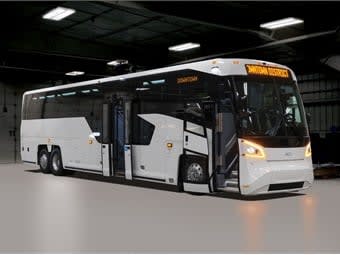
Introduced in 2017, the MCI D45 CRT LE features modern styling and a patented mid-coach low-entry vestibule with passenger seating and curb-level ramp system.
MCI
The State Road and Tollway Authority (SRTA), which manages the Xpress mobility and public transportation operations throughout the 12 counties surrounding metropolitan Atlanta, ordered 77 new MCI D4500 and 15 all-accessible MCI D45 CRT LE Commuter Coaches.
Last September, the two coaches were listed on the Georgia State Contract for Public Mass Transit and Transportation Vehicles. The statewide contract serves as a centralized purchasing mechanism for all state and local Georgia public entities from local governments to state offices and universities. Georgia makes this contract available to other states, too.
MCI’s ADA and Buy America-compliant and Altoona-tested D4500 and D45 CRT LE designed for comfortable distance travel. With an aging population, workers living farther outside city centers and fewer younger citizens buying cars, both models are flexible alternatives for transporting riders safely, economically, and comfortably to their destination.
Introduced in 2017, the MCI D45 CRT LE features modern styling and a patented mid-coach low-entry vestibule with passenger seating and curb-level ramp system allowing easy access for all passengers, including those with mobility devices. The dual entry on the model speeds passenger entry and exit to match low floor transit dwell times.
Both models are designed for durability, essential for vehicles placed on long-term distance commuting routes. MCI’s Commuter Coach brand is known for its rugged semi-monocoque structure and comfort and safety features including above-traffic, forward-facing seating with seatbelts, and electronic passenger services onboard.
The D4500 coaches will begin delivering in August 2019 with deliveries of the D45 CRT LE beginning first quarter 2020.
More Bus

New York MTA Plans Largest Bus Fleet Upgrade in More Than a Decade
The agency is seeking manufacturers for 650 new CNG buses to replace aging vehicles, improve reliability, and advance its broader fleet modernization strategy.
Read More →
Building a Flexible Path to Transit Electrification
John Hroncich discusses BAE Systems’ modular and scalable approach, lessons learned from decades of real-world operations, and how agencies can identify electrification strategies that fit their fleets.
Read More →
Bus Tech Talk: Keeping Transit Technicians Ahead of the Technology Curve
LA Metro’s Obed Mejia discusses technician training, evolving maintenance technology, fleet replacement, and strategies for getting the most out of today’s transit fleets.
Read More →
Biz Briefs: RIPTA Unveils New Frontrunners, Clevland RTA Adds New Siemens, and More
In METRO's latest installment, we take a look at recent news from Siemens, Prevost, Dodge, and more partnerships making headlines across the transportation sector.
Read More →
People Movement: Holly Arnold Joins Transdev and More
In this edition, we also cover recent appointments and announcements at Pace, CamTran, MCI, and more, showcasing the individuals helping to shape the future of transportation.
Read More →
The High Cost of Transit Buses: Industry Leaders Look to Procurement Reform
Transit leaders and policymakers examine how standardized bus designs, streamlined procurement, and predictable funding could help agencies stretch budgets and deliver better service.
Read More →
The Business Voice Behind Public Transportation
As chair of APTA’s Business Members Board of Governors, Ray Melleady explains how more than 850 business members are partnering with transit agencies to advance funding, innovation, and industry-wide collaboration.
Read More →
From Surviving to Thriving: Building Stronger Transportation Organizations
Bus Business Consultants founder Brian Dickson shares lessons on leadership, organizational health, and creating options for long-term success in a changing transportation industry.
Read More →
Finding the ‘Happy Medium’: Optimizing Maintenance Without Sacrificing Reliability
The key to maintenance optimization isn’t doing less work—it’s doing the right work at the right time on the right assets.
Read More →
LA Metro, City of West Hollywood, and Partners Advance Smarter Bus Lane Enforcement
The award-winning partnership combines AI-powered detection with human oversight to improve bus reliability, accessibility, and enforcement efficiency.
Read More →