



Metrolink survey highlights importance of service during stay-at-home
More than one half of the respondents either work in Healthcare (39%) or Transportation/Logistics (14%), and nearly one-third (32%) have no vehicle and rely on Metrolink to get to their jobs.

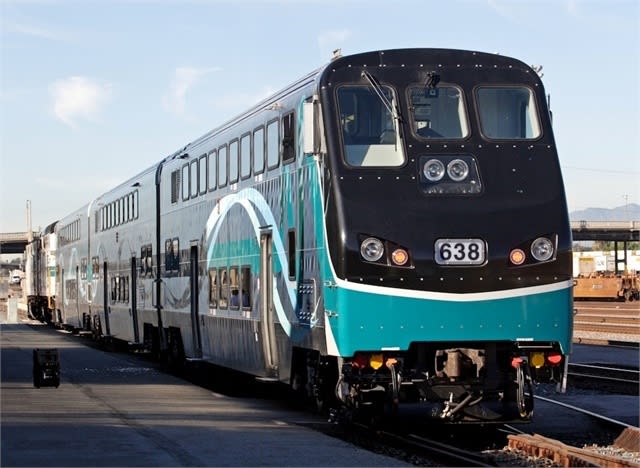
All riders surveyed agree that enhanced cleanliness and social distancing measures are priority considerations once stay-at-home-orders are lifted.
Metrolink
All riders surveyed agree that enhanced cleanliness and social distancing measures are priority considerations once stay-at-home-orders are lifted.
Metrolink
Seven of every 10 riders still taking Metrolink while stay-at-home orders are in place identify themselves as “Essential Workers,” according to the results of the COVID-19 Customer Survey released by Metrolink, Southern California’s regional passenger rail service. More than one half of these respondents either work in Healthcare (39%) or Transportation/Logistics (14%), and nearly one-third (32%) have no vehicle and rely on Metrolink to get to their jobs.
These are just a few of the results of the online survey that sought to understand motivations of current riders and the future expectations of these Essential Workers, as well as those riders who stopped riding when California Gov. Gavin Newsom issued the state’s stay-at-home order on March 19. The findings will be used to inform Metrolink’s transportation plans and its efforts to reimagine Metrolink to best serve its customers once the stay-at-home orders are lifted.
Of riders who have not been riding during stay-at-home orders, 81% say they are likely to return to Metrolink. All riders surveyed agree that enhanced cleanliness and social distancing measures are priority considerations once stay-at-home-orders are lifted.
The survey was distributed by email to 226,000 Metrolink mobile app users, shared via social media, and made available on the Metrolinktrains.com website. More than 11,000 people from throughout Metrolink’s six-county service area responded to the online survey.
“Over the last several weeks, the world around us has completely changed in ways none of us could have imagined,” said Stephanie Wiggins, Metrolink CEO. “In keeping with my customer-focused vision for Metrolink, surveying our riders to know what they think and what concerns them is crucial to creating a ‘Smarter, Better Metrolink’ for the post-stay-at-home era. And in the spirit of transparency, we are sharing the results of this survey with our riders and the public.”
Online Survey Objectives
Metrolink sought answers to questions that would be key to developing a recovery plan to serve customers in a drastically different operating environment. These include: Who is currently riding Metrolink? What changes do riders expect to their commute after stay-at-home orders are lifted? How likely are riders to return to Metrolink? And what changes do riders expect of Metrolink to encourage them to ride again?
Riders Still Taking Metrolink
Since the California stay-at-home orders were put in place, Metrolink’s daily ridership has stabilized at around 10% of its ridership a year ago. Of those continuing to ride during the pandemic, 71% describe themselves as Essential Workers — with 39% indicating they work in the healthcare industry, and another 14% indicating they work in transportation and logistics.
Riders Not Currently Taking Metrolink (due to stay-at-home-orders)
The survey found that 81% of all respondents are likely to return to Metrolink — but not all at once. While 29% indicate they will return as soon as the stay-at-home orders are lifted, some plan to wait for schools to re-open or for a vaccine or related treatment to be available.
Concerns and Expectations
A critical part of the survey was to understand riders’ concerns and expectations of Metrolink in the post stay-at-home-order era. Overwhelmingly riders are concerned about safety and expect expanded social distancing and cleanliness measures.
And while riders continue to want popular amenities like electrical outlets and Wi-Fi, hand sanitizers on every railcar tops the list.
Current Metrolink Efforts to Protect Against COVID-19
Since March, Metrolink significantly enhanced cleaning and other safety protocols on its trains as well as at its various employee work locations. This includes:
Increasing the number of cleaning staff so passenger cars are cleaned more frequently throughout the day.
Enhancing cleaning protocols which now include wiping down regularly touched surfaces such as doors, restrooms, head rests, armrests, handrails, tables and trash areas using additional disinfecting products, as well as the daily use of electrostatic sprayers that mist hospital-grade disinfectant on all areas of train cars — especially helpful for hidden and hard-to-reach locations.
Daily disinfecting of locations where Metrolink essential employees work — including crew bases, dispatch centers and the downtown Los Angeles office location.
Installing more hand sanitizer stations on trains and office locations, and ensuring they are filled more often.
Providing face masks to all employees and customer-facing contractors while at the same time mandating all employees strictly follow social distancing guidelines.
Continuing to reiterate to our team members are rider’s guidance from the Centers for Disease Control and other health authorities on ways to keep themselves and others safe through personal hygiene and social distancing.
What’s Next?
“Our team is putting the finishing touches on a safety and customer-focused recovery plan that our Board will consider this month. This plan will be informed by the survey results, guidance from health authorities and requirements of State and local government officials,” said Metrolink Board Chair Brian Humphrey. “We are looking forward to our team preparing short, medium and long-term recommendations to address the new world we all must navigate.”
For more survey results, click here.
More Rail

New York MTA Advances Final Contract for Second Avenue Subway Expansion
Contract Four is the largest in the Second Avenue Subway Phase 2 project and includes construction of station infrastructure, tracks, and signals for the subway expansion, MTA officials said. Work on Contract Four will begin in 2027.
Read More →
San Diego MTS Breaks Monthly Trolley Ridership Record
Agency officials said July’s ridership indicates MTS’s continued recovery from the pandemic.
Read More →
Report Examines NJ TRANSIT Reliability, Funding Challenges
The Garden State Initiative analysis examines the roles of Amtrak infrastructure, fleet management, and agency operations while recommending a more performance-based approach to improving reliability.
Read More →
Stadler, CapMetro Sign Long-Term Rail Fleet Support Agreement
Beginning in 2027, Stadler will provide on-site technical expertise, spare parts support, training, and obsolescence management to help extend the reliability and longevity of CapMetro’s GTW fleet.
Read More →
Biz Briefs: Alstom Lands Canadian Contract, LYT to Supply California TSP, and More
In METRO's latest installment, we take a look at recent news from Complete Coach Works, Beep, FlixBus, and more partnerships making headlines across the transportation sector.
Read More →
CATS Gold Line Marks 5 Years of Service, 2.8M Passenger Trips
With a six-mile expansion planned, the Charlotte streetcar is positioned to connect more neighborhoods and major transit hubs across the region.
Read More →
Why Simulating Pedestrian Movement Has Become Essential for Modern Rail Stations
Pedestrian microsimulation is helping rail planners identify bottlenecks, test station designs, and prepare complex transit hubs for growing passenger volumes.
Read More →
Amtrak Begins Major Construction at New York’s Sunnyside Yard
The new maintenance facility will support Amtrak’s Airo trainsets while improving maintenance efficiency and turnaround times in New York.
Read More →
Chicago Leaders Unveil Plans for O’Hare Airport Express Train
The privately developed project would offer a 15-minute trip between downtown and O’Hare’s Terminal 2, with trains operating every 15 minutes on a dedicated track. The service would use battery-electric trains and three existing freight rail rights-of-way.
Read More →
OCTA Maps Out 30-Year Strategy to Protect Coastal Rail Corridor
The draft feasibility report identifies strategies to protect the coastal rail line for decades as the agency continues near-term stabilization and sand placement efforts.
Read More →