




Ballin' on a Budget: Chicago's Budget Holds Fares Steady, Focuses on Investment
New York MTA Board Adopts 2023 Budget
The financial plan contains a roadmap for the MTA’s longer-term fiscal stability.
December 22, 2022
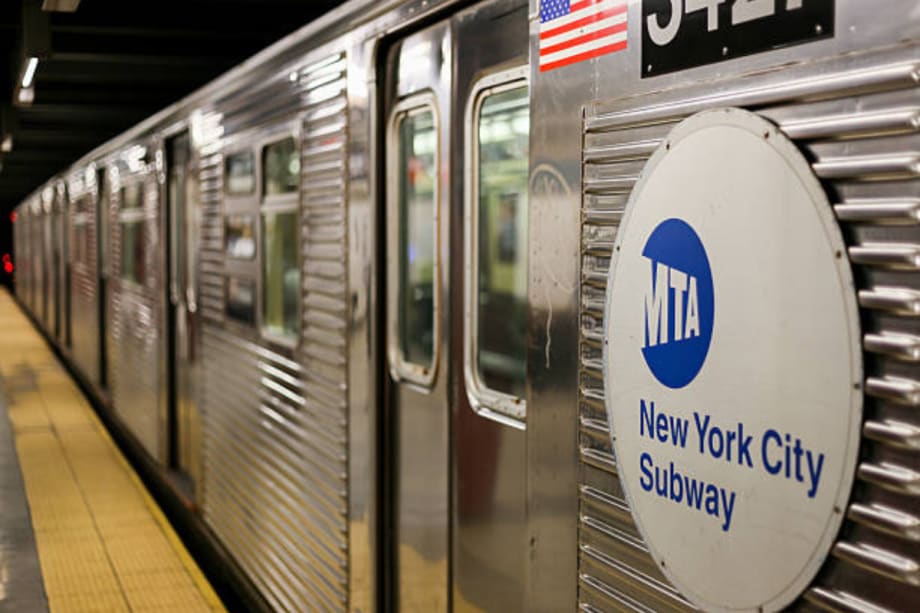
Starting in 2023, the MTA said it is working to implement operating efficiencies yielding $100 million in savings in 2023.
Photo: MTA
2 min to read
The Metropolitan Transportation Authority (MTA) Board approved the 2023 budget and four-year financial plan.
The financial plan contains a roadmap for the MTA’s longer-term fiscal stability, safeguards essential services, enhances transit equity, and provides a sustainable foundation for the region's economic growth, according to the agency's news release.
“I’ve been talking about the financial crisis facing the MTA for many months,” said Janno Lieber, MTA CEO. “The MTA’s plan balances the budget, while also preserving flexibility as to how we get there — with the help and financial support of Washington, Albany, and City Hall. Mass transit for New Yorkers is like air and water — we need it to survive. By working with all stakeholders, we must find creative ways to stabilize the MTA’s finances, while supporting the region’s recovery.”
The plan proposed in November followed recommendations put forward in the July financial plan, which outlined actions from the MTA to decrease its structural deficit from $2.6 billion to $600 million in 2023 and from almost $3 billion in 2024 and 2025 down to $1.2 billion.
Starting in 2023, the MTA said it is working to implement operating efficiencies yielding $100 million in savings in 2023 and rising to $416 million in savings by 2026.
The budget assumes the restoration of recurring biannual fare and toll increases, with 5.5% assumed in 2023. A board/staff fare and toll strategies working group will develop plans for fare and toll changes before the MTA Board takes additional action, according to the agency.
In addition, the proposed budget also assumes $600 million in additional dedicated funding in 2023 and projects a need of $1.2 billion per year in recurring new revenue beginning in 2024.
“The ridership trends that have emerged post-COVID have created a fiscal cliff higher and earlier than previously anticipated,” said Kevin Willens, MTA CFO. “The much-needed federal aid the MTA received from three COVID-relief packages has enabled a reduction in deficits in the immediate future. However, beginning in 2023, we need new dedicated revenue streams to ensure that essential transit service remains at the levels riders expect.”
More Management

METRO Opens Submissions for 2026 Motorcoach Awards
Nominations are now being accepted for METRO Magazine’s Operator of the Year and Innovative Operator of the Year awards.
Read More →
New York MTA Advances Final Contract for Second Avenue Subway Expansion
Contract Four is the largest in the Second Avenue Subway Phase 2 project and includes construction of station infrastructure, tracks, and signals for the subway expansion, MTA officials said. Work on Contract Four will begin in 2027.
Read More →
Transit Agencies Highlight Safety Gains at National Summit
Leaders from 15 major transit systems shared crime-reduction results and safety initiatives while discussing the role of continued federal support.
Read More →

NITA Names New Leadership, Expands Reduced-Fare Program at First Board Meeting
The new regional transit authority appointed its first board chair and interim executive director while extending reduced fares across CTA, Metra, and Pace for eligible riders.
Read More →
Beyond the Checklist: A Structured Approach to Transit Maintenance
Reliability-Centered Maintenance helps transit agencies move beyond routine checklists to focus limited resources on the assets and failures that have the greatest impact on safety, reliability, and service.
Read More →
APTA 2026 Nominating Committee Selects Leadership Slate, Names Chair and Vice Chair Nominees
Leadership changes will help shape the association’s priorities and its representation of the transportation industry during the 2026–2027 term.
Read More →
DART Launches Major Security, Fare Enforcement Initiative
The 90-day demonstration will deploy coordinated security teams at five light rail stations while testing controlled access and gathering data to guide future investments.
Read More →
Sponsored•September 9, 2026
Advancing Fare Collection Through Technology and Innovation
Learn about delivering 1300 gates at 91 stations while managing fare evasion. Explore the large scale deployment, solution customization and real-world results that affect the region. Prepare for deployment in your region now.
Read More →
Game Day in Motion: Moving Millions During the 2026 World Cup
Between packed transit stations and team motorcoaches, see how agencies and operators across North America tackled the transportation demands of the 2026 FIFA World Cup.
Read More →
Surface Transportation Extension Averts Shutdown, Leaves Transit Funding Gap
The stopgap keeps federal transportation programs moving, but missing advance funding could complicate the transit and rail projects agencies are planning next.
Read More →