



MTA C & D Reports $3B Saved in its First 5 Years
The strategic plan traces construction and development's progress since its founding in 2020 and charts a path forward for an ambitious docket of projects to be completed this year.

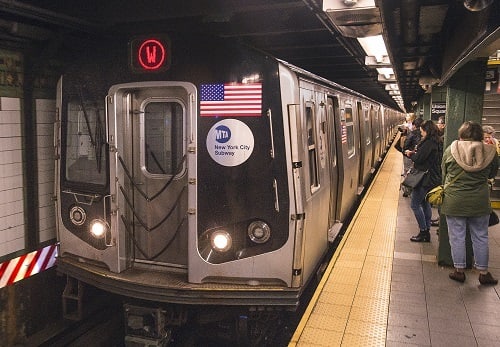
The C&D Strategic Plan comes as the MTA continues to make progress on the 2025-2029 Capital Plan.
Photo: Patrick Cashin
New York’s Metropolitan Transportation Authority (MTA) Construction & Development (MTA C&D) released “Better. Faster. Cheaper.” — the agency’s 2024 Year in Review and 2025 Strategic Plan, which found it has saved $3 billion on capital project delivery in its first five years.
The strategic plan traces C&D’s progress since its founding in 2020 and charts a path forward for an ambitious docket of projects to be completed this year.
Savings Highlights
The Strategic Plan arrives as the MTA seeks full funding of its proposed 2025-29 Capital Plan, the largest State of Good Repair investment in the organization’s history.
More than 90% of the proposed plan is dedicated to improving and rebuilding the existing system. Its priorities were informed by the most detailed system-wide evaluation the MTA has ever undertaken, the Twenty-Year Needs Assessment.
The savings identified in the report include:
Better Contracts: More than $1.1 billion in savings from improved contracting strategies, before a shovel hits the ground on key projects.
Better Planning: $750 million in savings from better upfront planning, identifying smarter design and correcting for over-customization.
Better Delivery: $750 million saved from efficiencies found in the contract budget versus the actual budget cost, due to rigorous project management during construction.
Better Management: $400 million saved on insurance reductions alone.
These savings have allowed the proposed 2025-2029 capital plan to deliver far more for riders than previous capital plans, while costing 4% less in inflation-adjusted dollars than the current 2020-2024 capital plan.
The C&D Strategic Plan
The C&D Strategic Plan comes as the MTA continues to make progress on the 2025-2029 Capital Plan.
At its March Capital Program Committee meeting, the MTA announced the next 13 stations to be made accessible in the plan including stations in Manhattan, Brooklyn, Queens, and the Bronx. This will close gaps between accessible stations and provide new elevators, improved stairs, and updated fare payment areas.
MTA C&D awarded $4.6 billion in commitments in 2024 and completed $5.5 billion worth of projects in 2024 while making enormous strides on reliability, accessibility, resilience, sustainability, and other key priorities. That includes launching the first new subway cars on the Staten Island Railway in 50 years; making 16 stations fully ADA accessible and awarding contracts for work on five more; completing a flood wall and flood gates at 207th St Yard to prevent service disruptions in severe weather; purchasing 60 new battery-electric buses, and far more.
The department made a total of $784 million in payments to MWDBE firms in 2024.
Thanks to congestion relief, MTA C&D has proceeded with procurement on other critical projects, like Communications-based Train Control (CBTC) signal modernization, additional ADA upgrades, dual-mode locomotives for Long Island Rail Road, and other major initiatives.
Looking forward to 2025 and beyond, the strategic plan looks toward continued improvements in executing the remainder of the 2020-24 capital plan, advancing long-range planning for the future of the public transit system in New York, and growing its in-house capacity to further reduce costs and project timelines going forward.
More Rail
Amtrak, CN Reach Agreements to Strengthen Passenger Rail Service, Safety
The agreement resolves a more than decade-long proceeding before the Surface Transportation Board concerning the terms and conditions for Amtrak services, such as the City of New Orleans, Illini/Saluki, and Wolverine.
Read More →
New York MTA Advances Final Contract for Second Avenue Subway Expansion
Contract Four is the largest in the Second Avenue Subway Phase 2 project and includes construction of station infrastructure, tracks, and signals for the subway expansion, MTA officials said. Work on Contract Four will begin in 2027.
Read More →
San Diego MTS Breaks Monthly Trolley Ridership Record
Agency officials said July’s ridership indicates MTS’s continued recovery from the pandemic.
Read More →
Report Examines NJ TRANSIT Reliability, Funding Challenges
The Garden State Initiative analysis examines the roles of Amtrak infrastructure, fleet management, and agency operations while recommending a more performance-based approach to improving reliability.
Read More →
Stadler, CapMetro Sign Long-Term Rail Fleet Support Agreement
Beginning in 2027, Stadler will provide on-site technical expertise, spare parts support, training, and obsolescence management to help extend the reliability and longevity of CapMetro’s GTW fleet.
Read More →
Biz Briefs: Alstom Lands Canadian Contract, LYT to Supply California TSP, and More
In METRO's latest installment, we take a look at recent news from Complete Coach Works, Beep, FlixBus, and more partnerships making headlines across the transportation sector.
Read More →
CATS Gold Line Marks 5 Years of Service, 2.8M Passenger Trips
With a six-mile expansion planned, the Charlotte streetcar is positioned to connect more neighborhoods and major transit hubs across the region.
Read More →
Why Simulating Pedestrian Movement Has Become Essential for Modern Rail Stations
Pedestrian microsimulation is helping rail planners identify bottlenecks, test station designs, and prepare complex transit hubs for growing passenger volumes.
Read More →
Amtrak Begins Major Construction at New York’s Sunnyside Yard
The new maintenance facility will support Amtrak’s Airo trainsets while improving maintenance efficiency and turnaround times in New York.
Read More →
Chicago Leaders Unveil Plans for O’Hare Airport Express Train
The privately developed project would offer a 15-minute trip between downtown and O’Hare’s Terminal 2, with trains operating every 15 minutes on a dedicated track. The service would use battery-electric trains and three existing freight rail rights-of-way.
Read More →