



MTI Research Identifies Transit Success in Metropolitan Areas
The study explores public transportation in ten international metropolitan cities, identifying key factors that make transit an effective competitor to the private motor vehicle.
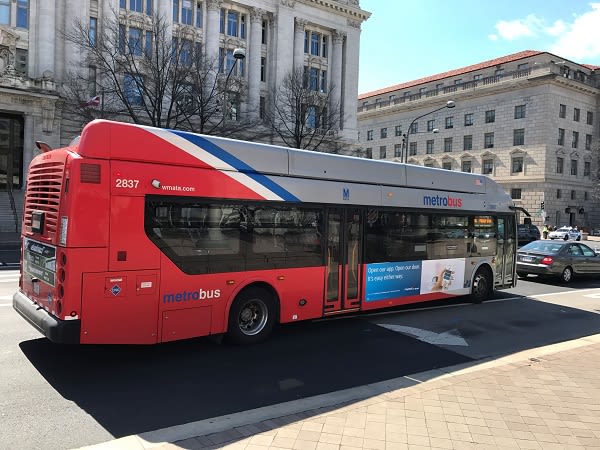
The study explores public transportation in ten international metropolitan cities, identifying key factors that make transit an effective competitor to the private motor vehicle.
METRO Magazine
New research from the Mineta Transportation Institute (MTI) evaluates ten international metropolitan areas with highly effective regional transit to identify specific characteristics, policies, and practices that contribute to their success.
The report, “Characteristics of Effective Metropolitan Areawide Public Transit: A Comparison of European, Canadian, and Australian Case Studies,” investigates four main categories: 1) metropolitan area background and setting, 2) regional transit coordinating agency, 3) customer-apparent characteristics, and 4) transit finance.
The ten case study areas included Barcelona, Frankfurt, Lyon, Milan, Stockholm, and Stuttgart in Europe as well as Vancouver, Toronto, Sydney, and Perth. The regional transit mode share for the ten areas ranged from 10% to 37% and the major city transit mode share was even higher, between 23% and 40%.
Overall, the report identifies the replicable factors in metropolitan public transportation that make transit an effective competitor to the private motor vehicle.
Researchers identified the critical presence of a Regional Transit Coordinator (RTC) in each of the case studies. RTCs ensure that schedules between modes are synchronized, coordinate long-range planning between different transit modes, and enforce a region-wide fare policy.
The research team also found three basic, but effective models of RTCs:
One agency coordinates the many separately-owned systems,
The RTC also serves as the operator of the regional rail and bus modes, or
A single public agency operates all public transit modes (busses, trams/light rail, and metro/subway) in the metropolitan area.
Principal Investigator Dr. Michelle DeRobertis points out that, “A regionwide single-fare policy that is journey-based improves customer satisfaction and ridership and thus, a coordinating entity, like an RTC, with sufficient authority to set fares appears to be essential to creating single fare policy.”
The report states that these research findings can be applied to U.S. metropolitan areas with multiple players, yielding effective, efficient, and high mode share public transit at the regional level. The research can also help U.S. policy makers and planners begin to improve the appropriate aspects of their own regional transit systems, including by improving coordination and organizational structures.
A 30-minute webinar is available on MTI’s research.
More Management

METRO Opens Submissions for 2026 Motorcoach Awards
Nominations are now being accepted for METRO Magazine’s Operator of the Year and Innovative Operator of the Year awards.
Read More →
New York MTA Advances Final Contract for Second Avenue Subway Expansion
Contract Four is the largest in the Second Avenue Subway Phase 2 project and includes construction of station infrastructure, tracks, and signals for the subway expansion, MTA officials said. Work on Contract Four will begin in 2027.
Read More →
Transit Agencies Highlight Safety Gains at National Summit
Leaders from 15 major transit systems shared crime-reduction results and safety initiatives while discussing the role of continued federal support.
Read More →

NITA Names New Leadership, Expands Reduced-Fare Program at First Board Meeting
The new regional transit authority appointed its first board chair and interim executive director while extending reduced fares across CTA, Metra, and Pace for eligible riders.
Read More →
Beyond the Checklist: A Structured Approach to Transit Maintenance
Reliability-Centered Maintenance helps transit agencies move beyond routine checklists to focus limited resources on the assets and failures that have the greatest impact on safety, reliability, and service.
Read More →
APTA 2026 Nominating Committee Selects Leadership Slate, Names Chair and Vice Chair Nominees
Leadership changes will help shape the association’s priorities and its representation of the transportation industry during the 2026–2027 term.
Read More →
DART Launches Major Security, Fare Enforcement Initiative
The 90-day demonstration will deploy coordinated security teams at five light rail stations while testing controlled access and gathering data to guide future investments.
Read More →
Advancing Fare Collection Through Technology and Innovation
Learn about delivering 1300 gates at 91 stations while managing fare evasion. Explore the large scale deployment, solution customization and real-world results that affect the region. Prepare for deployment in your region now.
Read More →
Game Day in Motion: Moving Millions During the 2026 World Cup
Between packed transit stations and team motorcoaches, see how agencies and operators across North America tackled the transportation demands of the 2026 FIFA World Cup.
Read More →
Surface Transportation Extension Averts Shutdown, Leaves Transit Funding Gap
The stopgap keeps federal transportation programs moving, but missing advance funding could complicate the transit and rail projects agencies are planning next.
Read More →