




New York MTA Panel Unveils Plan to Reduce Fare, Toll Evasion
N.Y. MTA Fare Change Pilot to Begin at End of Month
The temporary promotional changes to fare structures will begin Feb. 28 for New York City Transit and Feb. 25 for commuter rail tickets. The pilot will last for at least four months.
February 9, 2022
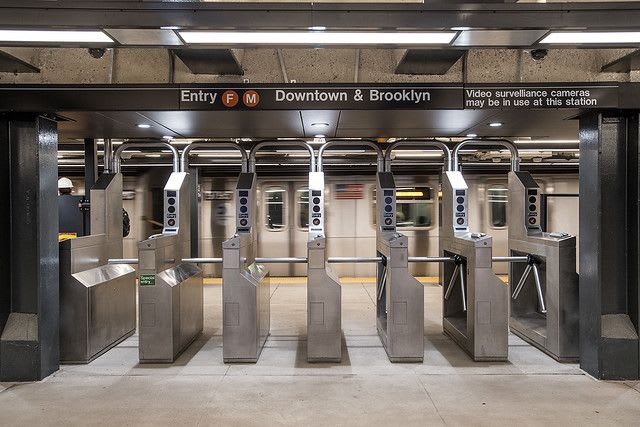
Customers who tap and go with OMNY will be charged the standard $2.75 pay-per-ride fare for their first 12 trips starting every Monday. Any trips after that through the following Sunday would be free.
Credit:
Patrick Cashin
3 min to read
To encourage New Yorkers to get back on subways, buses, and trains, and to reduce the cost and worry surrounding everyday travel, New York’s Metropolitan Transportation Authority (MTA) announced a pilot fare program it is calling more affordable, flexible, and fair.
The temporary promotional changes to fare structures will begin Feb. 28 for New York City Transit and Feb. 25 for commuter rail tickets. The pilot will last for at least four months.
“Bringing riders back to mass transit depends on three variables — reliability, safety, and price. We’ve made it a priority to get creative on fares,” said MTA Chair and CEO Janno Lieber. “Transit affordability is also an equity issue, and we are committed to providing a wide range of new discounts, while ensuring the MTA maintains a solid bottom line.”
The best weekly fare will be available to all riders who tap with OMNY, without the burden of pre-paying for the week, or having to track their progress.
OMNY’s technology provides enhanced flexibility to subway, local bus, and Staten Island Railway customers, so they can start accumulating the benefits weekly without having to sign up. Anybody with a device or contactless card can start tapping their way to free rides, if they use the same device or card each time.
Customers who tap and go with OMNY will be charged the standard $2.75 pay-per-ride fare for their first 12 trips starting every Monday. Any trips after that through the following Sunday would be free.
As a result, no OMNY customer would pay more than $33 per week, which is the current price of a seven-day unlimited-ride MetroCard. This way customers receive the benefits of a seven-day unlimited-ride card without having to decide to pay upfront.
Free transfers between subways and buses will continue to be offered to all customers under this pilot. Two-part trips that are linked by a free transfer between subway and bus are considered one trip toward the 12 needed to reach the free-fare threshold each week.
3 Big Fare Changes for the Long Island Rail Road and Metro-North Railroad
The MTA recognizes the evolving transportation needs of its customers with flexible work hours, and the fare pilot offers new, more affordable ticketing options for Long Island Rail Road and Metro-North Railroad customers.
The pilot also offers promotional fares designed to encourage railroad ridership within New York City. The MTA will offer three major changes to railroad fares:
A new 20-trip ticket will offer 20% off comparable 20 peak one-way fares when purchased through MTA eTix, or at a ticket window. These tickets are valid for 60 days.
Monthly tickets, which are currently discounted between 48% and 61% of the price of a comparable number of one-way peak tickets, will be discounted by an additional 10%.
CityTicket, which offers a reduced, flat fare for rail travel within New York City on weekends, will be extended to all weekday off-peak trains at a fare of $5.
All LIRR and Metro-North fares will remain off peak through Feb. 28, 2022.
The MTA will evaluate the new fares’ impact on operations, the customer experience, and farebox revenue. If the pilot proves successful, the new fare structures could be extended or become permanent.
More Management

METRO Opens Submissions for 2026 Motorcoach Awards
Nominations are now being accepted for METRO Magazine’s Operator of the Year and Innovative Operator of the Year awards.
Read More →
New York MTA Advances Final Contract for Second Avenue Subway Expansion
Contract Four is the largest in the Second Avenue Subway Phase 2 project and includes construction of station infrastructure, tracks, and signals for the subway expansion, MTA officials said. Work on Contract Four will begin in 2027.
Read More →
Transit Agencies Highlight Safety Gains at National Summit
Leaders from 15 major transit systems shared crime-reduction results and safety initiatives while discussing the role of continued federal support.
Read More →

NITA Names New Leadership, Expands Reduced-Fare Program at First Board Meeting
The new regional transit authority appointed its first board chair and interim executive director while extending reduced fares across CTA, Metra, and Pace for eligible riders.
Read More →
Beyond the Checklist: A Structured Approach to Transit Maintenance
Reliability-Centered Maintenance helps transit agencies move beyond routine checklists to focus limited resources on the assets and failures that have the greatest impact on safety, reliability, and service.
Read More →
APTA 2026 Nominating Committee Selects Leadership Slate, Names Chair and Vice Chair Nominees
Leadership changes will help shape the association’s priorities and its representation of the transportation industry during the 2026–2027 term.
Read More →
DART Launches Major Security, Fare Enforcement Initiative
The 90-day demonstration will deploy coordinated security teams at five light rail stations while testing controlled access and gathering data to guide future investments.
Read More →
Sponsored•September 9, 2026
Advancing Fare Collection Through Technology and Innovation
Learn about delivering 1300 gates at 91 stations while managing fare evasion. Explore the large scale deployment, solution customization and real-world results that affect the region. Prepare for deployment in your region now.
Read More →
Game Day in Motion: Moving Millions During the 2026 World Cup
Between packed transit stations and team motorcoaches, see how agencies and operators across North America tackled the transportation demands of the 2026 FIFA World Cup.
Read More →
Surface Transportation Extension Averts Shutdown, Leaves Transit Funding Gap
The stopgap keeps federal transportation programs moving, but missing advance funding could complicate the transit and rail projects agencies are planning next.
Read More →