



New Dubai tramway begins operation
Equipped with Alstom's APS ground-level power supply and the company's Citadis tram vehicles, the system is also the first in the world to be catenary-free all along the six-mile line which features 11 stations.

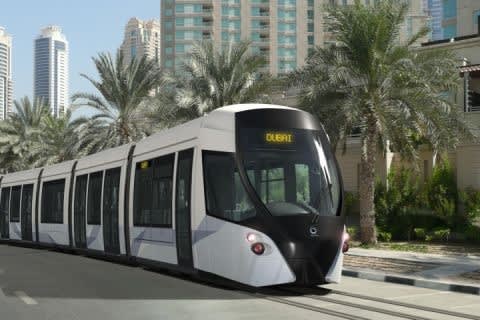
The world's first 100% catenary-free tram line began operation in Dubai on Wednesday. The six-mile line, featuring vehicles manufactured by Alstom Transport, will serve the Al Sufouh, Marina and JBR areas, which are experiencing high-end urban development.
The full system project, awarded to Alstom1 by Dubai Roads and Transport Authority (RTA), was launched to foster multimodal transportation use and to reduce traffic congestion and pollution. This first Tramway in the entire Gulf region is expected to serve about 27,000 passengers per day and is anticipated to reach about 66, 000 by 2020.
RELATED:Alstom delivers first of 11 Citadis trams to Dubai
“The tram for Dubai, which we are proud to have handed over ahead of schedule, illustrates Alstom’s strategy to serve all markets with a complete range of solutions while demonstrating our leading position in tramway systems. Thanks to Alstom and RTA’s close collaboration on the project, Dubai’s citizens can now travel aboard one of the most sophisticated and comfortable tram in the world” said Alstom President Henri Poupart-Lafarge.
The Dubai Tramway includes many Alstom’s technological breakthroughs, according to the company. It is the first tram in the world able to run in temperatures of up to 50 °C and to withstand harsh climate conditions such as humidity and sandy atmosphere. Equipped with APS ground-level power supply, the system is also the first in the world to be catenary-free all along the six-mile line which features 11 stations2. This technology enables perfect integration of the tramway into the cityscape. Lastly, it is the first line to be equipped with air-conditioned stations and automatic platform screen doors.
The Dubai Tram offers high-end comfort. The Citadis tram is 144 feet long and can accommodate 408 passengers in “gold,” “silver” and “women & children” classes. The tram is equipped with real-time passenger information and video broadcasting. To better reflect the city’s image, Citadis tram of Dubai has a distinctive diamond-shaped styling on the front end. (Photo gallery of tram in production and testing phase.)
The Dubai Tramway is the eighth system delivered by Alstom in a decade. With seven others under implementation worldwide3 including the Lusail tram in Qatar.
[1] For the supply of 11 Citadis, track laying, power network and substations, Urbalis signalling solution, communication and security systems, integrated operation control centre, platform screen doors, road signalling, ticketing system and 13 years of maintenance
[2] Along Al Sufouh Road from Dubai Marina to the Burj Al Arab, the Mall of the Emirates and interconnected to the metro line
[3] Including: Nottingham (UK), Cuenca (Ecuador), Rio (Brazil), …
More Management

FTA Ends Direct Oversight of MBTA Safety Actions
The federal agency closed its remaining special directive to the Massachusetts Department of Public Utilities following a safety review that began in 2022.
Read More →
Report: Transit Bus Manufacturing Supports 34,100 Jobs, $5.1B in GDP
The “Buses Mean Business” report examines the transit bus manufacturing industry’s economic footprint, supply chain, and rising demand for vehicle replacements.
Read More →
LIT Marks 10-Year Milestone at Annual Summit
Hosted by the COTA from September 10 to 13, the Summit carried the theme “Celebrating 10 Years of Excellence, Leadership, and Impact,” with every part of the program honoring the people, agencies, and partners who built LIT over its first decade.
Read More →

People Movement: Dan Dipert Coaches Adds Third-Generation Leader, Keolis Names New Valley Metro VP/GM, and More
In this edition, we also cover recent appointments and announcements at the Wabtec, SilverRide, HNTB, and more, showcasing the individuals helping to shape the future of transportation.
Read More →
METRO Opens Submissions for 2026 Motorcoach Awards
Nominations are now being accepted for METRO Magazine’s Operator of the Year and Innovative Operator of the Year awards.
Read More →
New York MTA Advances Final Contract for Second Avenue Subway Expansion
Contract Four is the largest in the Second Avenue Subway Phase 2 project and includes construction of station infrastructure, tracks, and signals for the subway expansion, MTA officials said. Work on Contract Four will begin in 2027.
Read More →
Transit Agencies Highlight Safety Gains at National Summit
Leaders from 15 major transit systems shared crime-reduction results and safety initiatives while discussing the role of continued federal support.
Read More →
NITA Names New Leadership, Expands Reduced-Fare Program at First Board Meeting
The new regional transit authority appointed its first board chair and interim executive director while extending reduced fares across CTA, Metra, and Pace for eligible riders.
Read More →
Beyond the Checklist: A Structured Approach to Transit Maintenance
Reliability-Centered Maintenance helps transit agencies move beyond routine checklists to focus limited resources on the assets and failures that have the greatest impact on safety, reliability, and service.
Read More →
APTA 2026 Nominating Committee Selects Leadership Slate, Names Chair and Vice Chair Nominees
Leadership changes will help shape the association’s priorities and its representation of the transportation industry during the 2026–2027 term.
Read More →