



New Mineta Study Explores Comprehensive Metrics for Fair Transit Services in California
By researching federal laws and regulations related to Title IV, MPO planning and policy documents, and academic papers related to equity measurement, the research team evaluated extant information on current equity measurement

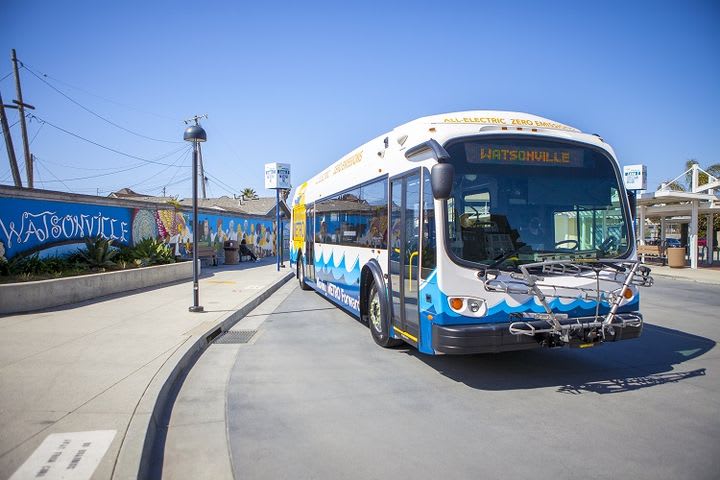
The Mineta study applies a series of possible metrics to a test case in Santa Cruz County, Calif., with Santa Cruz County Metropolitan Transit District and compares results to those generated by Title VI metric requirements.
Proterra
A new report from Mineta Transportation Institute (MTI), “Defining and Measuring Equity in Public Transportation,” aids Caltrans and other transit agencies in assessing transit service equity and helps evaluate potential solutions for past, existing, and future inequities.
Title VI is the federal policy that prohibits discrimination on the basis of race, color, or national origin in any program or activity that receives federal funds.
The Study
By researching federal laws and regulations related to Title IV, metropolitan planning organization (MPO) planning and policy documents, and academic papers related to equity measurement, the research team evaluated extant information on current equity measurement. From this information, the study applies a series of possible metrics to a test case in Santa Cruz County, Calif., with Santa Cruz County Metropolitan Transit District and compares results to those generated by Title VI metric requirements.
A review of the literature and transit practices found that Federal Transit Administration Title VI requirements have significant shortcomings for measuring transit equity. These are:
They only look at race and income.
They only address planned service change inequities and not existing inequities.
They do not set standards for defining and measuring equity.
“Current Title VI title requirements fall short in several regards in addressing the needs of transportation-disadvantaged persons. They only address how different race and income groups would be affected by proposed transit fare and service changes and do not address remedying existing inequities, nor do they consider other characteristics of transportation-disadvantaged populations,” explain the study’s authors. “There are several other measures that could reasonably be considered as indicators of transportation-disadvantaged populations. They include low vehicle ownership, households without internet access, single-parent households headed by females with children, and persons who work at night where little or no transit service is running at that time.”
Room for Improvement
The extensive research and analyses found that current standard practice metrics (race and income) likely miss critical aspects of equity. Agencies can employ new techniques and measurements that capture overlooked metrics, especially those that correlate to traditionally underserved populations who may not have access to the transit services they require. Identifying and diagnosing inequities in transit service provision are key.
Traditional ways to seek public input, particularly public hearings, are typically least accessible to groups such as those with low incomes and other historically marginalized groups. Taking these seemingly small actions can make huge improvements in transportation equity for all, according to the study.
More New Mobility

From Hardware to Digital Partner: Luminator Charts Its Next Chapter
CEO Magnus Friberg discusses Luminator’s shift toward becoming a digital partner, the growing importance of software and interoperability, and how AI can help agencies improve operations and passenger experience.
Read More →
Biz Briefs: Alstom Lands Canadian Contract, LYT to Supply California TSP, and More
In METRO's latest installment, we take a look at recent news from Complete Coach Works, Beep, FlixBus, and more partnerships making headlines across the transportation sector.
Read More →
CharterUP’s Armir Harris on Technology, AI, and the Future of Group Mobility
In a recent episode of METROspectives, CharterUP Founder/CEO Armir Harris discussed the company’s evolution from an online charter bus marketplace into a technology platform supporting public- and private-sector mobility and much more.
Read More →
Jacksonville’s NAVI Project Charts a New Course for Autonomous Public Transportation
Through its NAVI program, JTA is showing how autonomous vehicles, intelligent infrastructure, and coordinated operations can work together to deliver everyday public transportation.
Read More →
Biz Briefs: Luminator Marks Milestone and More
From manufacturers and suppliers to transit agencies and motorcoach operators, these updates offer a snapshot of the projects, partnerships and business moves driving the industry forward.
Read More →
New Tricks for Old Bureaucracies: Joshua Schank on Making Transit Innovation Stick
Former LA Metro Chief Innovation Officer Joshua Schank discusses why good ideas aren't enough, how transit agencies can overcome resistance to change, and why today's challenges demand more innovation.
Read More →
How DART's GoPass Is Redefining Regional Mobility
Serving 14 transit agencies, GoPass simplifies multimodal travel by allowing riders to plan, pay for, and manage an entire trip through one app.
Read More →
Biz Briefs: OCTA Taps Clean Energy for Hydrogen Station, Stadler to Supply Via Rail Vehicles, and More
From manufacturers and suppliers to transit agencies and motorcoach operators, these updates offer a snapshot of the projects, partnerships and business moves driving the industry forward.
Read More →CharterUP Expands Into New Mobility and Autonomous Transportation
Vice President of New Mobility Stephen Joos discusses how CharterUP is leveraging its nationwide transportation network, technology platform, and autonomous vehicle partnerships to expand into workforce mobility, campus shuttles, and transit solutions.
Read More →
METRO Magazine Announces 2026 Innovative Solutions Awards Winners
Projects Recognized for Advancing Mobility Through Technology, Accessibility, Workforce Innovation, and Operational Excellence
Read More →