




Read More: New York Gov. Announces Progress in Increasing MTA Accessibility
New York MTA Testing New Features on Buses to Improve Operator, Customer Safety
New York City Transit (NYCT) is testing and evaluating the efficacy of a fully enclosed operator compartment prototype for bus operators designed to cover operators by providing a physical barrier separate from the public area.
September 19, 2023
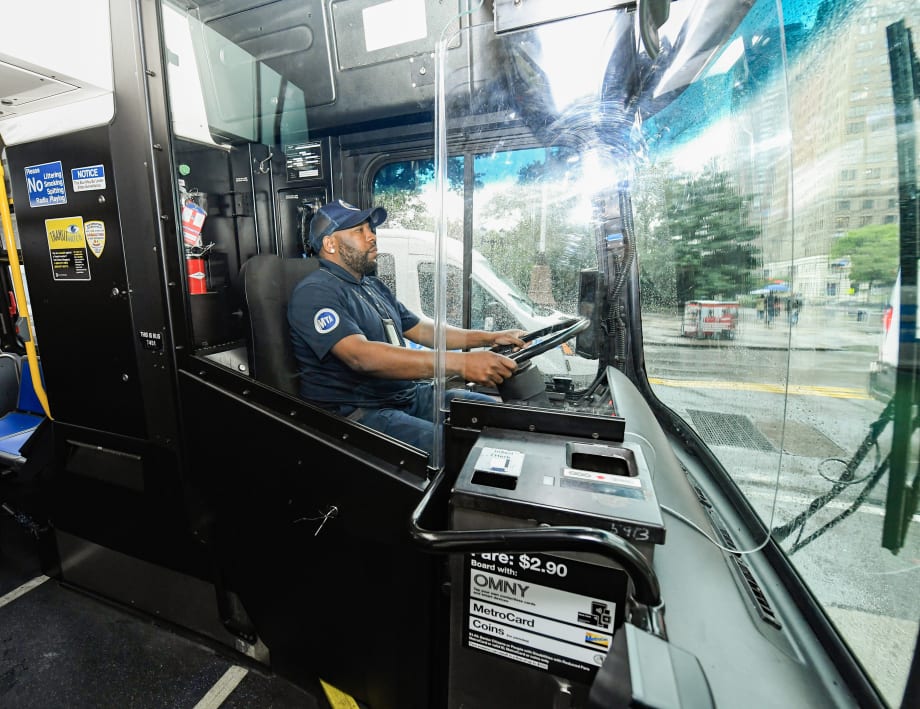
The device aims to protect bus operators from objects being thrown and prevent potential physical assaults to safely operate the bus.
Photo: New York MTA
2 min to read
The Metropolitan Transportation Authority (MTA) announced it has unveiled new prototypes designed to protect bus operators from potential assaults and prevent collisions with side mirrors.
New York City Transit (NYCT) is testing and evaluating the efficacy of a fully enclosed operator compartment prototype for bus operators designed to cover operators by providing a physical barrier separate from the public area.
Since 2017, the entire local bus fleet has been equipped with physical barriers that partially enclose operators.
The new prototype extends the physical barrier to the interior roof of the bus and includes additional larger glass on the operator’s compartment door and fixed glass in front of the door.
What the Device Aims to Accomplish
The device aims to protect bus operators from objects being thrown and prevent potential physical assaults to safely operate the bus.
These elements allow the operator to be better protected and customers to have full access to the farebox for payment and accessible boarding.
Two manufacturers have retrofitted two buses not currently in service respectively for ongoing testing and evaluation.
“Keeping bus operators and customers safe is paramount to NYCT’s North Star of providing faster, cleaner, and safer service,” said New York City Transit President Richard Davey. “We’re excited to see the results from the testing period of these prototypes and look forward to continuing to innovate and modernize the system to protect everyone’s safety.”
New E-Mirror Prototypes
NYCT also announced that the agency has installed and is testing the effectiveness of e-mirrors on several buses now in service with the goal of reducing collisions.
In 2022, bus side mirrors struck 18,000 objects totaling about 25% of all bus collisions. Using cameras located on the bus’s exterior, e-mirrors provide digital screens that show the surroundings of a bus to the operator, giving them a wider field of view on both sides of the bus.
These new e-mirror prototypes have now been installed on five buses across a variety of routes in the system for testing and evaluation.
More Security and Safety

Transit Agencies Highlight Safety Gains at National Summit
Leaders from 15 major transit systems shared crime-reduction results and safety initiatives while discussing the role of continued federal support.
Read More →
DART Launches Major Security, Fare Enforcement Initiative
The 90-day demonstration will deploy coordinated security teams at five light rail stations while testing controlled access and gathering data to guide future investments.
Read More →
RTD Launches NextRide App to Consolidate Trip Planning, Fares, Security Reporting
The app expands on RTD’s existing NextRide web application and allows customers to view real-time vehicle locations and service alerts, purchase and store digital fares, and access customer support.
Read More →

TAPTCO Updates OSHA Compliance Training for Transit Maintenance Operations
The revamped program addresses 26 OSHA standards for maintenance facilities, with TAPTCO pointing to training, documentation, and everyday shop hazards as continuing challenges for transit operations.
Read More →
Sponsored•August 18, 2026
How VaporVision Adds Value to Transit Door Systems
Wabtec engineers explain how the system improves doorway detection, strengthens diagnostics and gives transit agencies and OEMs greater operating flexibility.
Read More →
FRA Announces $5.3B in Rail Investments, Including $2B for Amtrak
Funding will support grade-crossing improvements, infrastructure upgrades, and new Amtrak equipment in 23 states.
Read More →
Chicago, Maryland Expand Non-Law-Enforcement Safety, Rider Support
The CTA and MTA are launching new programs aimed at de-escalation, crisis response, rider assistance, and greater transparency.
Read More →
LA Metro, City of West Hollywood, and Partners Advance Smarter Bus Lane Enforcement
The award-winning partnership combines AI-powered detection with human oversight to improve bus reliability, accessibility, and enforcement efficiency.
Read More →
LA Metro Reports 57% Decline in Homelessness on Transit System Since 2024
The agency's latest homelessness count offers new data on how care-based services and cross-sector partnerships can complement traditional transit security strategies.
Read More →
FTA Launches 'Transit Moves America' Dashboard to Highlight Agency Safety and Performance
The online dashboard transforms National Transit Database information into a public-facing resource that allows users to compare transit agencies on key operational and safety metrics.
Read More →