The MTA and the New York Power Authority are building critical infrastructure to power a zero-emissions bus fleet, including installing 17 new bus charge points at Grand Avenue Bus Depot in Queens.
The MTA and the New York Power Authority are building critical infrastructure to power a zero-emissions bus fleet, including installing 17 new bus charge points at Grand Avenue Bus Depot in Queens.
Ad Loading...
The announcement supports the Climate Leadership and Community Protection Act goal to reduce greenhouse gas emissions 85% by 2050 and the MTA’s goal of operating a 100% zero-emission bus fleet by 2040.
“These new electric buses will play a key role in ensuring New Yorkers can get to where they’re going safely and sustainably,” said Gov. Kathy Hochul. “Zero-emission buses are becoming the hallmark of our transit systems, demonstrating the importance of building healthy, environmentally friendly cities."
The MTA’s New ZEBs
The buses feature lightweight electric traction drive systems that allow buses to recover up to 90% of energy during braking. The regenerative braking reduces wear and tear on brakes and maximizes energy efficiency.
The MTA’s buses are paid for with almost $70 million in formula funds from the Federal Transit Administration, including almost $20 million from the Bipartisan Infrastructure Law.
The MTA is working closely with the New York Power Authority (NYPA) to build the critical infrastructure required to power a zero-emissions bus fleet.
Ad Loading...
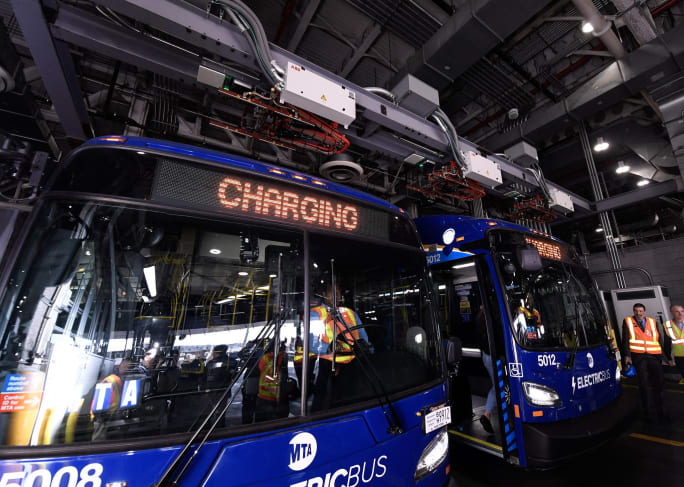
The Power Authority recently completed the installation of 17 fast charging systems points — known as autonomous pantograph dispensers because they “dispense” energy through roof mounted arms that automatically connect with the buses. Buses will park underneath the arms at the Grand Avenue Bus Depot and Central Maintenance Facility in Queens.
Another 46 are under construction at the Herkimer lot in East New York in Brooklyn and the Charleston facility in Staten Island, to be complete by the end of the year. An on-street pantograph that will serve buses needing to “top off” their batteries between daily runs is almost complete under the Williamsburg Bridge Plaza in Brooklyn.
Building Infrastructure to Support BEBs
The $188 million second phase of work will bring 220 additional overhead pantograph charging systems to Grand Avenue and four other depots in Queens, Manhattan, the Bronx, and Brooklyn.
In addition, several depots will require electric distribution upgrades in conjunction with Consolidated Edison. The contract will deploy multiple charging manufacturers, a sophisticated charge management system to help balance the electrical loads, and a long-term service agreement to help maintain reliable bus charging.
In a historic move, the MTA is also collaborating closely with Con Edison to source new power for bus charging. Work to transform bus depots to support electric buses includes building lanes inside depots that are specific for electric buses and restructuring areas to accommodate overhead pantograph dispensers, which charge buses. These high-tech devices energize the buses efficiently, ensuring they are always ready for service.
Ad Loading...
Following closely on the heels of this 60-bus delivery, the MTA expects to start receiving its next order of 205 electric buses in late 2025.
Photo: MTA/Marc A. Hermann
Another Step Toward Full Electric
Following closely on the heels of this 60-bus delivery, the MTA expects to start receiving its next order of 205 electric buses in late 2025.
The agencies are also negotiating an option to secure another 265 battery-electric buses at six depots starting in 2027, which would bring electric buses to a total of 11 depots. The recent delivery builds on the MTA’s previous order of 15 zero-emissions vehicles in 2019, which currently serve routes in Manhattan.
The MTA has committed to transitioning to a 100% zero-emissions bus fleet by 2040. A 100% zero emissions bus fleet means that the MTA will avoid a further 500,000 metric tons of greenhouse gas emissions each year.
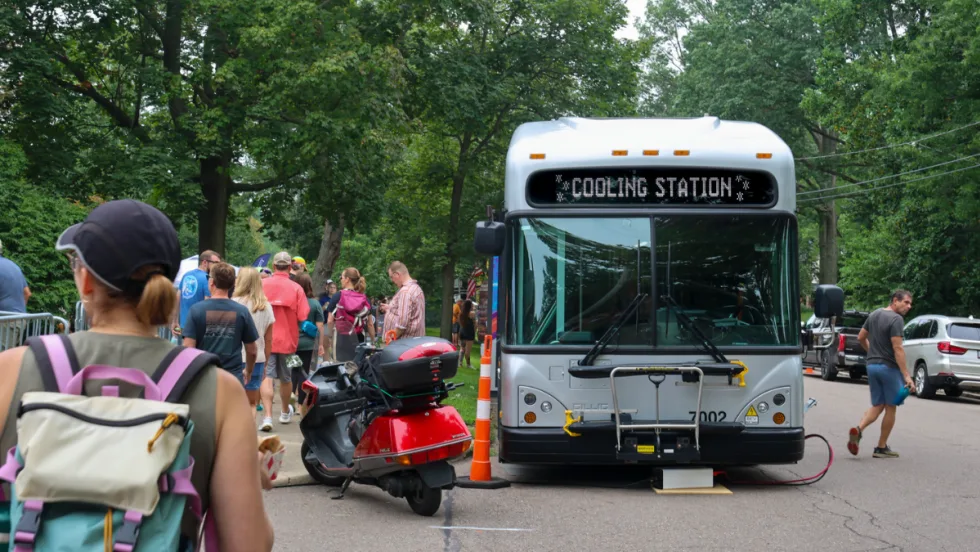
See how three Gillig battery-electric buses powered festival stages while the agency’s new Park & Ride service carried approximately 1,000 attendees, demonstrating another potential use for transit agencies’ electric fleets.
The new name represents a renewed vision for the nonprofit focused on advancing clean, equitable, and affordable transportation solutions that move people and goods.
John Hroncich discusses BAE Systems’ modular and scalable approach, lessons learned from decades of real-world operations, and how agencies can identify electrification strategies that fit their fleets.
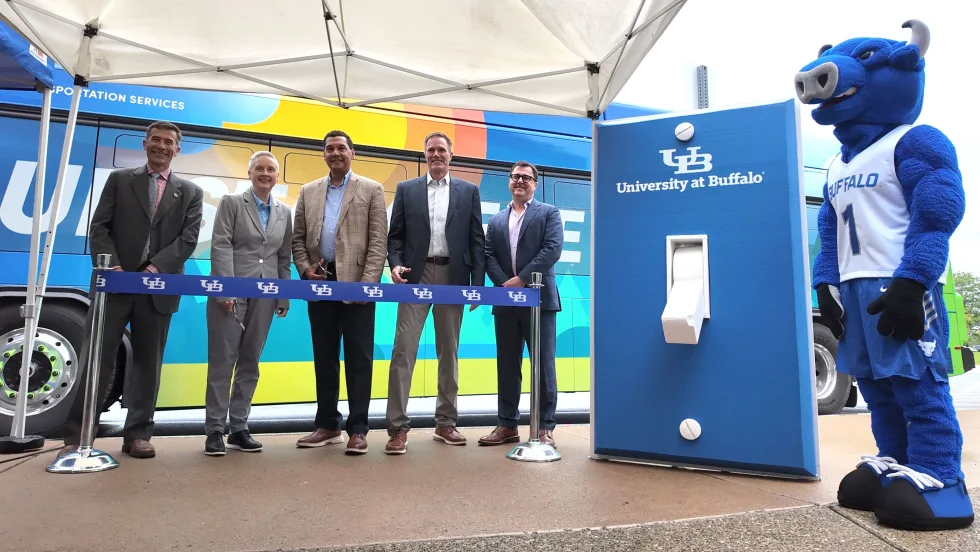
UB, transportation solutions provider WeDriveU, and fleet electrification specialist Zenobē marked the deployment in the presence of students, university administrators, and local officials.
From manufacturers and suppliers to transit agencies and motorcoach operators, these updates offer a snapshot of the projects, partnerships and business moves driving the industry forward.
The agency’s maintenance chief discusses leadership, workforce development, zero-emission technology, and preparing technicians for the future of public transportation.
The firm will work with CTDOT and RVT to define the facility layout, operational requirements, and long-term flexibility for RVT’s growing electric fleet.
The fast-charging infrastructure will help extend electric bus range, improve fleet utilization, and support DASH's goal of transitioning to a fully zero-emission fleet.