



NY MTA Proposes Historic $51 Billion to Modernize Bus, Rail Systems
Proposed investment is by far the highest in the MTA's history, increasing spending on infrastructure by 70% over current levels.

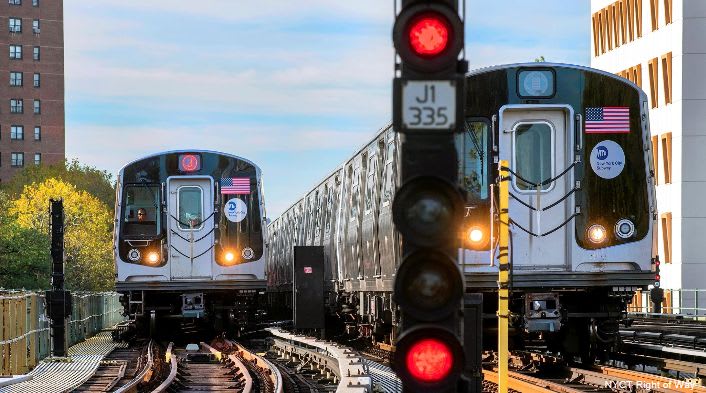
New York MTA's proposed capital program will modernize the subways by adding capacity, increasing reliability, and accelerating accessibility.
Photo: MTA/NYCT
The Metropolitan Transportation Authority (MTA) today released the 2020-2024 Capital Plan that proposes investing $51.5 billion into the region’s subways, buses and railroads over the next five years to institutionalize and build on the progress of the Subway Action Plan and create a faster, more accessible, and more reliable public transportation system.
The proposed level of investment is by far the highest in the MTA’s history, increasing spending on infrastructure by 70% over current levels, which were already the highest ever. The program plans to invest more than $40 billion in New York City Transit’s subways and buses alone – including crucial signal upgrades – as well as major investment in the Long Island Railroad and Metro-North.
The single largest source of funds for the plan — $25 billion — comes from bonds backed by new revenue streams authorized in this year’s State budget.
The program proposes to invest more than $40 billion in New York City Transit’s subways and buses alone.
MTA New York City Subways | $37.3 billion |
The proposed capital program will modernize the subways by adding capacity, increasing reliability, and accelerating accessibility.
The program includes full funding for Phase 2 of the Second Avenue Subway from a mixture of federal and local sources.
Systemwide priority initiatives funded by the plan include signal modernization, new subway cars, station accessibility, station improvements, and track replacement.
Signal Modernization | $7.1 billion |
More frequent and reliable service would come to six subway lines, including the Lexington Avenue Line, serving more than 50% of riders.
Subway Cars | $6.1 billion |
1,900 new subway cars would join the subway car fleet, modernizing the customer environment and improving mechanical reliability to mitigate up to 10% of delays.
Station Accessibility | $5.2 billion |
70 stations would be made accessible in accordance with the Americans with Disabilities Act so that no customer will be no more than two stations away from an accessible station; stations serving over 60% of passengers would be accessible. Four of these stations would be accelerated into the current 2015-2019 Capital Plan.
Station Improvements | $4.1 billion |
The MTA would perform renewal work addressing components in need of critical repair at about 175 stations, including replacement of 78 elevators and 65 escalators.
Track Upgrades | $2.6 billion |
New York City Transit would replace 60 miles of track and install 20 miles of continuous welded rail, creating a quieter ride and leading to fewer broken rails.
Second Avenue Subway Phase 2 | $4.55 billion |
This plan includes the final installment of the SAS project, which will be financed with approximately 50% federal funds and 50% MTA resources.
The MTA would build three new fully accessible stations serving 300,000 daily riders across the SAS line, and a new connection with Metro-North Railroad.
This phase will further relieve congestion on the Lexington Avenue Line and strengthen access to jobs and education for East Harlem residents.
MTA New York City Buses | $3.5 billion |
The proposed program calls for more than 2,400 new buses, depot improvements and customer experience upgrades. It accelerates the transition to a fleet composed fully of zero-emissions electric buses.
Replacement and Additional Buses | $2.5 billion |
The MTA would replace more than 2,200 of the oldest buses, including with electric, hybrid and compressed natural gas buses, and expand the fleet size by more than 175 buses.
New buses have twice the mechanical reliability of those to be replaced as measured by distance traveled between component failures that cause delays.
The MTA proposes investing $1.1 billion to modify depots for electric bus operations, and to purchase 500 electric buses, including replacement buses and some additional buses.
The program will enable the MTA to acquire only electric buses beginning in 2029.
Customer Experience Improvements | $109 million |
The MTA would accelerate the rollout of on-board digital information screens to provide real-time service information, add bus lane cameras that improve traffic enforcement, and add equipment for traffic signal priority, bringing for faster service to bus customers.
MTA Long Island Rail Road | $5.7 Billion |
The proposed capital plan makes the investments necessary to enable a historic transformation of the Long Island Rail Road by the planned December 2022 opening of East Side Access and Main Line Expansion.
East Side Access will allow more than 160,000 daily customers to travel to Grand Central Terminal, saving commuters up to 40 minutes per day.
Main Line Expansion will add a third track on 10 miles of the Main Line corridor, used by 40% of LIRR customers.
These projects, along with Jamaica Capacity Improvements, will enable a 60% increase in reverse commute and a 50% increase in peak service between Manhattan and Long Island.
Priority investments in the proposed capital program include track, station improvements, signals and switches, and rolling stock.
Track Upgrades | $1 billion |
The LIRR will install concrete ties and continuous welded rail to increase durability, reliability and customer comfort. The railroad will upgrade and reconfigure infrastructure at Jamaica to improve reliability. This will bring more than 90% of track assets to a state of good repair.
Station Accessibility and Improvements | $910 million |
The LIRR will make seven additional stations accessible in accordance with the Americans with Disabilities Act; 93% of stations, serving 97% of customers, would be accessible.
The LIRR will bring component work and upgrades benefitting up to half of all riders to more than 20 stations, including platform, elevator and escalator replacements.
Signals and Switches | $364 million |
In accordance with the LIRR Forward plan to accelerate infrastructure renewal and improve train reliability, the LIRR will replace 32% of switches, 21% of track circuits and 11% of grade crossing equipment at the locations with highest maintenance needs.
The railroad will upgrade signals and interlockings on three branches that are technologically obsolete.
The total also includes spending on enhanced communications equipment.
Rolling Stock | $487 million |
The railroad will purchase 160 M9A new electric cars, expanding the fleet by 13%.
Fleet growth allows for at least 25,000 more seats into Grand Central during the morning rush hour.
The LIRR will purchase nearly 20 coaches and more than 10 locomotives serving the railroad’s non-electrified territory.
MTA Metro-North Railroad | $4.7 billion in New York State |
The proposed program advances New Haven Line access to Penn Station via four new stations in the Bronx, begins reconstruction of the Grand Central Terminal train shed and Park Avenue tunnel and viaduct, begins replacement of Metro-North’s fleet of M3 rail cars, improves stations, prepares for capacity improvements on the Harlem Line and Port Jervis Line.
Grand Central Terminal Trainshed and Park Avenue Tunnel and Viaduct | $895 million |
Metro-North will pursue Phase 1 of the replacement of the 100+ year old structures used by more than 700 trains per day and 83% of customers, and build four new emergency exits.
The Grand Central Trainshed is 75 acres under east Midtown, and the Park Avenue viaduct is 1.8 miles long, from 97th Street to the Harlem River.
Stations Accessibility and Improvements | $621 million |
Metro-North will add accessibility improvements at up to four stations, bringing wheelchair access to 78% of stations serving 93% of customers, renew stations on the Harlem Line in the Bronx and southern Westchester County, and make priority component repairs at stations on the upper Hudson Line and upper Harlem Line. This work will benefit 60% of customers.
Rolling Stock | $485 million |
The railroad will begin replacement of 140 M3 electric cars. New electric cars are expected to improve mechanical reliability of the fleet, mitigating up to 27% of delays
West of Hudson Improvements | $187 million |
The railroad will pursue the phased construction of core infrastructure needed to allow reverse-peak and better off-peak service, including state-of-good-repair needs, and support the potential future increase in daily service of up to 60%.
Harlem Line Capacity Improvements | $184 million |
The plan would progress infrastructure work to improve reliability and support a future third track on the Harlem Line, including building two new electrical substations, designing three more, and relocating and expanding parking at Southeast Station to allow for future Brewster Yard expansion.
MTA Bridges and Tunnels – The Triborough Bridge and Tunnel Authority | $3.3 billion |
Paying for the Plan
The single largest source of funds for the plan – $25 billion – comes from bonds backed by new revenue streams authorized in this year’s State budget, including $15 billion from central business district tolling that was passed by the legislature and signed into law in April by Governor Cuomo as part of the State’s FY 2020 budget.
The MTA anticipates receiving $10.68 billion from federal funding programs. Another $10 billion will come from bonds backed by newly established revenue sources dedicated to public transportation: a progressive tax on high-end real estate sales and the elimination of the internet tax advantage.
The State of New York under Governor Cuomo has pledged $3 billion, subject to approval by the legislature, and the City of New York under Mayor Bill de Blasio has been asked to pledge an equal amount.
The remaining $9.8 billion will come from the MTA in the form of pay-as-you-go capital contributions and bonds backed by longstanding dedicated taxes, fares and revenues from existing tolling.
More Management

LIT Marks 10-Year Milestone at Annual Summit
Hosted by the COTA from September 10 to 13, the Summit carried the theme “Celebrating 10 Years of Excellence, Leadership, and Impact,” with every part of the program honoring the people, agencies, and partners who built LIT over its first decade.
Read More →
People Movement: Dan Dipert Coaches Adds Third-Generation Leader, Keolis Names New Valley Metro VP/GM, and More
In this edition, we also cover recent appointments and announcements at the Wabtec, SilverRide, HNTB, and more, showcasing the individuals helping to shape the future of transportation.
Read More →
METRO Opens Submissions for 2026 Motorcoach Awards
Nominations are now being accepted for METRO Magazine’s Operator of the Year and Innovative Operator of the Year awards.
Read More →

New York MTA Advances Final Contract for Second Avenue Subway Expansion
Contract Four is the largest in the Second Avenue Subway Phase 2 project and includes construction of station infrastructure, tracks, and signals for the subway expansion, MTA officials said. Work on Contract Four will begin in 2027.
Read More →
Transit Agencies Highlight Safety Gains at National Summit
Leaders from 15 major transit systems shared crime-reduction results and safety initiatives while discussing the role of continued federal support.
Read More →
NITA Names New Leadership, Expands Reduced-Fare Program at First Board Meeting
The new regional transit authority appointed its first board chair and interim executive director while extending reduced fares across CTA, Metra, and Pace for eligible riders.
Read More →
Beyond the Checklist: A Structured Approach to Transit Maintenance
Reliability-Centered Maintenance helps transit agencies move beyond routine checklists to focus limited resources on the assets and failures that have the greatest impact on safety, reliability, and service.
Read More →
APTA 2026 Nominating Committee Selects Leadership Slate, Names Chair and Vice Chair Nominees
Leadership changes will help shape the association’s priorities and its representation of the transportation industry during the 2026–2027 term.
Read More →
DART Launches Major Security, Fare Enforcement Initiative
The 90-day demonstration will deploy coordinated security teams at five light rail stations while testing controlled access and gathering data to guide future investments.
Read More →
Advancing Fare Collection Through Technology and Innovation
Learn about delivering 1300 gates at 91 stations while managing fare evasion. Explore the large scale deployment, solution customization and real-world results that affect the region. Prepare for deployment in your region now.
Read More →