



OKC's EMBARK Releases Customer Satisfaction Survey Findings
The results, based on a combination of “very satisfied” and “satisfied” responses, showed that riders ranked EMBARK’s transit services significantly higher than the national average in overall customer satisfaction.

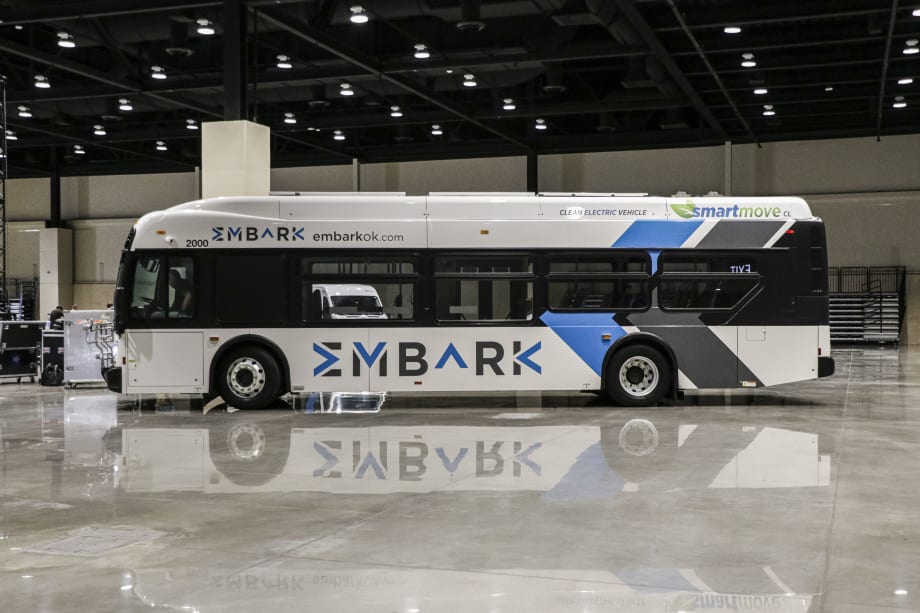
Overall, EMBARK’s customers care most about safety, frequency of service, driver courtesy, on-time arrivals, availability, and reliability of service.
Photo: EMBARK
EMBARK recently released findings from the 2024 Transit Rider Survey; over 2,000 responses were compiled among Oklahoma City fixed route bus, RAPID NW, and OKC Streetcar customers, as well as riders in Norman, Okla., to yield findings in rider satisfaction, frequency of use, preferences, and demographic information.
Conducted in Spring 2024 by ETC Institute, a market research firm specializing in gathering survey data for public transit systems, the Transit Rider Survey was shared last month with the Oklahoma City Council and the Central Oklahoma Transportation and Parking Authority (COTPA).
EMBARK Survey Results
The results, based on a combination of “very satisfied” and “satisfied” responses, showed that riders ranked EMBARK’s transit services significantly higher than the national average in overall customer satisfaction, setting a benchmark for excellence:
OKC Fixed Route: 77% overall satisfaction; 19% above the national average.
OKC Streetcar: 94% overall satisfaction; 36% above the national average.
RAPID NW: 92% overall satisfaction; 34% above the national average.
"We are committed to providing the highest level of service to our riders," said Jesse Rush, director of EMBARK. "These surveys are a vital part of our ongoing efforts to understand rider needs and identify areas for improvement. The positive feedback we've received fuels our passion to continue improving public transit and making it more reliable and accessible for all.”
According to the survey, close to 56% of riders use transit services five or more days per week, showcasing how EMBARK continues to play a key role in connecting the community to work, education, and essential services.
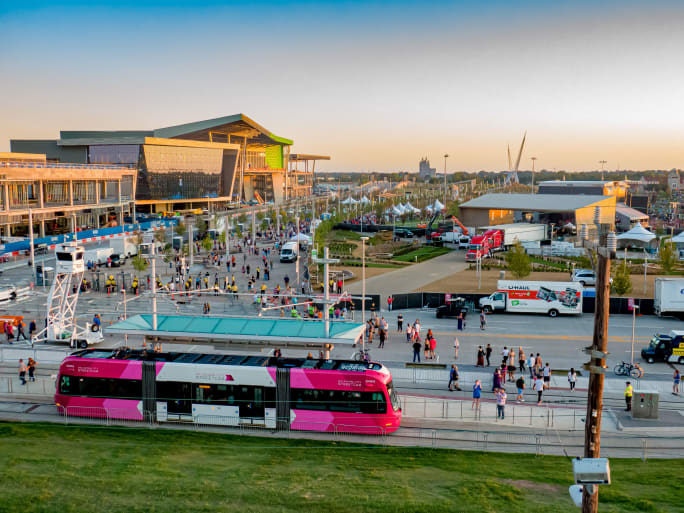
The survey found 96% of riders feel safe while riding the streetcar.
Photo: EMBARK
What Means Most to Riders
Overall, EMBARK’s customers care most about safety, frequency of service, driver courtesy, on-time arrivals, availability, and reliability of service.
Results from the Oklahoma City Transit Rider Survey include:
OKC Bus
81% of riders feel safe while riding the bus.
74% of riders were satisfied with the courtesy and helpfulness of drivers.
73% of riders were satisfied with the reliability of service.
OKC Streetcar
96% of riders feel safe while riding the streetcar.
95% of riders were satisfied with the courtesy and helpfulness of drivers.
92% of riders were satisfied with the reliability of service.
RAPID NW
93% of riders rated the cleanliness of RAPID buses highly.
92% of riders were satisfied with the frequency of RAPID service.
92% of riders were satisfied with the reliability of service.
RAPID NW, the region’s first bus rapid transit (BRT) line, was included in the rider survey for the first time in 2024. Results showed at least a 75% satisfaction rating in all areas, an impressive accomplishment according to the survey administrators.
“Our recent efforts to launch RAPID NW, ongoing MAPS 4 bus stop improvements and a Long-Range Transit Plan (LRTP) that will identify transit improvements for better regional mobility over the next 30 years and enhanced lighting at the transit center demonstrate EMBARK’s Vision to provide world class transportation to all.”
The full survey report and historical survey data can be downloaded here.
More Management

METRO Opens Submissions for 2026 Motorcoach Awards
Nominations are now being accepted for METRO Magazine’s Operator of the Year and Innovative Operator of the Year awards.
Read More →
New York MTA Advances Final Contract for Second Avenue Subway Expansion
Contract Four is the largest in the Second Avenue Subway Phase 2 project and includes construction of station infrastructure, tracks, and signals for the subway expansion, MTA officials said. Work on Contract Four will begin in 2027.
Read More →
Transit Agencies Highlight Safety Gains at National Summit
Leaders from 15 major transit systems shared crime-reduction results and safety initiatives while discussing the role of continued federal support.
Read More →

NITA Names New Leadership, Expands Reduced-Fare Program at First Board Meeting
The new regional transit authority appointed its first board chair and interim executive director while extending reduced fares across CTA, Metra, and Pace for eligible riders.
Read More →
Beyond the Checklist: A Structured Approach to Transit Maintenance
Reliability-Centered Maintenance helps transit agencies move beyond routine checklists to focus limited resources on the assets and failures that have the greatest impact on safety, reliability, and service.
Read More →
APTA 2026 Nominating Committee Selects Leadership Slate, Names Chair and Vice Chair Nominees
Leadership changes will help shape the association’s priorities and its representation of the transportation industry during the 2026–2027 term.
Read More →
DART Launches Major Security, Fare Enforcement Initiative
The 90-day demonstration will deploy coordinated security teams at five light rail stations while testing controlled access and gathering data to guide future investments.
Read More →
Advancing Fare Collection Through Technology and Innovation
Learn about delivering 1300 gates at 91 stations while managing fare evasion. Explore the large scale deployment, solution customization and real-world results that affect the region. Prepare for deployment in your region now.
Read More →
Game Day in Motion: Moving Millions During the 2026 World Cup
Between packed transit stations and team motorcoaches, see how agencies and operators across North America tackled the transportation demands of the 2026 FIFA World Cup.
Read More →
Surface Transportation Extension Averts Shutdown, Leaves Transit Funding Gap
The stopgap keeps federal transportation programs moving, but missing advance funding could complicate the transit and rail projects agencies are planning next.
Read More →