



ORCA Transit Reaches 151 Million Trips
Transit usage in the Puget Sound region is on the rise, with further growth expected in 2025 due to increased return-to-office initiatives and world-famous events coming to the region.

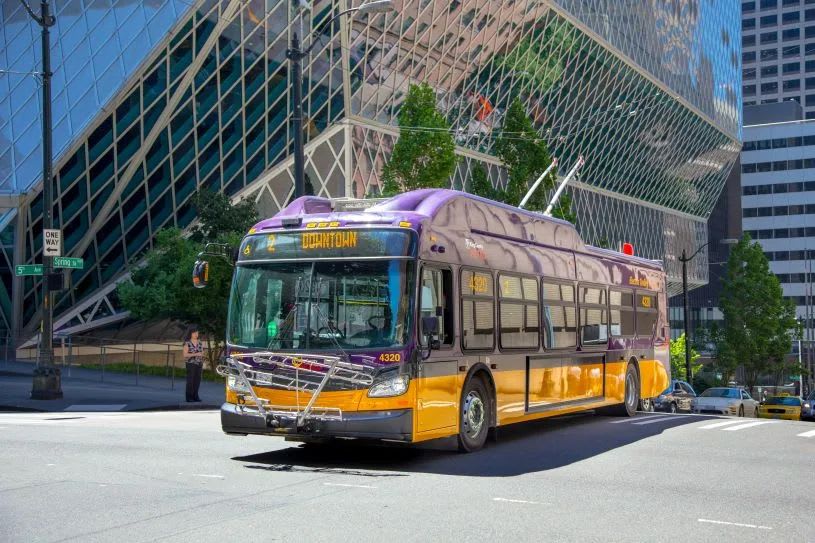
King County Metro is one of six transit providers in the Puget Sound region that is expanding to keep up with growing transit demands.
Photo: King County Metro
Transit usage in the Puget Sound region significantly jumped in 2024, bringing ridership up to 151 million trips.
Growing Transit in 2024
According to six ORCA transit agencies, Community Transit, Everett Transit, King County Metro, Kitsap Transit, Pierce Transit, and Sound Transit delivered 17 million more trips in 2024 than in 2023.
"Our riders chose to take 10 million more Metro trips in 2024 than the year before, and more people are taking transit more often in 2025, too,” said King County Metro General Manager Michelle Allison. “In the years ahead, we're responding to communities' desire for even more transit to better connect our riders to the people and destinations that are most important to them."
Recent expansions and improvements across the region match transit's growing popularity. The agencies celebrated adding more bus trips, opening new bus rapid transit lines, launching Sound Transit Link light rail extensions, offering faster ferry and water taxi services, and extending the “first-mile, last-mile” options that connect neighborhoods that.
“With the opening of the Northgate and Lynnwood light rail extensions, more and more people have discovered just how convenient transit is to get to entertainment, sporting events and work,” said Sound Transit CEO Goran Sparrman. “As we extend across Lake Washington and south to Federal Way in the near future, we know that even more riders will be using light rail to enjoy everything our region has to offer.”
Importance of Transit in 2025
With increased in-person work and the region’s growing popularity, transit offers many benefits compared to private vehicles. More people using public transportation shortens commuting times, lowers stress levels, reduces pollution, decreases congestion, and cuts travel costs such as gasoline, insurance, maintenance, and parking.
Since January 2025, vehicle traffic and transit ridership increased as Amazon office staff resumed in-person work five days a week. In 2026, Seattle is hosting the FIFA Men’s World Cup, bringing hundreds of thousands of people worldwide to the Puget Sound region.
The Washington State Department of Transportation will be making major improvements to Interstate 5, with resulting changes, closures, and detours affecting alternate routes and side streets.
Transit can help many people get where they need to go safely and reliably.
With more riders, ORCA transit agencies continue expanding and enhancing transit service, combatting climate change and making transit more accessible and affordable to residents and visitors.
More Management

METRO Opens Submissions for 2026 Motorcoach Awards
Nominations are now being accepted for METRO Magazine’s Operator of the Year and Innovative Operator of the Year awards.
Read More →
New York MTA Advances Final Contract for Second Avenue Subway Expansion
Contract Four is the largest in the Second Avenue Subway Phase 2 project and includes construction of station infrastructure, tracks, and signals for the subway expansion, MTA officials said. Work on Contract Four will begin in 2027.
Read More →
Transit Agencies Highlight Safety Gains at National Summit
Leaders from 15 major transit systems shared crime-reduction results and safety initiatives while discussing the role of continued federal support.
Read More →

NITA Names New Leadership, Expands Reduced-Fare Program at First Board Meeting
The new regional transit authority appointed its first board chair and interim executive director while extending reduced fares across CTA, Metra, and Pace for eligible riders.
Read More →
Beyond the Checklist: A Structured Approach to Transit Maintenance
Reliability-Centered Maintenance helps transit agencies move beyond routine checklists to focus limited resources on the assets and failures that have the greatest impact on safety, reliability, and service.
Read More →
APTA 2026 Nominating Committee Selects Leadership Slate, Names Chair and Vice Chair Nominees
Leadership changes will help shape the association’s priorities and its representation of the transportation industry during the 2026–2027 term.
Read More →
DART Launches Major Security, Fare Enforcement Initiative
The 90-day demonstration will deploy coordinated security teams at five light rail stations while testing controlled access and gathering data to guide future investments.
Read More →
Advancing Fare Collection Through Technology and Innovation
Learn about delivering 1300 gates at 91 stations while managing fare evasion. Explore the large scale deployment, solution customization and real-world results that affect the region. Prepare for deployment in your region now.
Read More →
Game Day in Motion: Moving Millions During the 2026 World Cup
Between packed transit stations and team motorcoaches, see how agencies and operators across North America tackled the transportation demands of the 2026 FIFA World Cup.
Read More →
Surface Transportation Extension Averts Shutdown, Leaves Transit Funding Gap
The stopgap keeps federal transportation programs moving, but missing advance funding could complicate the transit and rail projects agencies are planning next.
Read More →