




Miss This? SEPTA Expands Cost-Saving Plan with New Phase of Efficiency Program
Philadelphia’s SEPTA Sees Crime Drop as Fare Evasion Enforcement Intensifies
The second quarter report shows serious crime staying at a low rate, with significant progress made on fare evasion and quality-of-ride offenses.
July 16, 2025
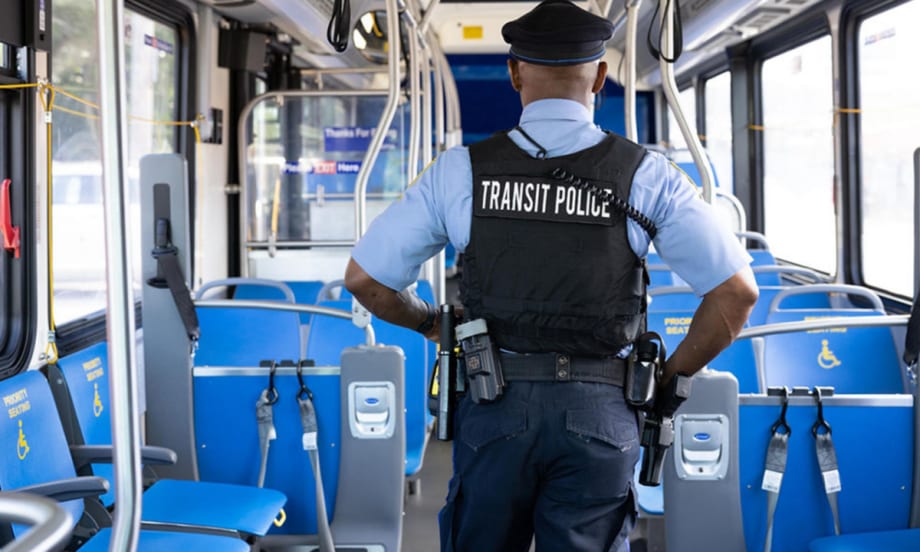
SEPTA is planning for more visible patrols and new full-length fare gates at nine additional stations to deter fare evasion.
Photo: SEPTA
2 min to read
The first-half of 2025 crime report from the SEPTA Transit Police Department reveals serious crimes have continued dropping in most categories while enforcement of fare evasion, smoking, and other quality-of-ride offenses has increased significantly.
In 2024, SEPTA reported a record-setting annual crime reduction of 33%, with transit police continuing to implement data-driven deployment strategies. These efforts are helping keep serious crime rates low, with reductions in seven of eight categories over the first six months of 2025.
“We are continuing to see great results from the SEPTA Transit Police Department, thanks to efforts to bolster staffing and the implementation of innovative enforcement strategies,” said SEPTA General Manager Scott A. Sauer. “Despite an imminent fiscal crisis that could result in massive service cuts, we will continue to support the critical work that our police force does to ensure SEPTA is safe and secure for customers and employees.”
In addition to the progress on serious crimes, the focus on fare evasion and quality-of-ride offenses by transit police shows significant progress. Overall enforcement of these incidents increased by 27% compared to the first quarter of 2024.
SEPTA Steps Up Fare Checks, Sees Drops in Crime and Complaints
SEPTA Transit Police Chief Chuck Lawson said increased fare enforcement directly impacts serious crime and other offenses.
For the first half of 2025, SEPTA transit police issued 4,366 citations for fare evasion, a 74% increase over the same six months in 2024. In addition:
1,189 tickets were issued for smoking — a 6% increase.
253 tickets were issued for marijuana use — a 19% increase.
Meanwhile, reports by customers to the SEPTA Transit Watch App over fare evasion declined 46.7%, and reports of smoking declined 13.6%.
“When we increase our enforcement of fare evasion, we consistently see lower rates of crime and disorder on the system,” Lawson said. “We are committed to a three-pronged approach to combating fare evasion through deterrence, enforcement, and education.”
For deterrence, transit police will continue to enhance visible patrols and use new technology, including full-length fare gates that will soon begin expanding to nine additional stations. The first full-length gates at 69th Street Transportation Center have reduced fare evasion by approximately 20%.
Enforcement includes regular patrols and using data to deploy officers to fare-evasion hot spots. These are complemented by educational efforts, such as recent fare enforcement blitzes at stations and on buses, and new signage listing the criminal penalties for fare evasion.
More Management

METRO Opens Submissions for 2026 Motorcoach Awards
Nominations are now being accepted for METRO Magazine’s Operator of the Year and Innovative Operator of the Year awards.
Read More →
New York MTA Advances Final Contract for Second Avenue Subway Expansion
Contract Four is the largest in the Second Avenue Subway Phase 2 project and includes construction of station infrastructure, tracks, and signals for the subway expansion, MTA officials said. Work on Contract Four will begin in 2027.
Read More →
Transit Agencies Highlight Safety Gains at National Summit
Leaders from 15 major transit systems shared crime-reduction results and safety initiatives while discussing the role of continued federal support.
Read More →

NITA Names New Leadership, Expands Reduced-Fare Program at First Board Meeting
The new regional transit authority appointed its first board chair and interim executive director while extending reduced fares across CTA, Metra, and Pace for eligible riders.
Read More →
Beyond the Checklist: A Structured Approach to Transit Maintenance
Reliability-Centered Maintenance helps transit agencies move beyond routine checklists to focus limited resources on the assets and failures that have the greatest impact on safety, reliability, and service.
Read More →
APTA 2026 Nominating Committee Selects Leadership Slate, Names Chair and Vice Chair Nominees
Leadership changes will help shape the association’s priorities and its representation of the transportation industry during the 2026–2027 term.
Read More →
DART Launches Major Security, Fare Enforcement Initiative
The 90-day demonstration will deploy coordinated security teams at five light rail stations while testing controlled access and gathering data to guide future investments.
Read More →
Sponsored•September 9, 2026
Advancing Fare Collection Through Technology and Innovation
Learn about delivering 1300 gates at 91 stations while managing fare evasion. Explore the large scale deployment, solution customization and real-world results that affect the region. Prepare for deployment in your region now.
Read More →
Game Day in Motion: Moving Millions During the 2026 World Cup
Between packed transit stations and team motorcoaches, see how agencies and operators across North America tackled the transportation demands of the 2026 FIFA World Cup.
Read More →
Surface Transportation Extension Averts Shutdown, Leaves Transit Funding Gap
The stopgap keeps federal transportation programs moving, but missing advance funding could complicate the transit and rail projects agencies are planning next.
Read More →