




More News: First Private Natural Gas Fueling Station for Huston's METRO
Pierce Transit Pilots New Signage
New Accessible signs are being installed at seven bus stops that include braille, raised lettering, and large print.
October 1, 2024
2 min to read
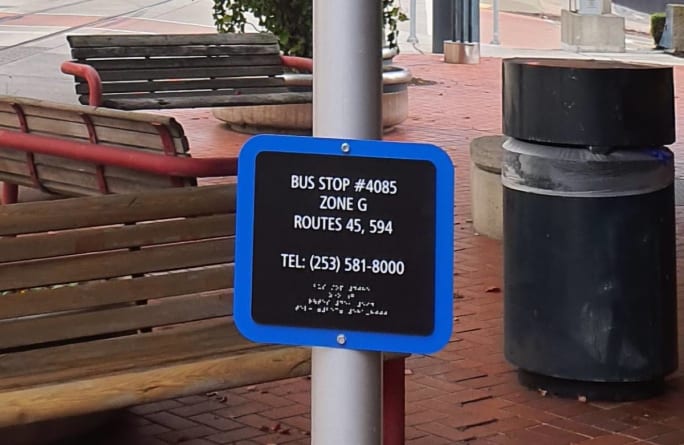
Pierce Transit’s new accessible signs include the bus stop ID number, types of available service, and Pierce Transit’s phone number.
Photo: Pierce Transit
Pierce Transit has installed seven new signs at bus stops at Pierce Transits’ Commerce Street Station in response to community input regarding accessibility.
Each accessible bus stop sign includes braille, raised lettering, and large print that display the bus stop ID number, type of service available at the stop, and Pierce Transit’s phone number.
“Thanks to Ausha Potts, Pierce Transit’s ADA Eligibility Assistant Manager, and other staff at Pierce Transit, we finally have signs accessible for blind, low vision, and deafblind travelers,” said Amin “Tony” Hester, vice chair of Pierce Transit’s community transportation Advisory Group. “These signs will give us more independence when we’re out taking our necessary bus trips. They give us the ability to know what routes arrive at the bus stop and what number to call if we need some assistance.”
These signs are part of Pierce Transit’s continuing efforts to make traveling independently more accessible for people with disabilities. They are the only fixed route transit agency in the region to incorporate this type of signage at bus stops.
Finding the Right Sign
Earlier this year a workgroup was convened to assess sample signage.
The group consisted of subject matter experts including representatives from Pierce Transit’s Community Transportation Advisory Group, Lighthouse for the Blind and Deafblind Service Center, Sound Transit Citizens Accessibility Advisory Committee, and Pierce County Association of the Blind.
The workgroup provided valuable feedback on proposed accessible signage, training for operators, and improvements to accessibility and wayfinding throughout Pierce Transit’s system to enhance the customer experience.
“Many people in our community rely on public transit for everyday transportation,” said Ryan Mello, Pierce Transit board member and chair of the Pierce County Council. “This signage program will make our transportation system more inclusive and accessible for everyone, especially those who are blind or have low vision. Ensuring everyone may access our system seamlessly is a top priority and this project demonstrates that commitment.”
Throughout the pilot project Pierce Transit is gathering feedback from riders about potential improvements to the new accessible signage, with any updates to be made at the March 2025 service change.
The agency is also pursuing funding to place the accessible signs throughout its service area and continue improving the transit travel experience for riders with disabilities.
More Bus
Biz Briefs: New Flyer Delivers in Columbus, Houston, Beep and Freebee Merge, and More
In this edition of Biz Briefs, we spotlight the latest developments shaping the future of mobility.
Read More →
People Movement: Dan Dipert Coaches Adds Third-Generation Leader, Keolis Names New Valley Metro VP/GM, and More
In this edition, we also cover recent appointments and announcements at the Wabtec, SilverRide, HNTB, and more, showcasing the individuals helping to shape the future of transportation.
Read More →
New York MTA Plans Largest Bus Fleet Upgrade in More Than a Decade
The agency is seeking manufacturers for 650 new CNG buses to replace aging vehicles, improve reliability, and advance its broader fleet modernization strategy.
Read More →
Building a Flexible Path to Transit Electrification
John Hroncich discusses BAE Systems’ modular and scalable approach, lessons learned from decades of real-world operations, and how agencies can identify electrification strategies that fit their fleets.
Read More →
Bus Tech Talk: Keeping Transit Technicians Ahead of the Technology Curve
LA Metro’s Obed Mejia discusses technician training, evolving maintenance technology, fleet replacement, and strategies for getting the most out of today’s transit fleets.
Read More →
Biz Briefs: RIPTA Unveils New Frontrunners, Clevland RTA Adds New Siemens, and More
In METRO's latest installment, we take a look at recent news from Siemens, Prevost, Dodge, and more partnerships making headlines across the transportation sector.
Read More →
People Movement: Holly Arnold Joins Transdev and More
In this edition, we also cover recent appointments and announcements at Pace, CamTran, MCI, and more, showcasing the individuals helping to shape the future of transportation.
Read More →
The High Cost of Transit Buses: Industry Leaders Look to Procurement Reform
Transit leaders and policymakers examine how standardized bus designs, streamlined procurement, and predictable funding could help agencies stretch budgets and deliver better service.
Read More →
The Business Voice Behind Public Transportation
As chair of APTA’s Business Members Board of Governors, Ray Melleady explains how more than 850 business members are partnering with transit agencies to advance funding, innovation, and industry-wide collaboration.
Read More →
From Surviving to Thriving: Building Stronger Transportation Organizations
Bus Business Consultants founder Brian Dickson shares lessons on leadership, organizational health, and creating options for long-term success in a changing transportation industry.
Read More →