




RELATED: 2017 Consultant Roundtable
Report finds public-private partnerships gaining momentum
The survey asked respondents to indicate their current level of involvement with public-private partnership projects; favorability of P3 projects; and expectations for utilizing P3 in the future.
February 27, 2018

Denver RTD's commuter rail line is one example of a P3 in North America.
University of Denver
3 min to read
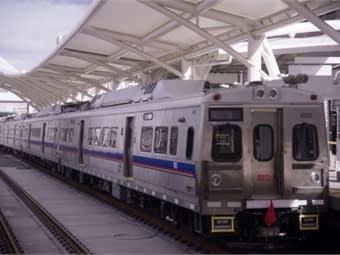
Denver RTD's commuter rail line is one example of a P3 in North America.
University of Denver
Coinciding with the Public-Private Partnership Conference & Expo (P3C) in Dallas, Husch Blackwell released its inaugural Public-Private Partnership Trends Report and the results of its fourth-annual P3C Conference survey, which measures marketplace sentiment for P3 as a project-delivery mechanism for meeting a community’s infrastructure needs.
Husch Blackwell queried conference registrants — including public sector respondents representing city, county, state, and educational officials and private organization participants from construction, consulting, design, and engineering, financial advisory and lending firms — on various factors relating to their evaluation and planned use of P3 to support future projects. Among other questions, the survey asked respondents to indicate their current level of involvement with public-private partnership projects; favorability of P3 projects; and expectations for utilizing P3 in the future.
Notable results of the survey found:
Ninety-one percent of public-side respondents — up from 85% in 2017 — and 94% of private-side respondents — up from 93% a year ago —plan to have multiple P3 projects in the works over the next three years.
Eighty percent of private-side and more than 50% of public-side respondents are currently involved in a P3 project.
Public and private respondents agreed that project efficiencies are a top reason for pursuing potential P3 projects.
Public and private respondents identified financing and risk transfer as the top two reasons that P3 is desirable.
The survey also revealed that private-side participants continue to exhibit more confidence in their understanding of P3 than their public-entity counterparts. Less than half of the survey’s private-side respondents thought that a current lack of understanding of P3 was a “strong” or “good” reason for not pursuing a P3 project; meanwhile, that number soared to nearly 70% among public-side respondents.
“There has long been a kind of information asymmetry at work in large infrastructure projects, where private-side participants tend to possess more experience and knowledge of how to price various projects or project stages,” said Charles Renner, who served as editor of the report and is the leader of Husch Blackwell’s P3 practice group. “What we are finding with P3, however, is that there is value in competition. When the public side solicits multiple bids, competition has a kind of leveling effect that compensates for a public entity’s lack of experience around various kinds of infrastructure projects.”
In addition to its survey results, the report includes an assessment of P3 projects that reached financial close since the beginning of 2016. The cohort of projects was refined to remove post-agreement transactions, such as refinancing and equity sales. In total, the report examined 16 projects across the nation in industries such as higher education, transportation, aviation, and energy.
Highlights of the project analysis include:
Fourteen of the 16 projects analyzed utilized a P3 “full model,” which includes the private partner being involved in all project phases — design/build, finance, operations, and maintenance (DBFOM).
Twelve of the 16 projects saw project debt levels exceed 70% of the overall capital stack at financial close. Government loans accounted for $2.9 billion during the report period, almost all of it on surface transportation projects utilizing Transportation Infrastructure Finance and Innovation Act, or TIFIA, loans.
Thirteen of the 16 projects employed public activity bonds, or PABs, to some extent, including much of the $2.3 billion issued to support the development of LaGuardia Airport’s Terminal B.
The Public-Private Partnership Conference & Expo is a three-day event exploring the role of P3 as it unites over 1,200 attendees from private industry and public governments and agencies to discuss infrastructure challenges faced nationwide.
For more information about the report, click here.
More Management

METRO Opens Submissions for 2026 Motorcoach Awards
Nominations are now being accepted for METRO Magazine’s Operator of the Year and Innovative Operator of the Year awards.
Read More →
New York MTA Advances Final Contract for Second Avenue Subway Expansion
Contract Four is the largest in the Second Avenue Subway Phase 2 project and includes construction of station infrastructure, tracks, and signals for the subway expansion, MTA officials said. Work on Contract Four will begin in 2027.
Read More →
Transit Agencies Highlight Safety Gains at National Summit
Leaders from 15 major transit systems shared crime-reduction results and safety initiatives while discussing the role of continued federal support.
Read More →

NITA Names New Leadership, Expands Reduced-Fare Program at First Board Meeting
The new regional transit authority appointed its first board chair and interim executive director while extending reduced fares across CTA, Metra, and Pace for eligible riders.
Read More →
Beyond the Checklist: A Structured Approach to Transit Maintenance
Reliability-Centered Maintenance helps transit agencies move beyond routine checklists to focus limited resources on the assets and failures that have the greatest impact on safety, reliability, and service.
Read More →
APTA 2026 Nominating Committee Selects Leadership Slate, Names Chair and Vice Chair Nominees
Leadership changes will help shape the association’s priorities and its representation of the transportation industry during the 2026–2027 term.
Read More →
DART Launches Major Security, Fare Enforcement Initiative
The 90-day demonstration will deploy coordinated security teams at five light rail stations while testing controlled access and gathering data to guide future investments.
Read More →
Sponsored•September 9, 2026
Advancing Fare Collection Through Technology and Innovation
Learn about delivering 1300 gates at 91 stations while managing fare evasion. Explore the large scale deployment, solution customization and real-world results that affect the region. Prepare for deployment in your region now.
Read More →
Game Day in Motion: Moving Millions During the 2026 World Cup
Between packed transit stations and team motorcoaches, see how agencies and operators across North America tackled the transportation demands of the 2026 FIFA World Cup.
Read More →
Surface Transportation Extension Averts Shutdown, Leaves Transit Funding Gap
The stopgap keeps federal transportation programs moving, but missing advance funding could complicate the transit and rail projects agencies are planning next.
Read More →