




RELATED: Bi-State Development named 'Healthiest Employer' for 2018
Roach officially named new Bi-State Development president/CEO
Roach, who resides in St. Louis, is a public transit advocate and a frequent Metro Transit rider.
January 3, 2019

Taulby Roach (right) assumed the position of president/CEO at Bi-State Development on January 1, 2019. Photo: Bi-State Development
2 min to read

Taulby Roach (right) assumed the position of president/CEO at Bi-State Development on January 1, 2019. Photo: Bi-State Development
Taulby Roach assumed the position of president/CEO at Bi-State Development on January 1, 2019. The Board of Commissioners selected Roach to succeed President/CEO John Nations as the head of Bi-State Development, which operates the Metro Transit public transportation system in the St. Louis region. Bi-State Development also operates four other enterprises: St. Louis Downtown Airport, Gateway Arch Riverfront ticket, tram and riverboat operations, St. Louis Regional Freightway, and Bi-State Development Research Institute.
Roach, who resides in St. Louis, is a public transit advocate and a frequent Metro Transit rider. For the past year and a half, he has served as the chief financial officer at St. Clair County Transit District. St. Clair County Transit District contracts with Bi-State Development and Metro Transit for MetroLink and MetroBus services in St. Clair County.
Roach has worked closely with Bi-State Development for more than 20 years on a variety of Metro Transit capital projects in St. Clair County, Illinois.
In the last year, he played a key role in the St. Clair County security mobilization initiative to establish cross-jurisdictional police support for officers on MetroLink trains in Illinois and Missouri.
He has contributed to a wide range of other projects over the years including securing transit vehicle purchases and maintenance improvements with Metro Transit and the Illinois Department of Transportation.
Three years ago, he successfully reorganized the St. Clair County MetroLink extension project refunding revenue to take advantage of favorable market shifts and superior credit ratings to improve the financial health of a public project.
Roach also played a major role in coordinating slope mitigation projects to maintain the structural integrity and long-term viability of transit assets on the Illinois MetroLink alignment.
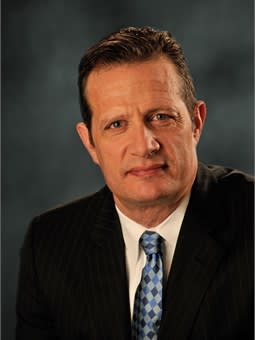
Taulby Roach, who resides in St. Louis, is a public transit advocate and a frequent Metro Transit rider. Photo: Bi-State Development
Roach, who is an avid cyclist, developed and was the project manager for MetroBikeLink, a 15-mile bicycle and recreational trail that is located along MetroLink in St. Clair County. The trail was constructed in sections on right-a-ways from existing light rail and abandoned rail corridors. MetroBikeLink conveniently connects neighborhoods and communities with public transit in St. Clair County.
Roach is also committed to improving access to educational opportunities through public transit. He assisted in implementing the campus improvement plan at Southwestern Illinois College from 2011 to 2014. That project included negotiating an active student transit pass program and campus infrastructure which enhanced student access and campus logistics.
Another priority of Roach’s has been promoting economic growth, not only through public transit access, but through transportation infrastructure development. For the past seven years, he was involved in the multi-million dollar River Bridge District infrastructure project in East St. Louis, which utilized public and private sector funding to support economic growth.
More Management

From Surviving to Thriving: Building Stronger Transportation Organizations
Bus Business Consultants founder Brian Dickson shares lessons on leadership, organizational health, and creating options for long-term success in a changing transportation industry.
Read More →
Everett Transit, Community Transit Outline Consolidation Agreement
The proposed agreement calls for a 50% increase in bus service in Everett, a new microtransit zone, continued paratransit service, and the transfer of Everett Transit operations to Community Transit.
Read More →
Strada360’s Steve Lassey on Turning Transit Data Into Better Decisions
From breaking down data silos to preparing for AI, Strada360 CEO Steve Lassey discusses how transit agencies can use technology to improve operations, customer information, and long-term decision-making.
Read More →

People Movement: Phil Washington Joins HNTB, Denver RTD Launches CEO Search, and More
In this edition, we also spotlight recent personnel moves at STV, the Eno Center for Transportation, and more, highlighting the people taking on new roles across the transportation industry.
Read More →
SEPTA Details Accelerate Vision for Transit System
The plan outlines investments in trolley modernization, new Metro and Regional Rail vehicles, accessible stations, and more frequent bus and rail service.
Read More →
FTA Ends Direct Oversight of MBTA Safety Actions
The federal agency closed its remaining special directive to the Massachusetts Department of Public Utilities following a safety review that began in 2022.
Read More →
Report: Transit Bus Manufacturing Supports 34,100 Jobs, $5.1B in GDP
The “Buses Mean Business” report examines the transit bus manufacturing industry’s economic footprint, supply chain, and rising demand for vehicle replacements.
Read More →
LIT Marks 10-Year Milestone at Annual Summit
Hosted by the COTA from September 10 to 13, the Summit carried the theme “Celebrating 10 Years of Excellence, Leadership, and Impact,” with every part of the program honoring the people, agencies, and partners who built LIT over its first decade.
Read More →
People Movement: Dan Dipert Coaches Adds Third-Generation Leader, Keolis Names New Valley Metro VP/GM, and More
In this edition, we also cover recent appointments and announcements at the Wabtec, SilverRide, HNTB, and more, showcasing the individuals helping to shape the future of transportation.
Read More →
METRO Opens Submissions for 2026 Motorcoach Awards
Nominations are now being accepted for METRO Magazine’s Operator of the Year and Innovative Operator of the Year awards.
Read More →