



Solano Transportation Authority Selects WSP USA for Zero-Emission Bus Projects
Projects include designing inductive charging stations for the agency’s commuter bus service network and developing a countywide electrification transition plan.

One of the projects includes developing a countywide electrification transition plan for the five transit agencies in Solano County to convert their fleets to battery-electric buses. Shown here is an all-electric bus and charging unit from Solano County Transit (SolTrans).
SolTrans
Solano Transportation Authority (STA) has selected WSP USA to provide services on two major projects related to zero-emission buses.
WSP is leading design services for the first STA project to construct four inductive charging stations for the SolanoExpress commuter bus service network, located in the Bay Area. The opportunity chargers will be installed at the Walnut Creek Bay Area Rapid Transit (BART) Station, El Cerrito Del Norte BART Station, the Fairfield Transit Center, and at the Suisun City Amtrak Station. WSP will also provide procurement assistance services and proposal evaluations for the project.
The second STA project is the development of the Countywide Electrification Transition Plan, which will provide the transition framework for the five transit agencies in Solano County to convert their fleets to battery-electric buses (BEBs). WSP will provide multiple services, including route, utility and financial modeling, utility coordination, and the development of facility design concepts. This plan will help those transit agencies meet the California Air Resource Board (CARB) Innovative Clean Transit regulation, which requires all transit agencies in the state to transition to 100% ZEB technologies by 2040.
Both projects will result in lower greenhouse gas (GHG) emissions and reduction of air pollution through the operation of all-BEB fleets.
“We are deeply proud and excited to work with the Solano Transportation Authority to help transition their stakeholder agencies off fossil fuels to power their transit fleets,” said Alva Carrasco, WSP Transit and Rail senior business development manager for Northern California. “Transit passengers, as well as community members who do not use transit, will benefit from the operation of BEBs in their neighborhoods. BEBs have no emissions, are quieter than typical buses, and will have the capability to recharge its battery at key locations along specific routes.”
Implementing the operation of BEBs into its entire fleet will help STA achieve regional and state goals to mitigate the impacts of climate change. WSP will also discuss with STA officials the benefits and strategies to achieve Envision certification from the Institute of Sustainable Infrastructure, which provides a consistent, consensus-based framework and standard for assessing sustainability and resilience in infrastructure.
More Zero Emissions

Caltrain’s Electrification Drives a New Era of Ridership Growth
The railroad’s shift to electric service has brought more frequent trains, stronger customer satisfaction, and increased ridership, earning it APTA’s Outstanding Public Transportation System award.
Read More →
Building a Flexible Path to Transit Electrification with BAE's John Hroncich
John Hroncich discusses BAE Systems’ modular and scalable approach, lessons learned from decades of real-world operations, and how agencies can identify electrification strategies that fit their fleets.
Read More →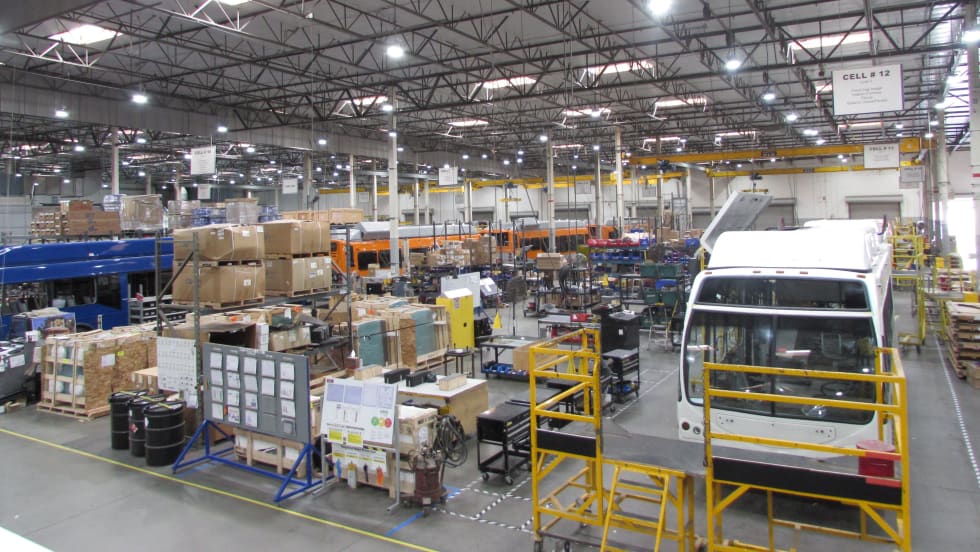
LA Metro Board Awards 220 Battery-Electric Bus Contract to ENC
The contract, which is the largest base award of battery-electric buses by a U.S. transit agency, will be built in Southern California, sustaining good jobs as LA prepares to welcome the world in 2028
Read More →
Public Transit Conference Returning to GFX in 2027, Call for Papers Now Open
The Call for Papers is now open, allowing transit agency professionals and industry experts to help shape the PTC educational program by submitting session ideas for consideration.
Read More →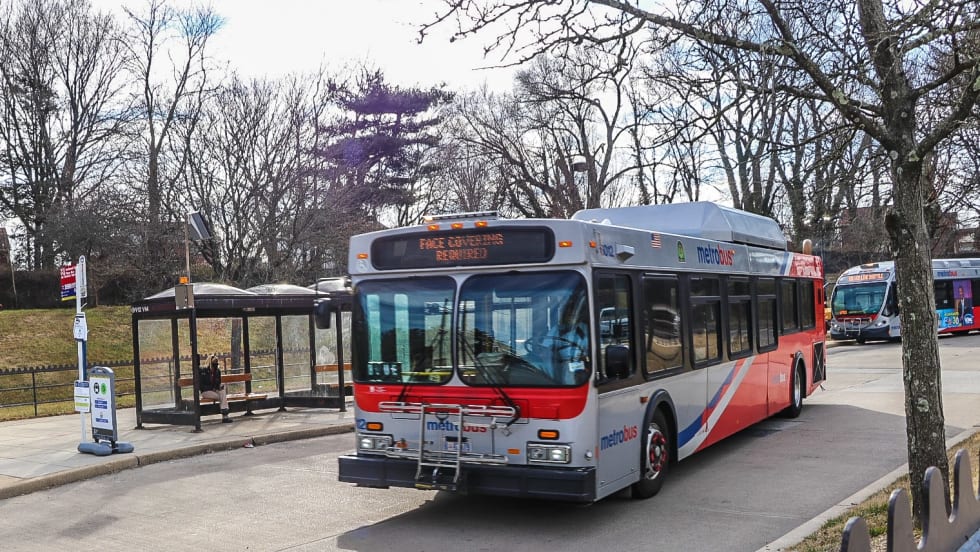
Report: Transit Bus Manufacturing Supports 34,100 Jobs, $5.1B in GDP
The “Buses Mean Business” report examines the transit bus manufacturing industry’s economic footprint, supply chain, and rising demand for vehicle replacements.
Read More →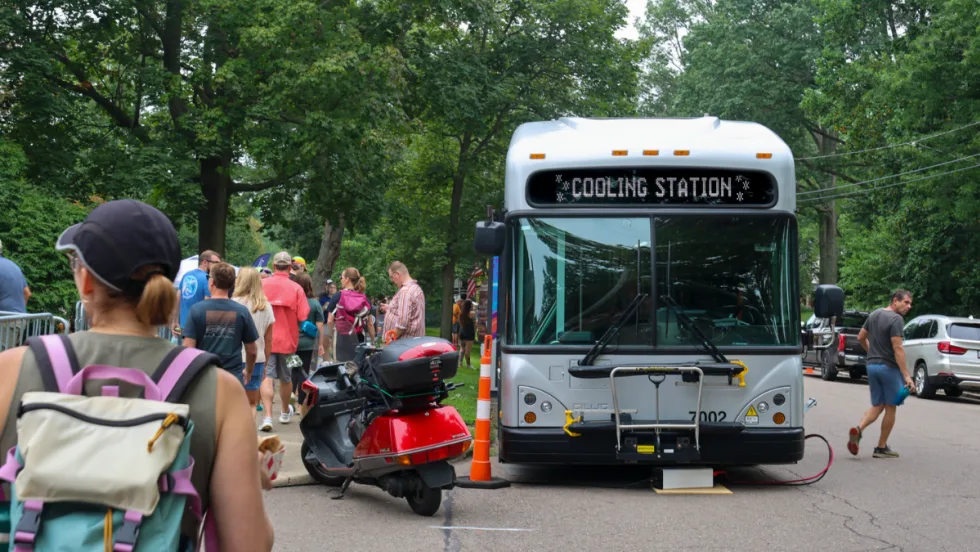
Ohio’s METRO RTA Turns Electric Buses into Mobile Power Sources at PorchROKR
See how three Gillig battery-electric buses powered festival stages while the agency’s new Park & Ride service carried approximately 1,000 attendees, demonstrating another potential use for transit agencies’ electric fleets.
Read More →
CALSTART and Forth Combine to Form Catalyst Mobility
The new name represents a renewed vision for the nonprofit focused on advancing clean, equitable, and affordable transportation solutions that move people and goods.
Read More →
Building a Flexible Path to Transit Electrification
John Hroncich discusses BAE Systems’ modular and scalable approach, lessons learned from decades of real-world operations, and how agencies can identify electrification strategies that fit their fleets.
Read More →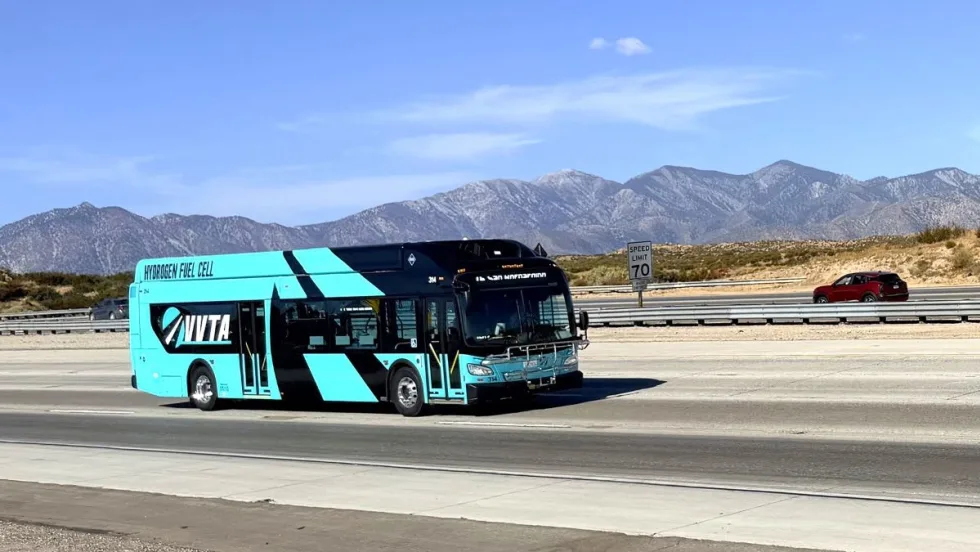
California's VVTA Begins Phased Rollout of Hydrogen Fuel Cell Buses
The agency is introducing 13 zero-emission buses into revenue service while evaluating performance across its urban, rural, and long-distance routes.
Read More →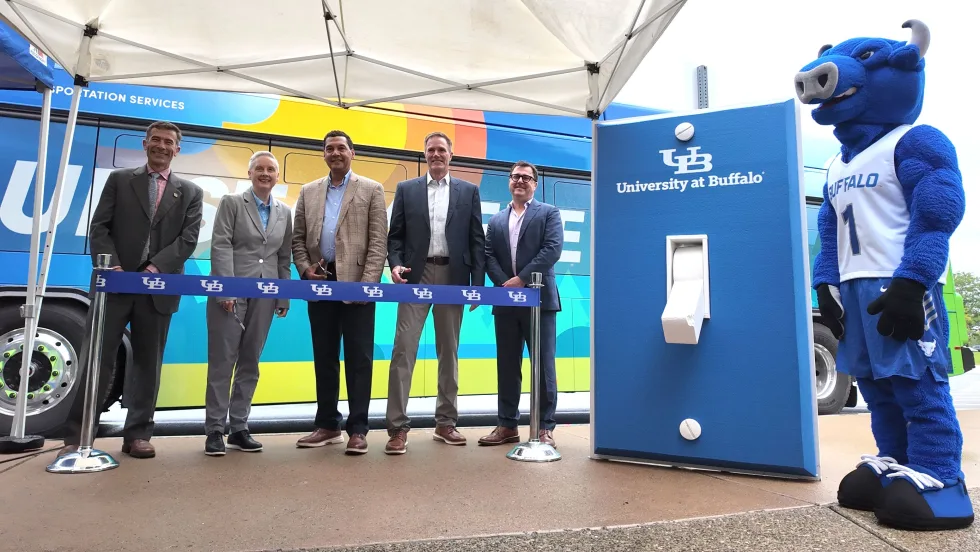
Inside Look: University at Buffalo Puts First 8 Electric Buses Into Stampede Service
UB, transportation solutions provider WeDriveU, and fleet electrification specialist Zenobē marked the deployment in the presence of students, university administrators, and local officials.
Read More →