



Solaris to Provide King County Metro Battery-Electric Buses
The award marks Solaris’ first contract with a U.S.-based transit agency and represents the company’s effort to expand its presence in the North American market.


King County Metro GM Michelle Allison with Solaris CEO Javier Iriarte after Metro signed a contract to purchase zero-emission buses from Solaris.
Photo: King County Metro
Seattle’s King County Metro contracted with European bus builder Solaris to buy up to 16 zero-emission buses.
The award marks Solaris’ first contract with a U.S.-based transit agency and represents the company’s effort to expand its presence in the North American market.
The partnership also reflects a broader push to diversify the number of transit suppliers in the region.
Metro’s procurement will help increase the bus manufacturing competition in the U.S. market, where bus manufacturing shortages have created supply chain challenges for all transit agencies.
From Europe to the US
Poland-based Solaris has been a supplier of zero-emission buses for over a decade and provides battery-electric buses, hydrogen fuel cell buses, and electric trolleys.
Solaris buses are in service in over 30 countries and Solaris-built buses were recognized in 2017 and in 2024 as Europe’s Bus of the Year.
Metro will initially buy four battery-electric buses, with the option of purchasing a total of 16 vehicles.
“At Metro, we are deeply committed to building a sustainable future through innovation and collaboration,” said King County Metro GM Michelle Allison. “Our goal is to create a zero-emission fleet that not only enhances our communities but also leads the way in environmental responsibility. Metro’s partnership with electric and hydrogen bus manufacturer Solaris will help overcome the bus manufacturing shortage and potentially provide more options for other transit agencies in North America, too.”
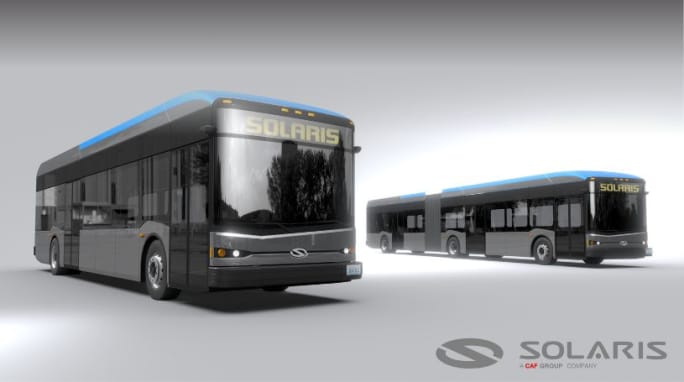
A rendering of King County Metro's Solaris battery-electric buses.
Photo: Solaris
King County Metro’s New ZEBs
Metro is purchasing two 40-foot buses and two 60-foot buses with an option to procure 12 additional vehicles. The first of the vehicles is scheduled to arrive in 2026.
The buses are designed specifically for the North American market and feature the most progressive battery bus technology developed by Solaris.
Metro will put these vehicles through vigorous testing and evaluations including shadow service. This comprehensive testing will allow Metro to evaluate Solaris’ ability to meet the requirements of the North American market and has the potential to add a competitor to the North American battery-electric, hydrogen, and trolley bus market for 40-foot and 60-foot buses.
Metro’s Current Fleet
Metro’s current zero-emission fleet includes battery-electric buses manufactured by New Flyer.
The first of 89 new battery-electric buses purchased from GILLIG are scheduled to be delivered by the end of the year and are expected to go into service in 2026 when Metro’s Tukwila Base is scheduled to open.
More Zero Emissions

Caltrain’s Electrification Drives a New Era of Ridership Growth
The railroad’s shift to electric service has brought more frequent trains, stronger customer satisfaction, and increased ridership, earning it APTA’s Outstanding Public Transportation System award.
Read More →
Building a Flexible Path to Transit Electrification with BAE's John Hroncich
John Hroncich discusses BAE Systems’ modular and scalable approach, lessons learned from decades of real-world operations, and how agencies can identify electrification strategies that fit their fleets.
Read More →
LA Metro Board Awards 220 Battery-Electric Bus Contract to ENC
The contract, which is the largest base award of battery-electric buses by a U.S. transit agency, will be built in Southern California, sustaining good jobs as LA prepares to welcome the world in 2028
Read More →
Public Transit Conference Returning to GFX in 2027, Call for Papers Now Open
The Call for Papers is now open, allowing transit agency professionals and industry experts to help shape the PTC educational program by submitting session ideas for consideration.
Read More →
Report: Transit Bus Manufacturing Supports 34,100 Jobs, $5.1B in GDP
The “Buses Mean Business” report examines the transit bus manufacturing industry’s economic footprint, supply chain, and rising demand for vehicle replacements.
Read More →
Ohio’s METRO RTA Turns Electric Buses into Mobile Power Sources at PorchROKR
See how three Gillig battery-electric buses powered festival stages while the agency’s new Park & Ride service carried approximately 1,000 attendees, demonstrating another potential use for transit agencies’ electric fleets.
Read More →
CALSTART and Forth Combine to Form Catalyst Mobility
The new name represents a renewed vision for the nonprofit focused on advancing clean, equitable, and affordable transportation solutions that move people and goods.
Read More →
Building a Flexible Path to Transit Electrification
John Hroncich discusses BAE Systems’ modular and scalable approach, lessons learned from decades of real-world operations, and how agencies can identify electrification strategies that fit their fleets.
Read More →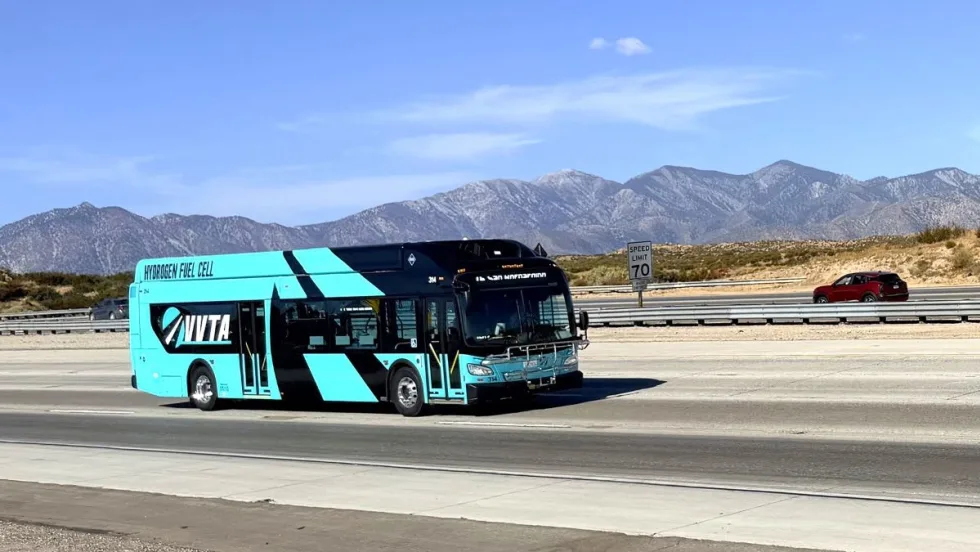
California's VVTA Begins Phased Rollout of Hydrogen Fuel Cell Buses
The agency is introducing 13 zero-emission buses into revenue service while evaluating performance across its urban, rural, and long-distance routes.
Read More →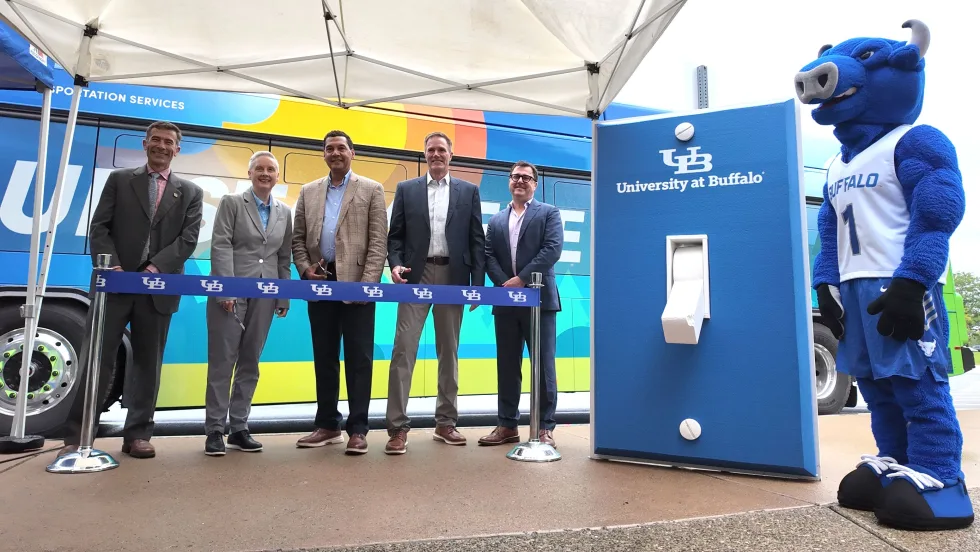
Inside Look: University at Buffalo Puts First 8 Electric Buses Into Stampede Service
UB, transportation solutions provider WeDriveU, and fleet electrification specialist Zenobē marked the deployment in the presence of students, university administrators, and local officials.
Read More →