



Streetcars Making a Resurgence in the U.S.
Whether you call them streetcars, cable cars, trolleys or trams, those nostalgic, street-level transit lines not seen in many cities since the 1950s are making an unprecedented resurgence across the U.S. and around the world.

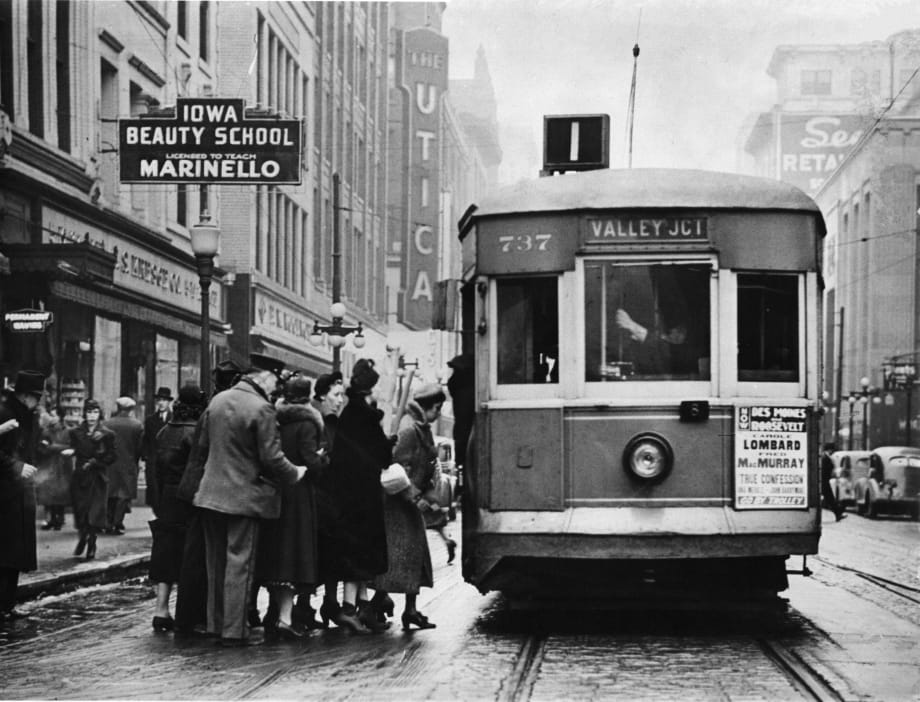
Streetcar systems in the U.S. were all but extinct by the 1950s due to the rise of cars and the nation’s highway system.
Streetcar systems in the U.S. were all but extinct by the 1950s due to the rise of cars and the nation’s highway system.
Whether you call them streetcars, cable cars, trolleys or trams, those nostalgic, street-level transit lines not seen in many cities since the 1950s are making an unprecedented resurgence across the U.S. and around the world. And, whether you’re a transportation-industry insider or a commuter weary of crowded, chaotic highways, the rebirth can’t come soon enough.
Streetcars (or trams, as they’re called outside of the U.S.) were a transportation staple in hundreds of cities in the late 19th and early 20th centuries. In the U.S., they were largely abandoned by the 1950s, as car and bus travel became more popular. Today, many cities are taking a second look at streetcars for many reasons, said Thomas J. Spearing III, president, project management group – Americas, at Hill International Inc. Spearing has been working in — and advocating for — the transportation industry for more than 25 years.
“First, there are landmark cultural shifts occurring in both the U.S. and Canada,” said Spearing. “Many cities are seeing surges in their populations, as residents seeking convenience and easy commuting begin moving back to urban areas from the suburbs. They’ve found that the plusses of living in a suburban setting are outweighed by increasingly longer and more expensive commutes, and are looking for homes where nearly every convenience is within walking distance.”
Spearing added streetcars are a “greener” alternative to cars and buses.
“As travel costs and the sheer number of vehicles on our roadways continue to rise, and as our simultaneous concern about our carbon footprint heightens, cities are looking for innovative ways to get commuters out of their vehicles,” he said.
Susan E. Schruth, a Hill executive consultant, added that unprecedented numbers of younger commuters are making public transportation a lifestyle choice.
“Many cities are citing millenials’ combined preferences for public transportation for cultural and environmental reasons,” she explained. “They are pushing the demand for transit. Many just don’t want cars, and a streetcar is a perfect way to enhance mobility within an urban area.”
Statistics seem to bolster that trend
“A [recent] study by APTA asserted that a streetcar draws more ridership because of its added convenience and comfort,” said Schruth. “Furthermore, developers are more attracted to rail because it is perceived as being a ‘harder’ investment, because rails are being laid down, making it seem a more permanent part of the community.”
While streetcar lines aren’t expected to completely replace buses and other faster, more widespread modes of transportation, they’re a perfect alternative for moving people efficiently in distinct areas of a city — whether those people are commuting, shopping or sightseeing. Streetcars add more capacity than buses and are, frankly, more attractive, Spearing said.
“Streetcar lines in cities such as Portland, Ore., have been a tremendous boon to local business and tourism, providing transportation that is safe, accessible and affordable,” he explained.
Never went away
Streetcar lines in New Orleans, San Francisco, Memphis, Philadelphia and other cities never completely went away, Schruth pointed out. They continued to function as reliable modes of transportation, even as similar lines in other cities were being ripped out and replaced by buses.
But, over the last couple of decades, streetcars began getting a more widespread second look. Portland’s streetcar line, opened in 2001, has been highly popular and is credited with spurring an estimated $3.5 billion in residential and commercial development there. The line also has been held up as a standard for how viable such lines can be in other places. Over the past decade or so, new projects have been completed or put on the drawing board in such far-flung cities as Tucson, Ariz.; St. Paul, Minn.; Atlanta; Kansas City, Mo. and Cincinnati.
U.S. streetcar lines are being financed by a combination of federal and local public funding, as well as funding from public-private partnerships and private consortiums. Spearing and Schruth are optimistic that federal support of these projects will continue pushing even more projects forward.
“Projects that had been in the planning stages for years can now move ahead, thanks to a new federal commitment to funding alternative modes of transportation that reduce both carbon emissions and our long-standing reliance on foreign oil,” said Spearing. “All of these factors are converging right now, making it an ideal time to re-introduce light rail, and the joy of streetcars, to whole new generation.”
Usage around the world
While Europe never completely abandoned the tram, and successful lines have been chugging along there for decades, the mode is experiencing a resurgence of sorts as existing lines expand and new lines are planned to meet growing demand throughout the continent. Projects have recently opened or are underway in England, Scotland, Germany, Norway, Spain, Italy, Hungary and Turkey. One line in France, the Nantes-Chateaubriant Line, reopened last February after a 34-year dormancy. The Zaragoza Tram line in Zaragoza, Spain, recently completed the last leg of a tram line that was resurrected after more than 30 years. And Sheffield, in the northern U.K., recently unveiled a highly innovative “tram train,” which operates as both a tram on the industrial city’s streets and a commuter line that runs on existing light rail tracks.
Emerging countries also are jumping on the tram platform, using these relatively inexpensive rail lines to move increasing numbers of city commuters efficiently. Tram lines are under construction in Latin America, in Ecuador and Colombia, and in Suzhou and Nanjing, China. India also is planning new or expanded tram lines as part of a sweeping plan for economic growth there.
In the Middle East, governments already see the value of getting commuters out of their cars. Qatar and Dubai both are building tram and light rail lines, and more countries are expected to begin their own lines in the new few years, as unprecedented development lures more and more people to live and work there.
“The transportation market is one of Hill’s fastest-growing markets throughout the world,” said Samer Tamimi, PE, a Hill VP with more than 30 years of construction industry experience in the U.S. and the Middle East. Tamimi heads the Middle and Far East’s rail and infrastructure sector, managing some of the region’s most groundbreaking transportation projects, including the Green Line of the Doha Metro; Al Ain City roadway projects and the Riyadh Metro, among others.
“Cities like Dubai, which embraced the benefits of public transportation early on and developed a high capacity metro backbone system, are now seeing the benefits of using short, distinct tram lines to supplement the metro system and move people within urban areas,” Tamimi said.
Railcar manufacturers are citing historic levels of demand for street or tram cars across the globe, including those like Sheffield’s, which can traverse both tracks laid in streets and track on private rights-of-way. Siemens’ S-70 car, for example, has been widely acclaimed in Utah, where it is used in Salt Lake City for both the Utah Transit Authority’s S streetcar line and the city’s TRAX light rail line. The S Line uses single S-70 cars to take passengers from Salt Lake City’s Sugar Hill shopping district to Central Point Station and the TRAX light rail line. Using the cars for both functions saves money and helps bolster the city’s businesses as well, Siemens Rail Systems President Michael Cahill said. “The Sugar House Line is an excellent example showing what streetcars can do in American cities,” he said. “The economic development spurred by such lines is, and will be, considerable.”
Streetcars often are more easily accepted by communities than high-speed or even light rail lines, Spearing added.
“And, they can help open the door to later rail development,” he said. “Once people experience, firsthand, the benefits of this type of transit, they’re more likely to want more, so streetcars can be a great ‘emissary’ for other types of rail.
“Riding transit makes good economic sense, and also is a safer alternative to any other mode of transportation,” Spearing continued. “The business of transit results in four dollars in economic return for every dollar invested, and helps green the planet at same time.”
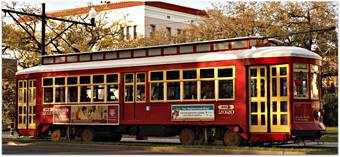
While most streetcar systems in the U.S. disappeared, some such as in New Orleans, continued to function as a reliable mode of transportation.
A continuing trend
Spearing doesn’t think the streetcars trend will slow down anytime soon.
“You’re seeing an unprecedented acceptance of them, which I expect will absolutely continue,” he said.
Spearing knows, firsthand, the benefits of safe, reliable means of transportation. He grew up “almost literally underneath the Frankford Elevated,” SEPTA’s elevated rail line that connects northern Philadelphia with Center City, in a working-class neighborhood in the city’s Kensington section.
“We had a family of four that went to work, to school, or got around the city every single day by using public transportation. It was a way of life,” he said. “Bringing back that way of life and, at the same time, bringing public transportation into the 21st century will have very specific and lasting benefits for generations to come.”
Tricia McCunney is a technical writer at Hill International.
More Management

FTA Ends Direct Oversight of MBTA Safety Actions
The federal agency closed its remaining special directive to the Massachusetts Department of Public Utilities following a safety review that began in 2022.
Read More →
Report: Transit Bus Manufacturing Supports 34,100 Jobs, $5.1B in GDP
The “Buses Mean Business” report examines the transit bus manufacturing industry’s economic footprint, supply chain, and rising demand for vehicle replacements.
Read More →
LIT Marks 10-Year Milestone at Annual Summit
Hosted by the COTA from September 10 to 13, the Summit carried the theme “Celebrating 10 Years of Excellence, Leadership, and Impact,” with every part of the program honoring the people, agencies, and partners who built LIT over its first decade.
Read More →

People Movement: Dan Dipert Coaches Adds Third-Generation Leader, Keolis Names New Valley Metro VP/GM, and More
In this edition, we also cover recent appointments and announcements at the Wabtec, SilverRide, HNTB, and more, showcasing the individuals helping to shape the future of transportation.
Read More →
METRO Opens Submissions for 2026 Motorcoach Awards
Nominations are now being accepted for METRO Magazine’s Operator of the Year and Innovative Operator of the Year awards.
Read More →
New York MTA Advances Final Contract for Second Avenue Subway Expansion
Contract Four is the largest in the Second Avenue Subway Phase 2 project and includes construction of station infrastructure, tracks, and signals for the subway expansion, MTA officials said. Work on Contract Four will begin in 2027.
Read More →
Transit Agencies Highlight Safety Gains at National Summit
Leaders from 15 major transit systems shared crime-reduction results and safety initiatives while discussing the role of continued federal support.
Read More →
NITA Names New Leadership, Expands Reduced-Fare Program at First Board Meeting
The new regional transit authority appointed its first board chair and interim executive director while extending reduced fares across CTA, Metra, and Pace for eligible riders.
Read More →
Beyond the Checklist: A Structured Approach to Transit Maintenance
Reliability-Centered Maintenance helps transit agencies move beyond routine checklists to focus limited resources on the assets and failures that have the greatest impact on safety, reliability, and service.
Read More →
APTA 2026 Nominating Committee Selects Leadership Slate, Names Chair and Vice Chair Nominees
Leadership changes will help shape the association’s priorities and its representation of the transportation industry during the 2026–2027 term.
Read More →